September 29, 2026
Before coming to Cambodia, I sadly have to admit I was unaware of the landmine problems they face. On our first night in Siem Reap, where we hiked up the hill to try and see the sunset views, there was a small band of men playing instruments and our tuk tuk driver explained to me they were victims of landmine explosions who had lost limbs or their sight and were trying to make money via donations to support their families.
Then we heard about an interesting tour, other shipmates had taken, at an organization called APOPO. So we went to check it out.
What really saddened me was learning that the majority of landmines came from the US bombing Cambodia during the Vietnam War in an effort to stop the Viet Cong troops.
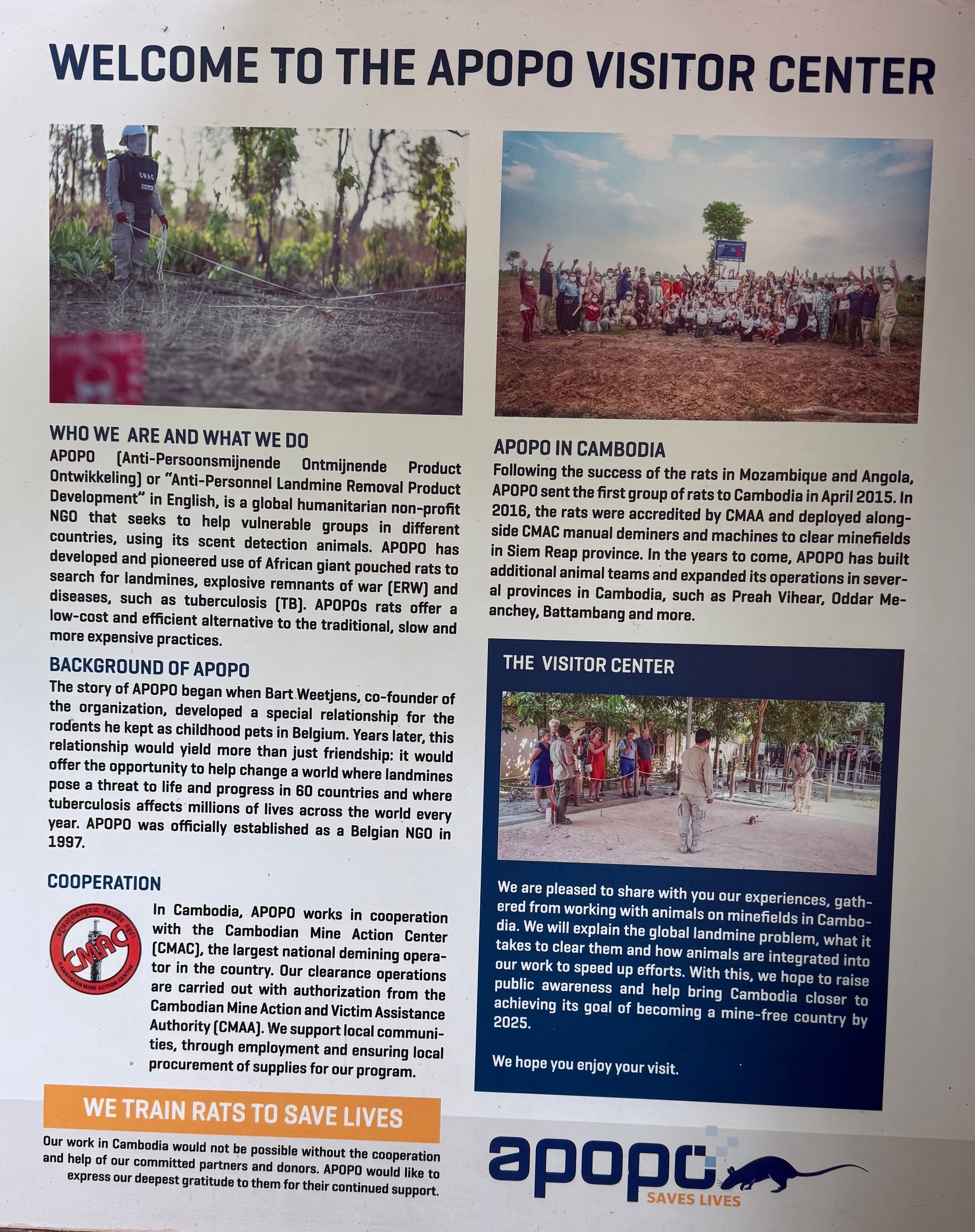
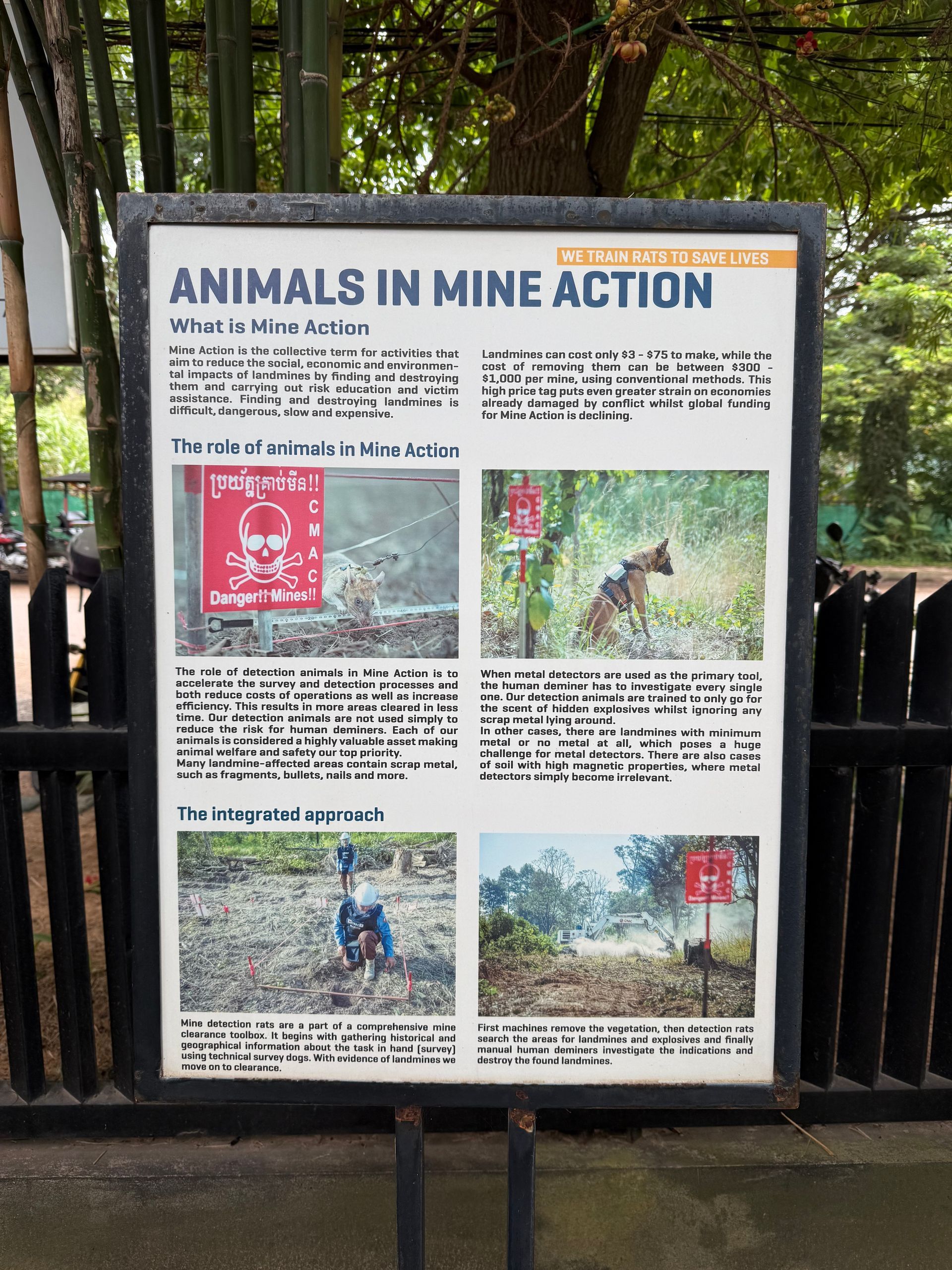


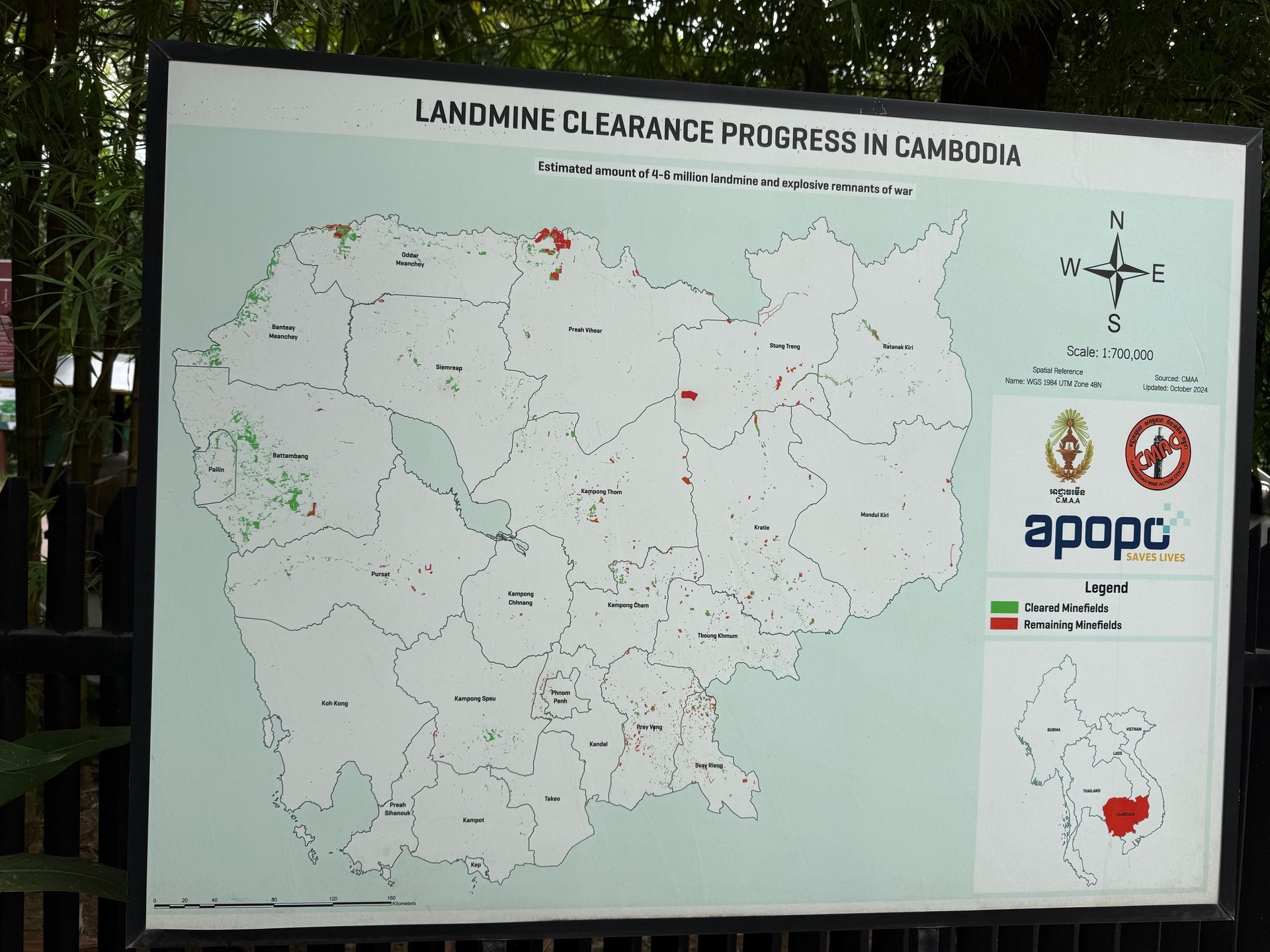
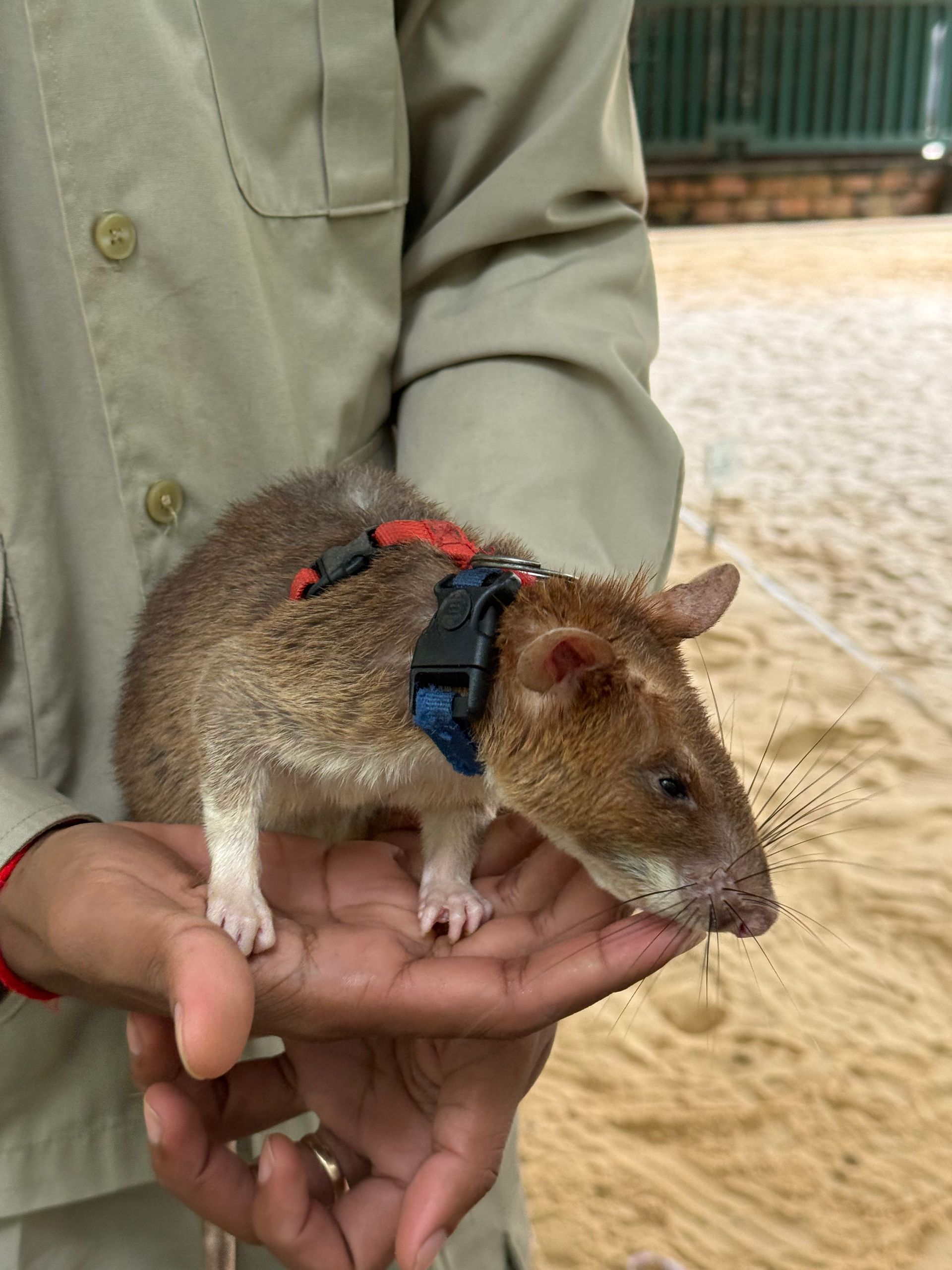
The fascinating story that emerged out of this tour was these HERO RATS that are trained and used by this organization, in sniffing out the TNT / Gunpowder in the ground, from these undetected abandoned landmines. The founder is Bart Weetjens a Belgian Zen Buddhist Monk that had rats as pets, as a child, and has since taught them to detect smell of TNT, through a reward process. The rats are too light in weight, to set off the mines, so they are unharmed in the process, and they are able to sniff out the TNT many feet below the land surface. They scratch at spot, the handlers record measurements and bomb specialist detonate mines, safely later.
The rats can clear an area the size of a tennis field, in 30 minutes, where the tradition way, with metal detectors, would take 4 days.

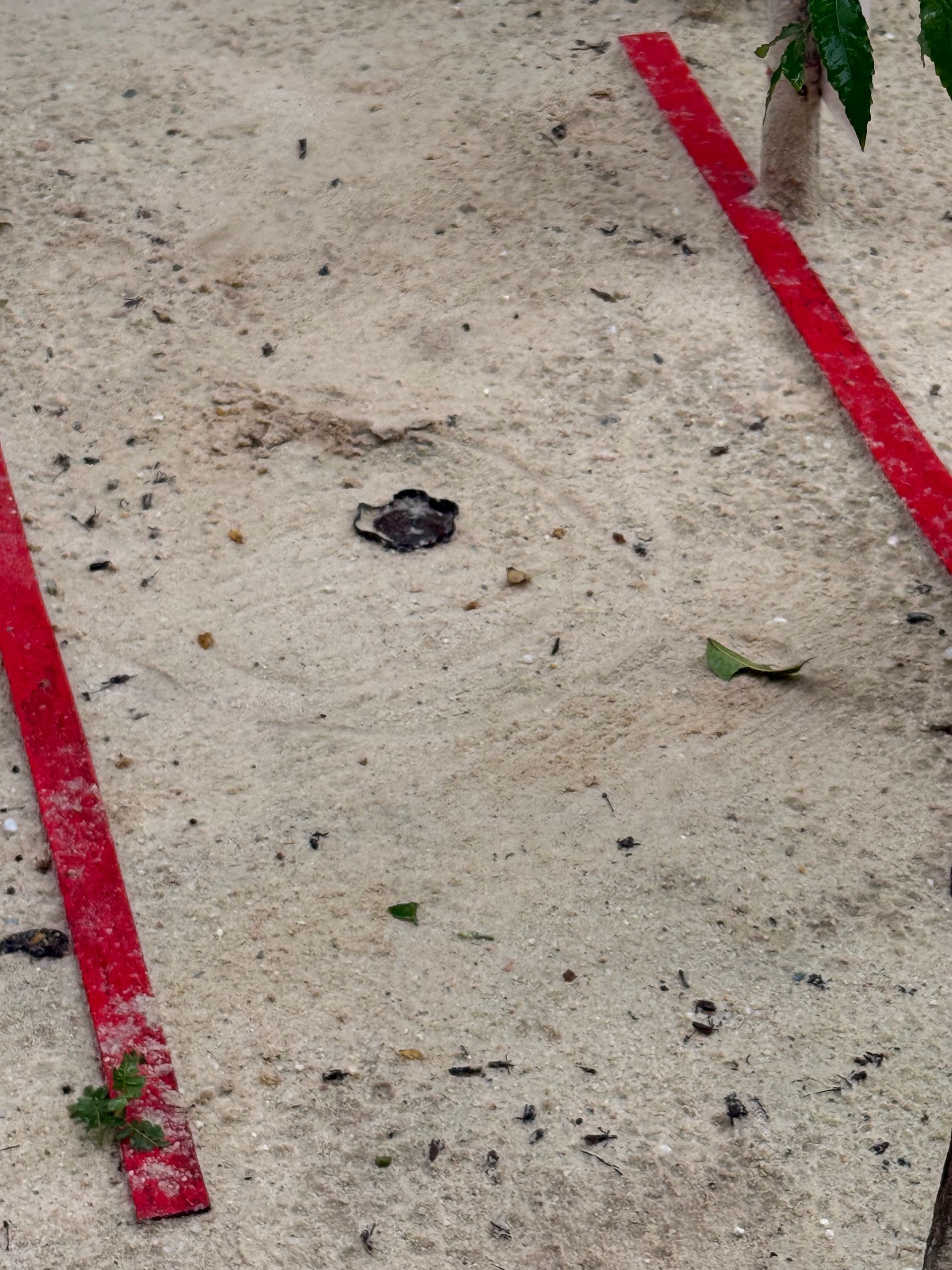


The four types of mines typically found. The Khmer Rouge also installed a lot of these devices during their fighting in Cambodia.
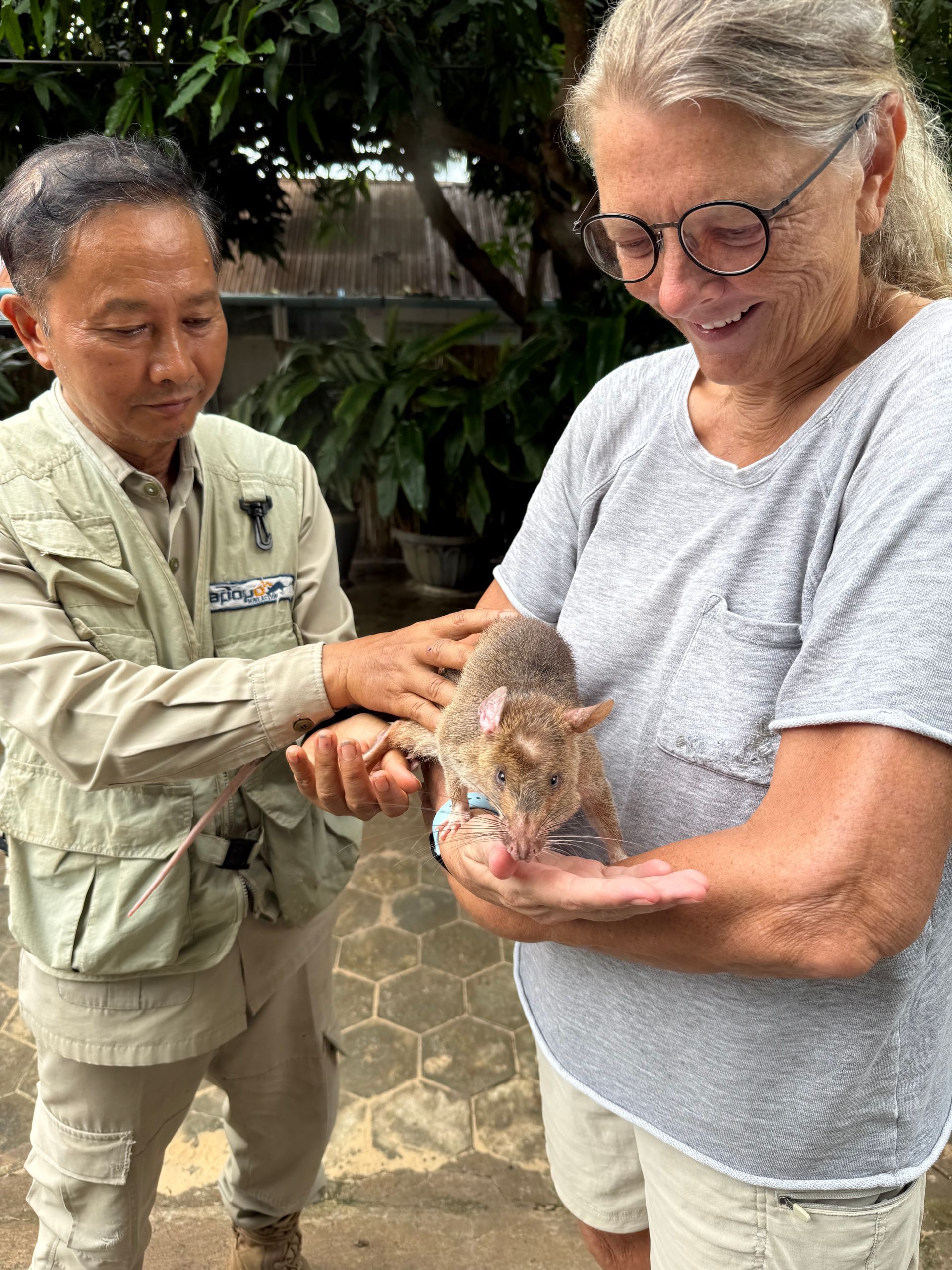
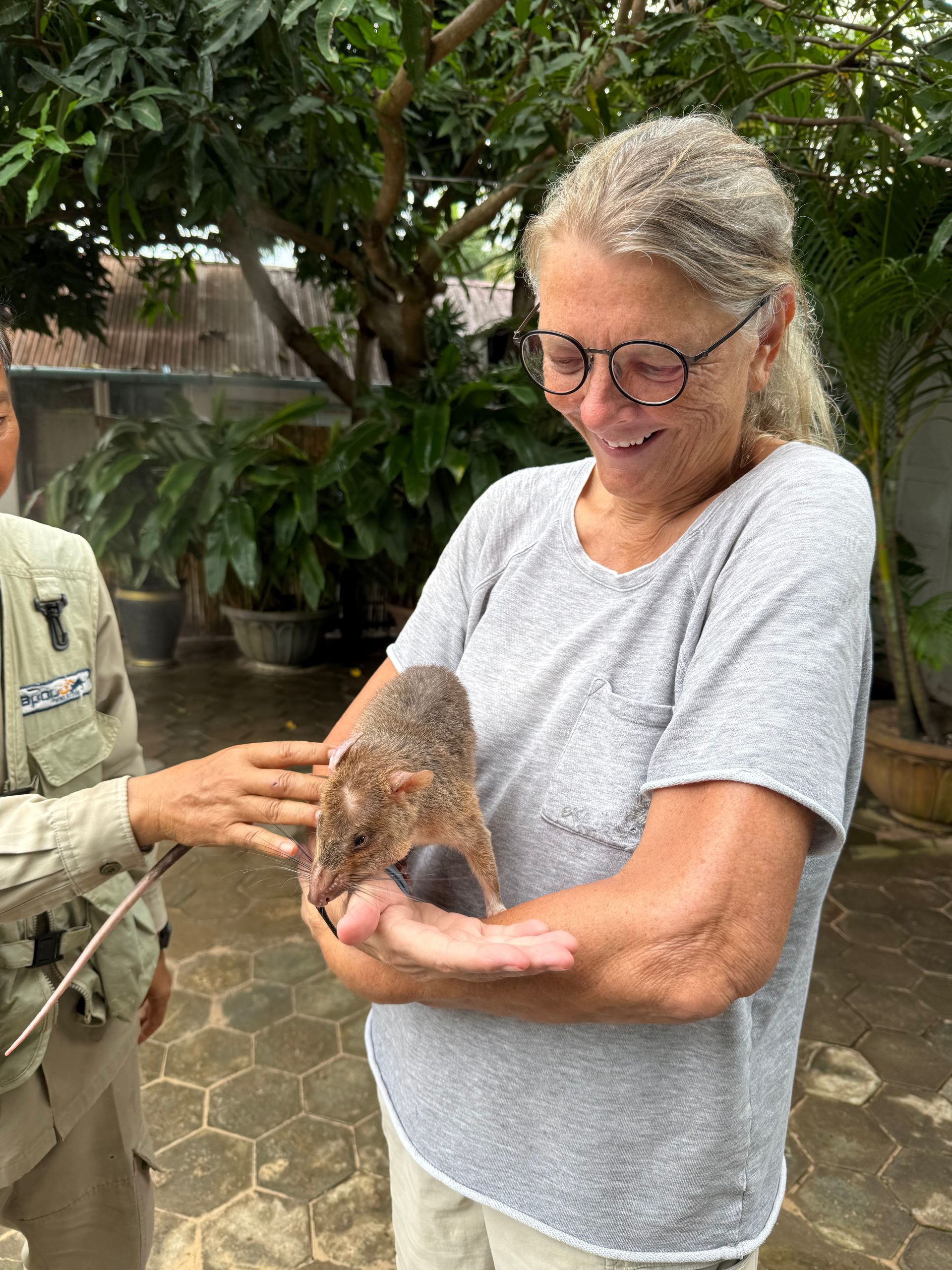
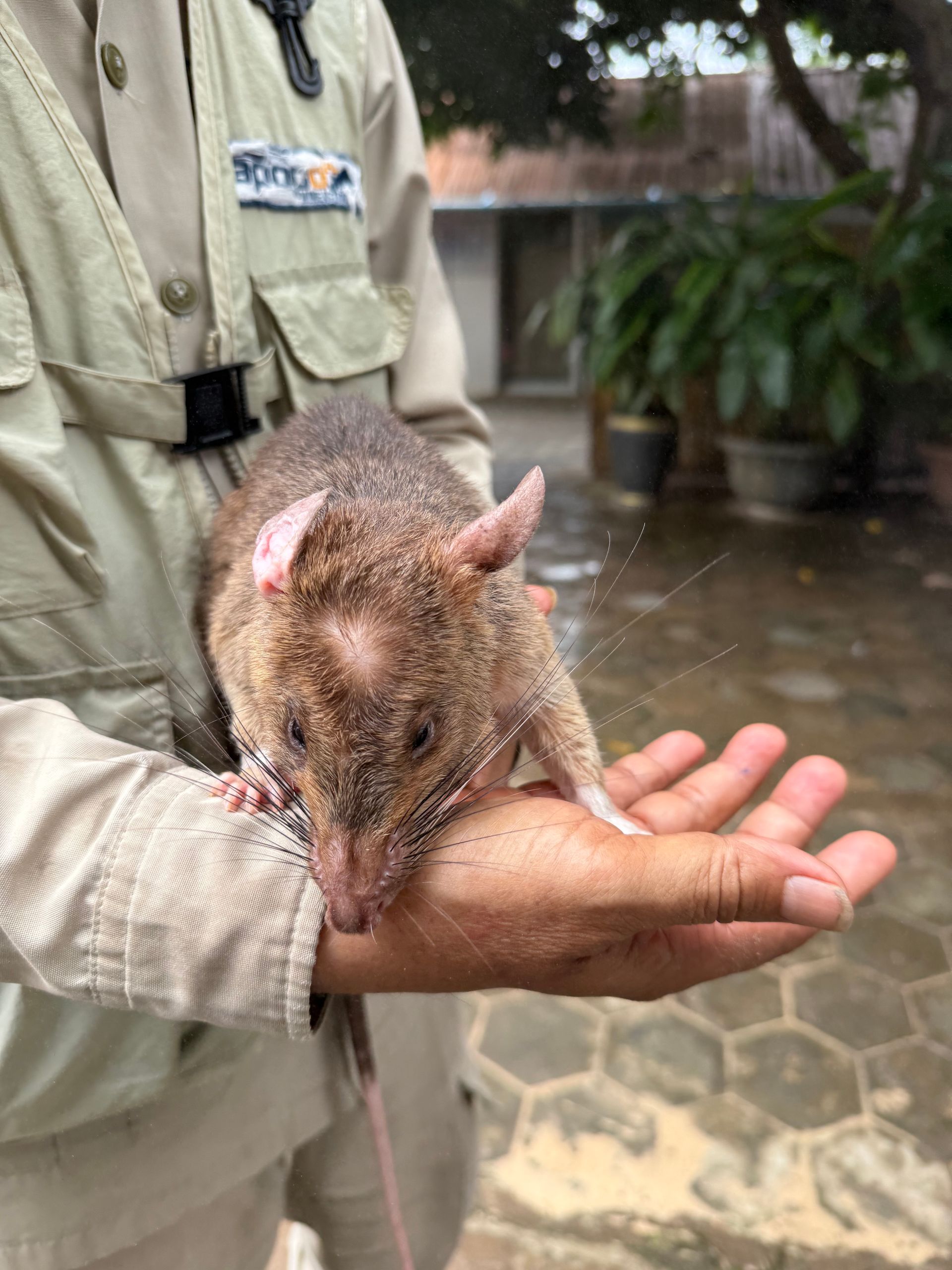
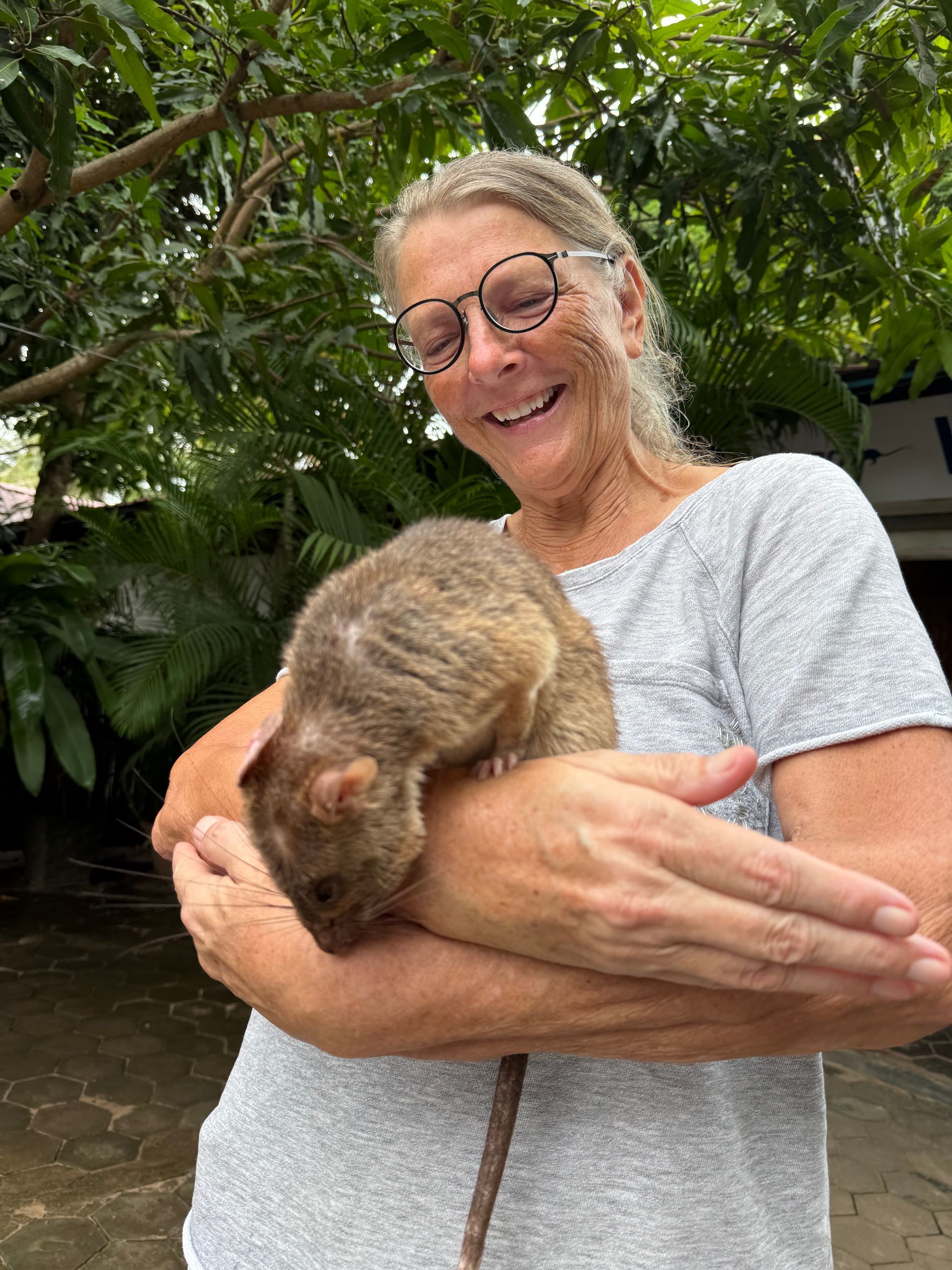
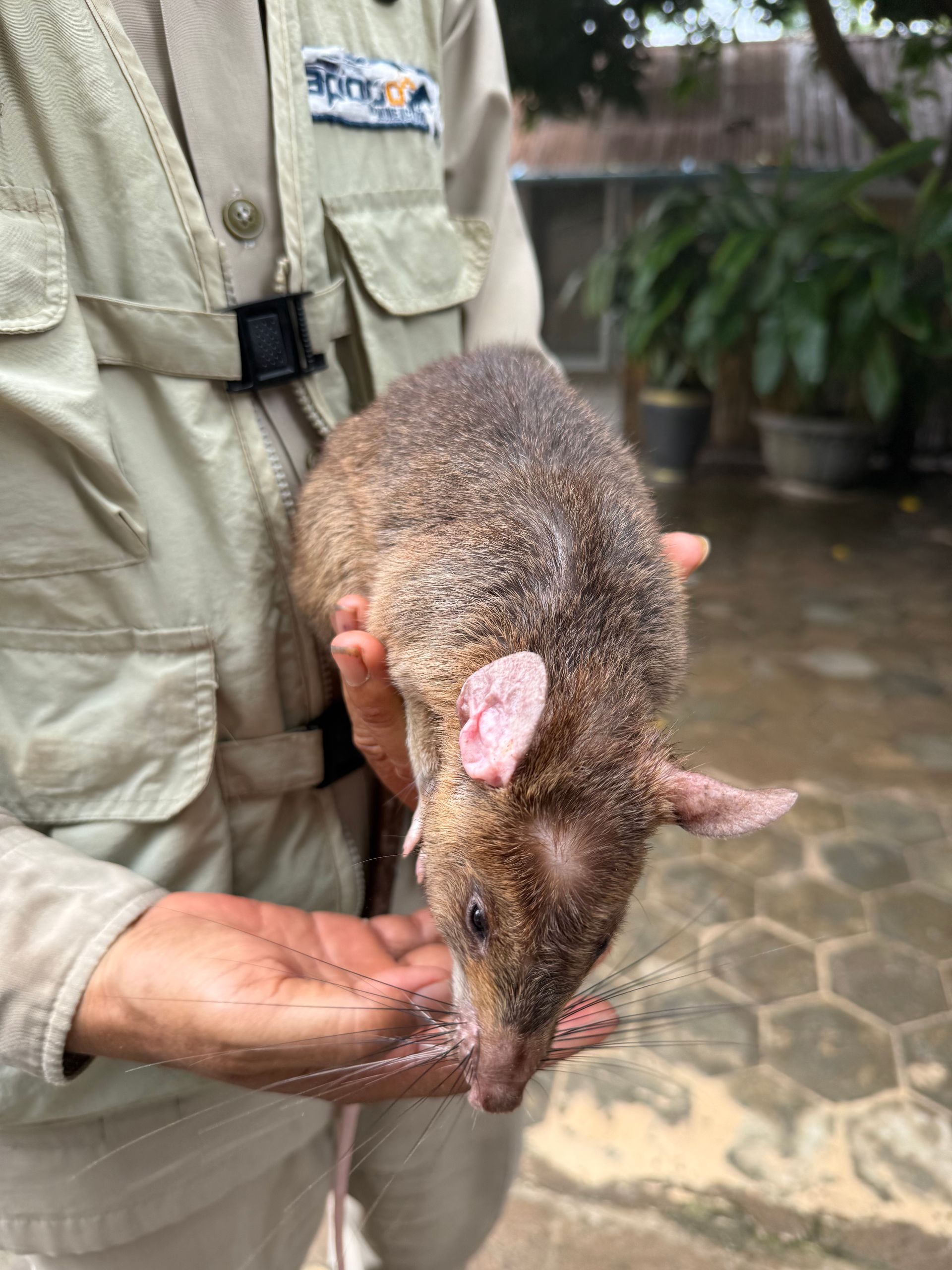
Basia and I ended up getting a private tour and she even got to hold Etto, one of the rats in training. I opted to just give a scratch on his head! They put sunscreen on rats eats and tails to protect them when they work in sunlight - usually the early morning is best.
The rats they use here are African giant pouch rats because they have a longer life span 8-9 years than Belgium rats. Rats eat a vegetarian diet and are rewarded with fruit and nuts. When they scratch a spot, handler makes a click noise, and they have been trained that this gets them a reward. So cool! Glad we found this little tour to add on to our trip!