
September 28, 2026
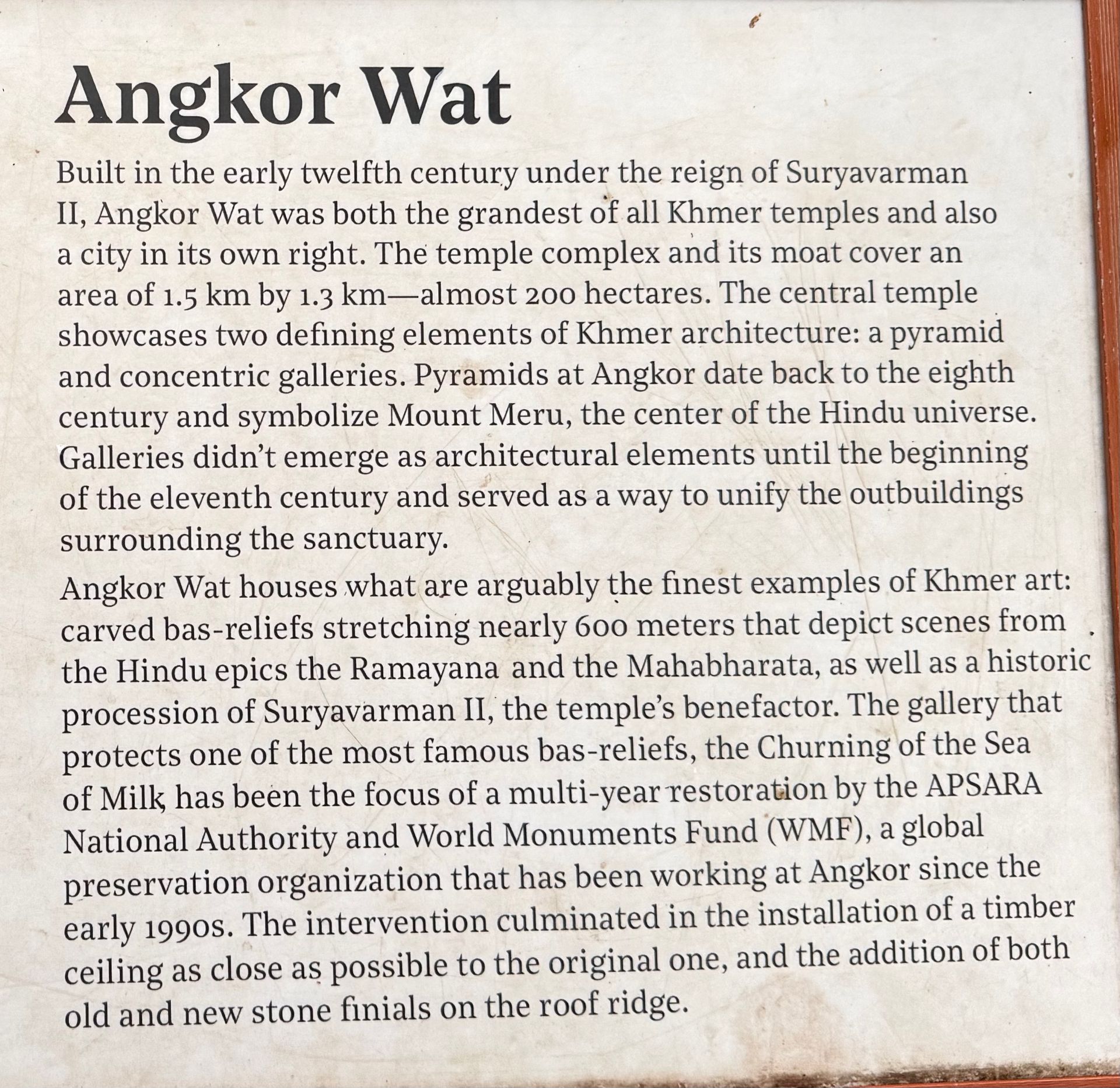
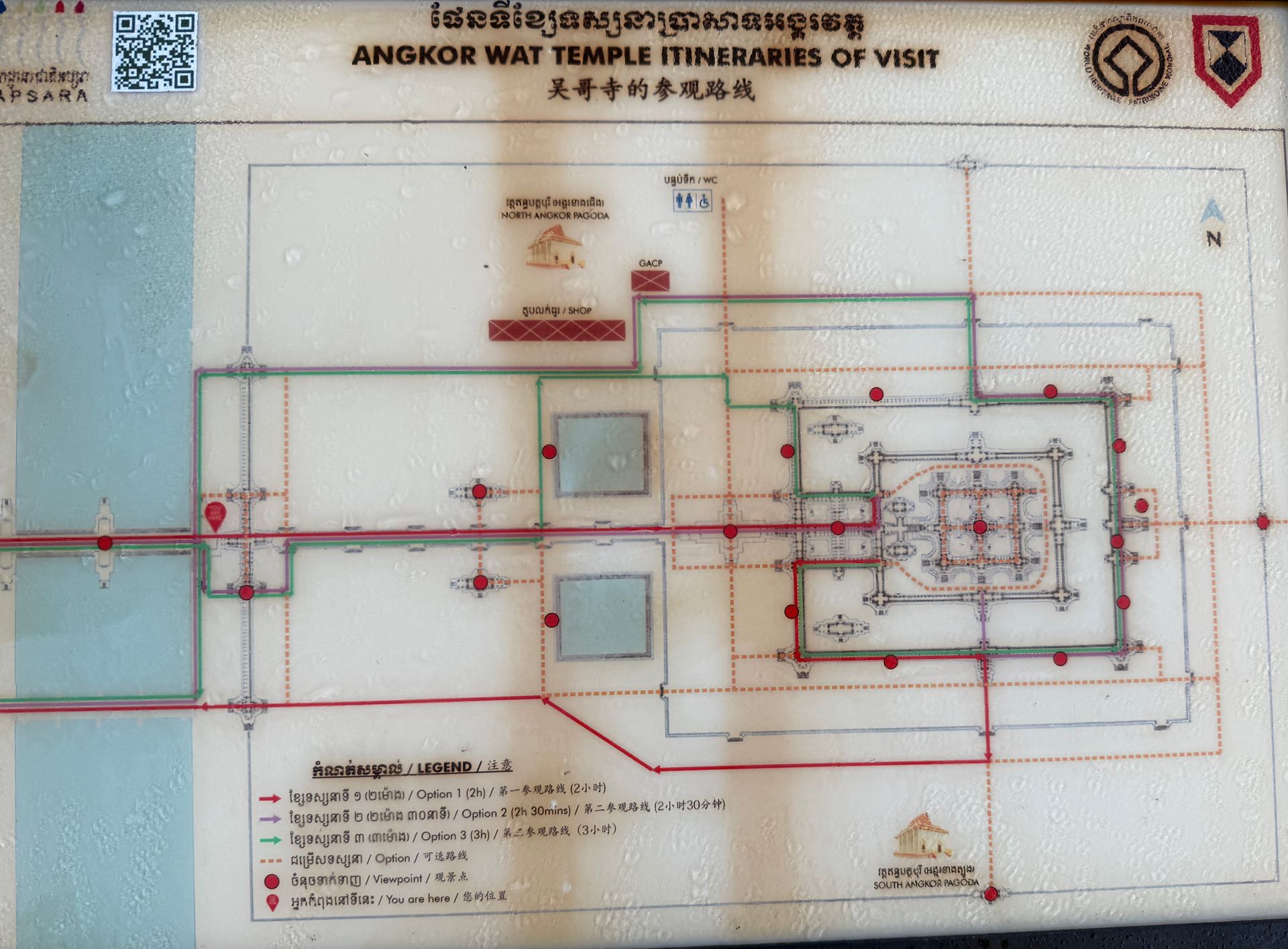
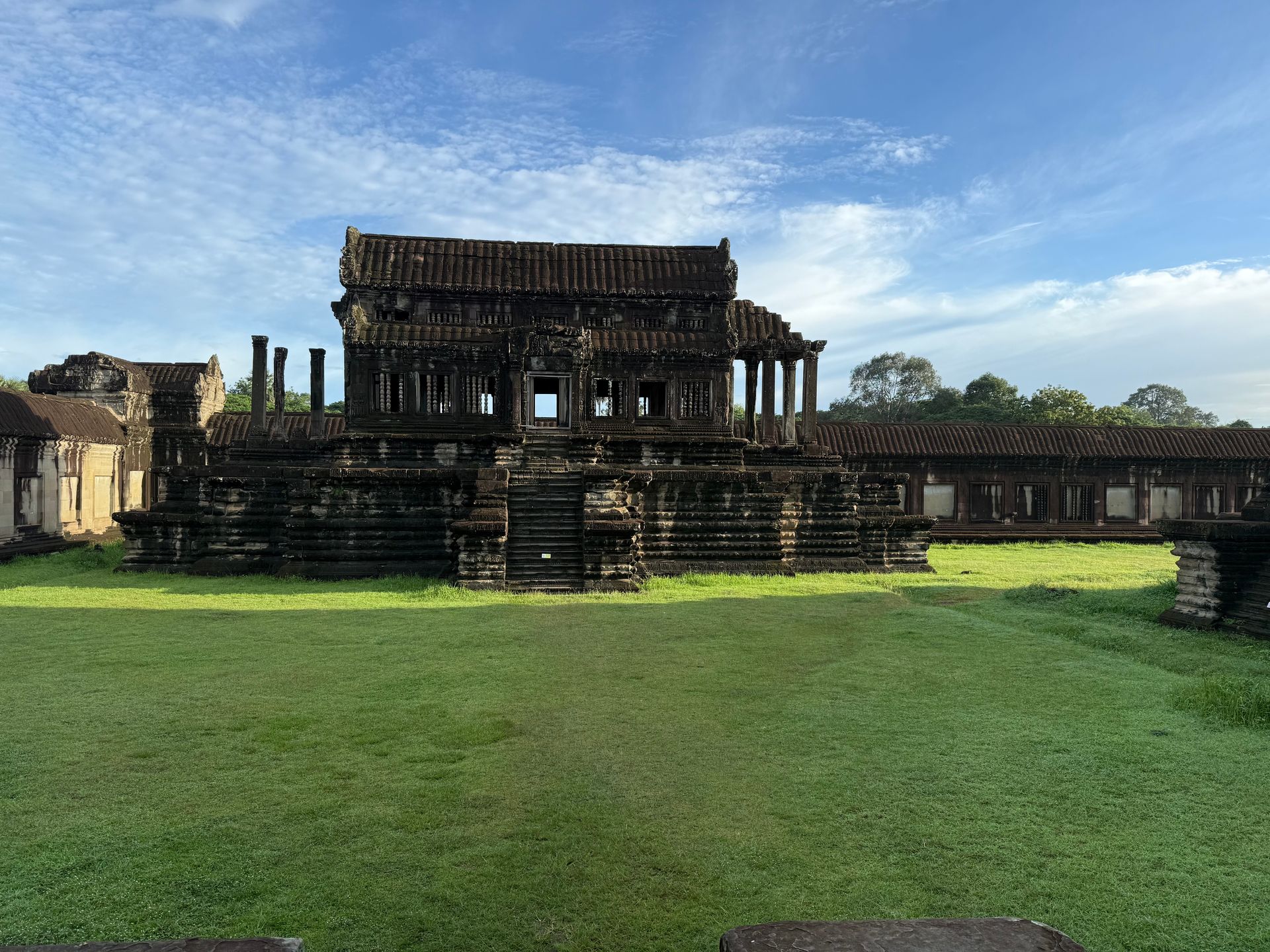
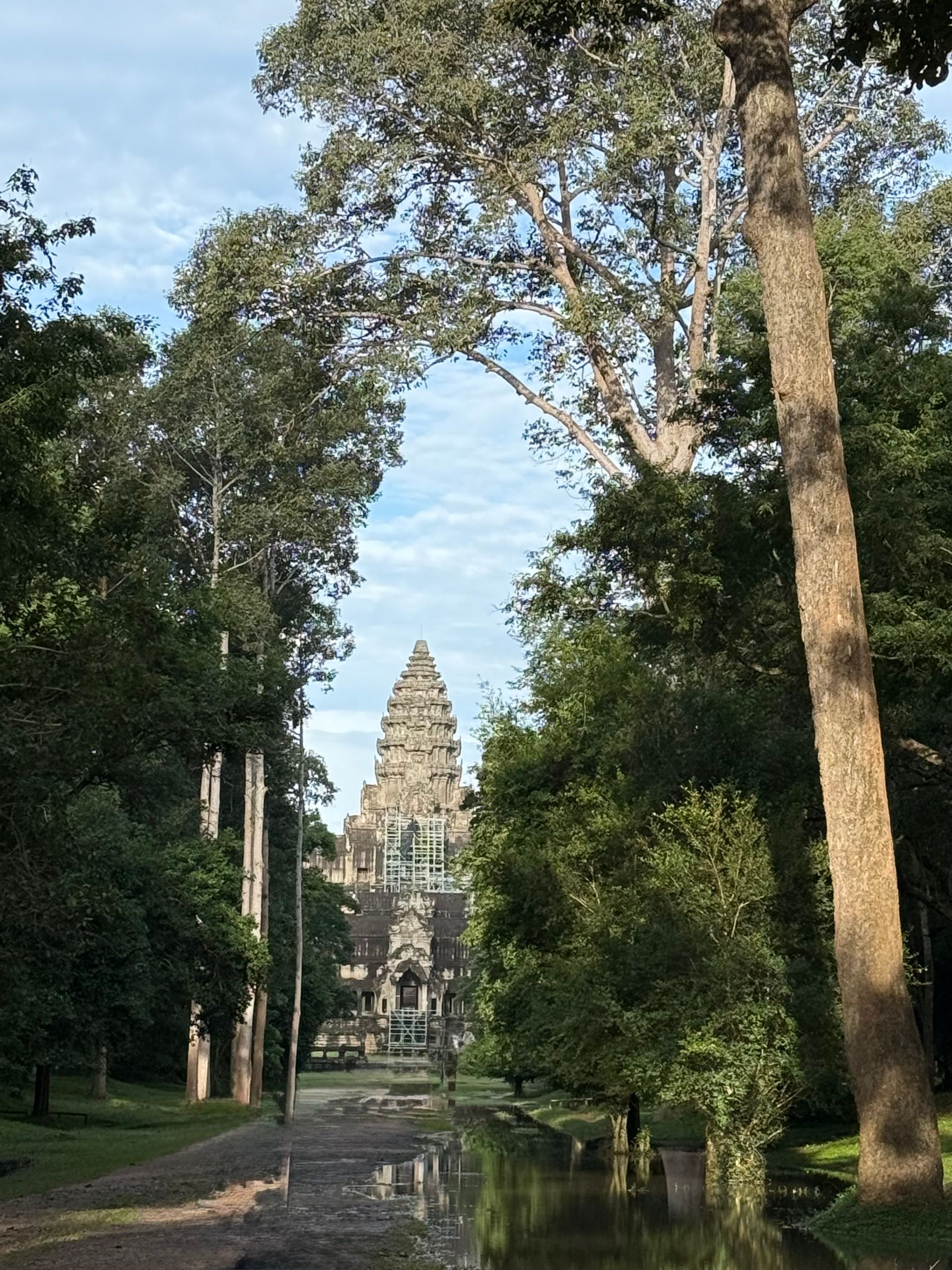
Angkor Wat is the largest temple and the Capital of Angkor World Heritage. We hired a separate English speaking guide and tuktuk driver for the morning to escort us though this massive complex. We entered Angkor temple thru the west entry, the same one King Suryavarman would have entered via elephant, back in 1150, when it was built as a Hindu temple, dedicated to Vishnu. It took roughly 38 years to build, starting in 1113 and was done with lots of elephants, thousands of men and a bamboo pulley system, maneuvering the giant blocks of lava stone for the base and sandstone, for the structure, all quarried from the surrounding area.
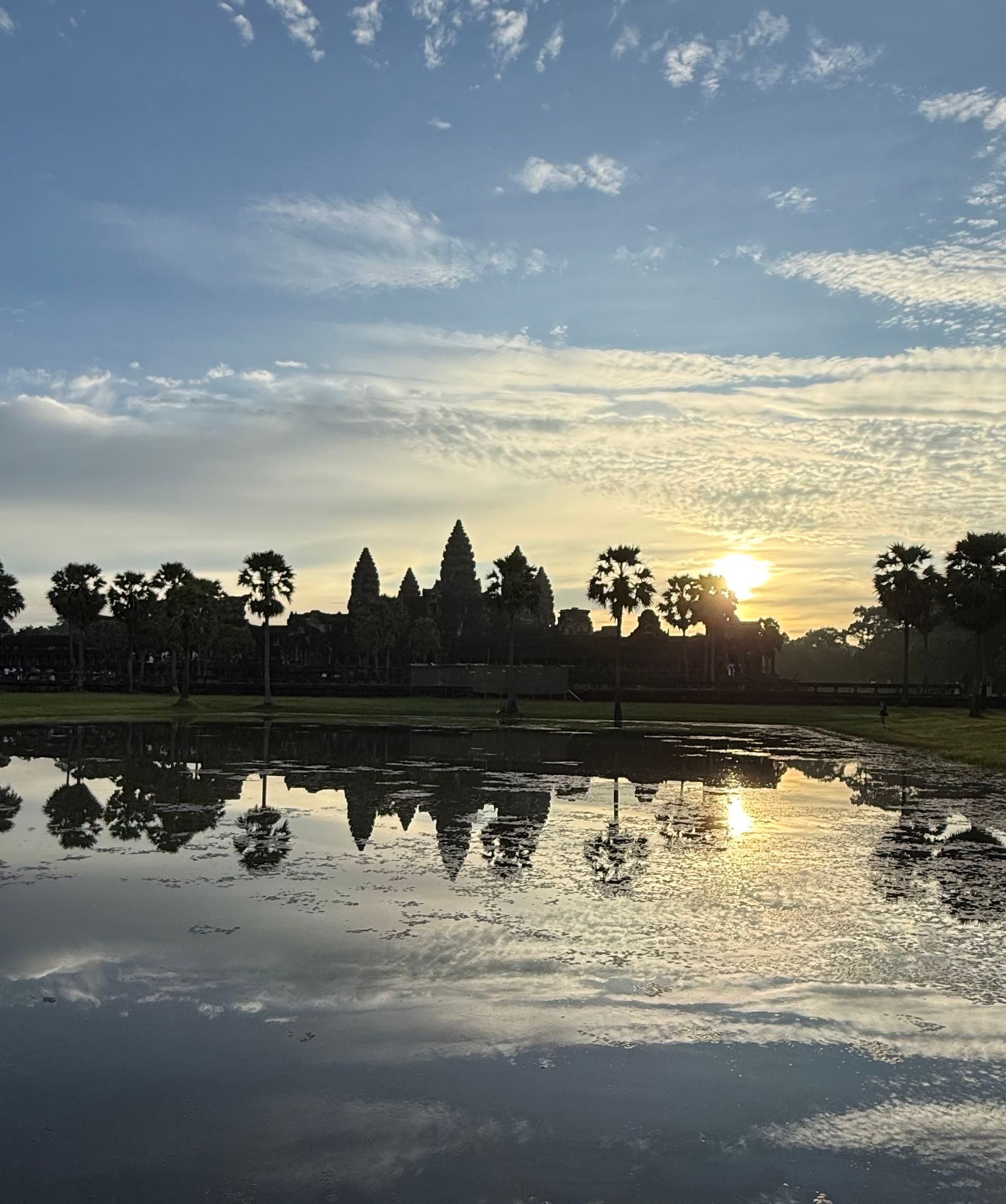
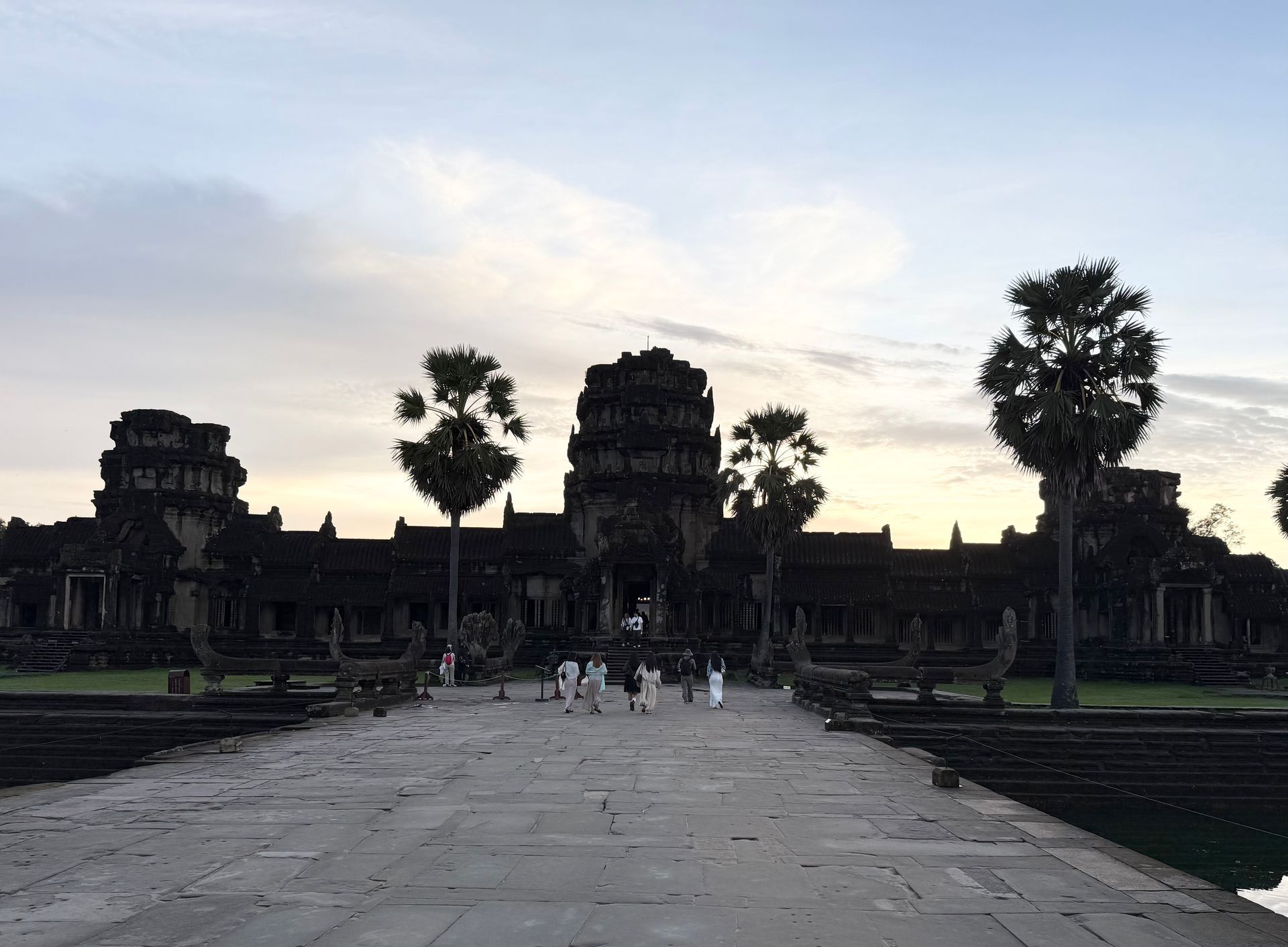
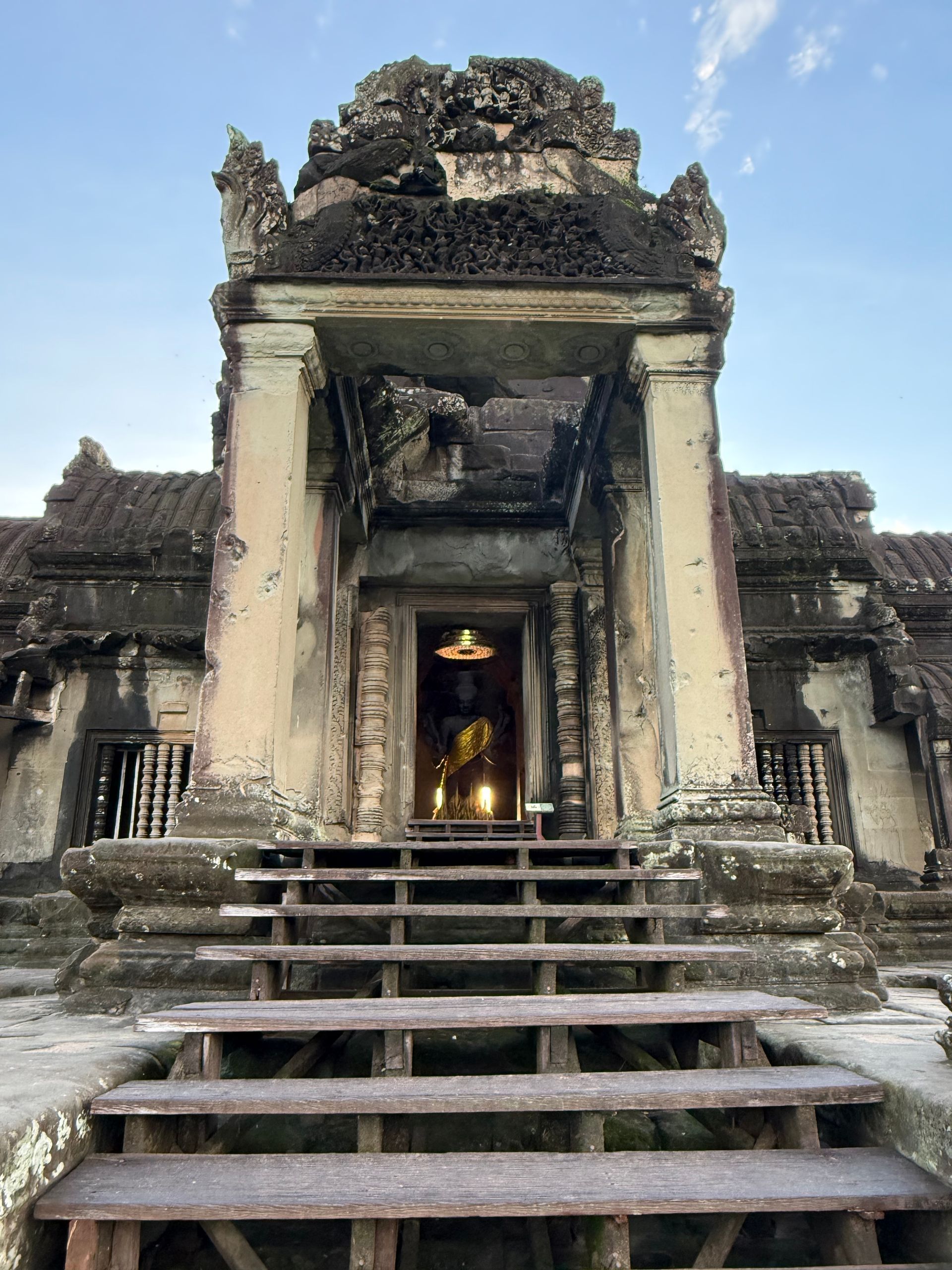
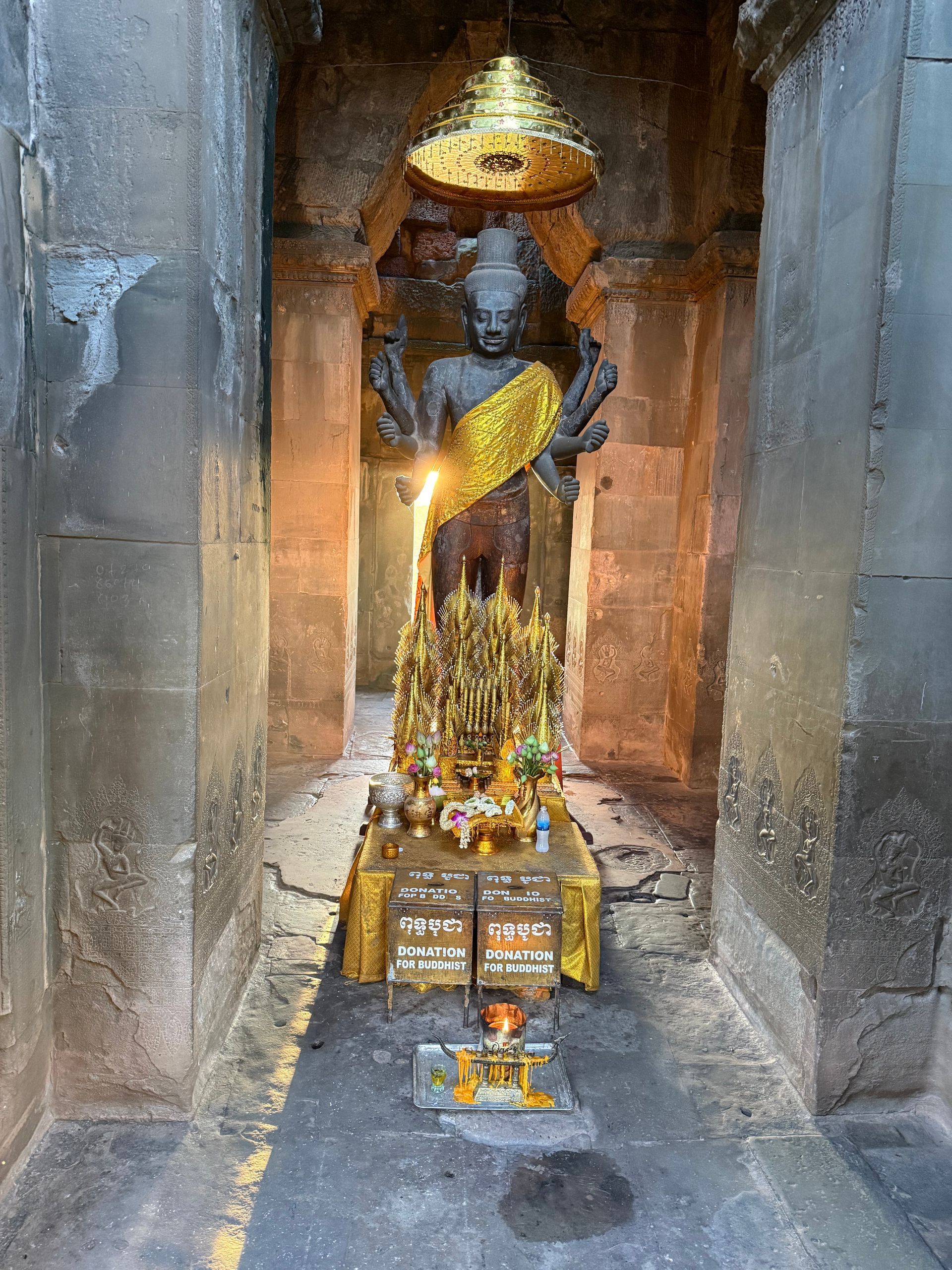
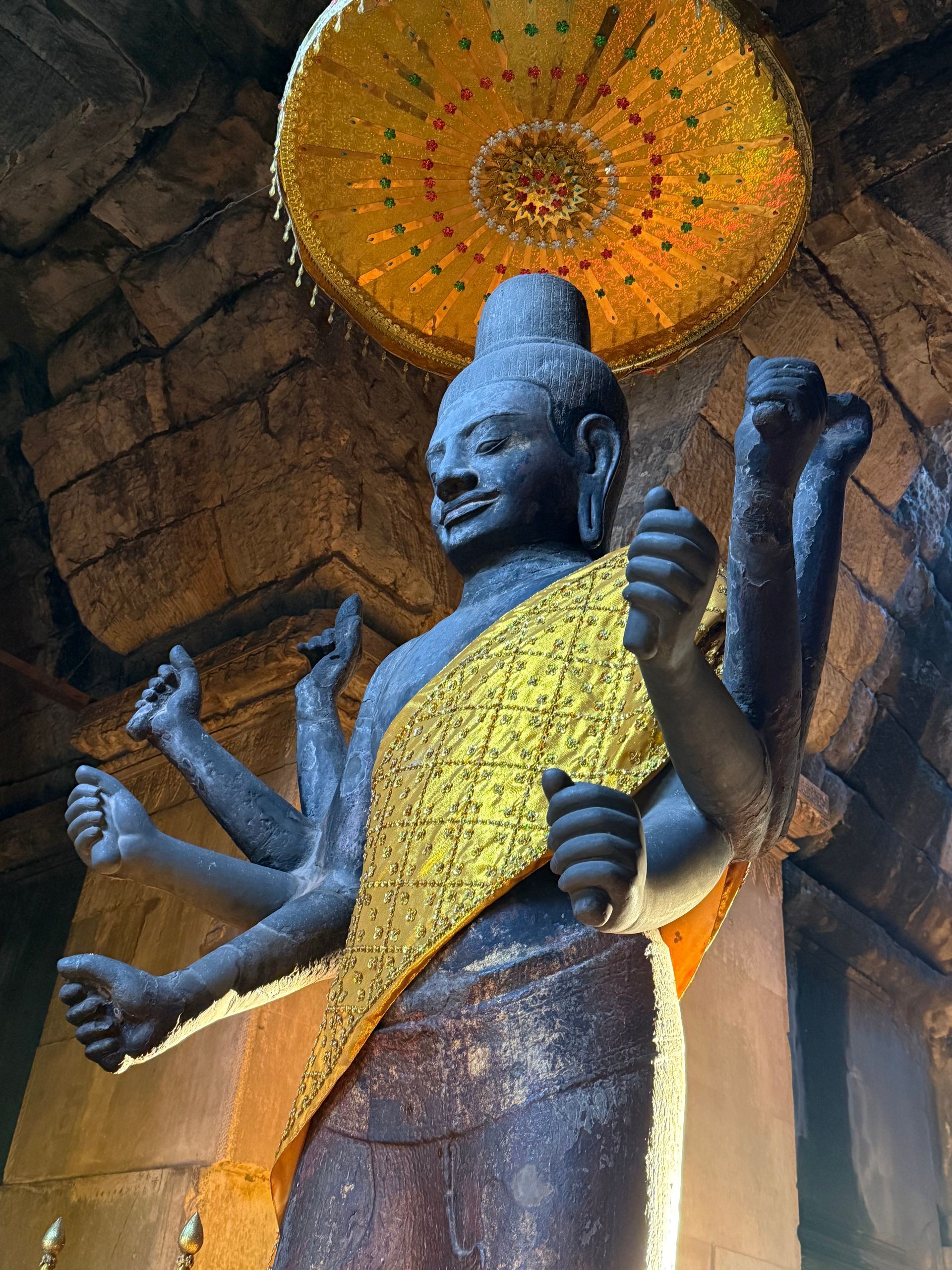
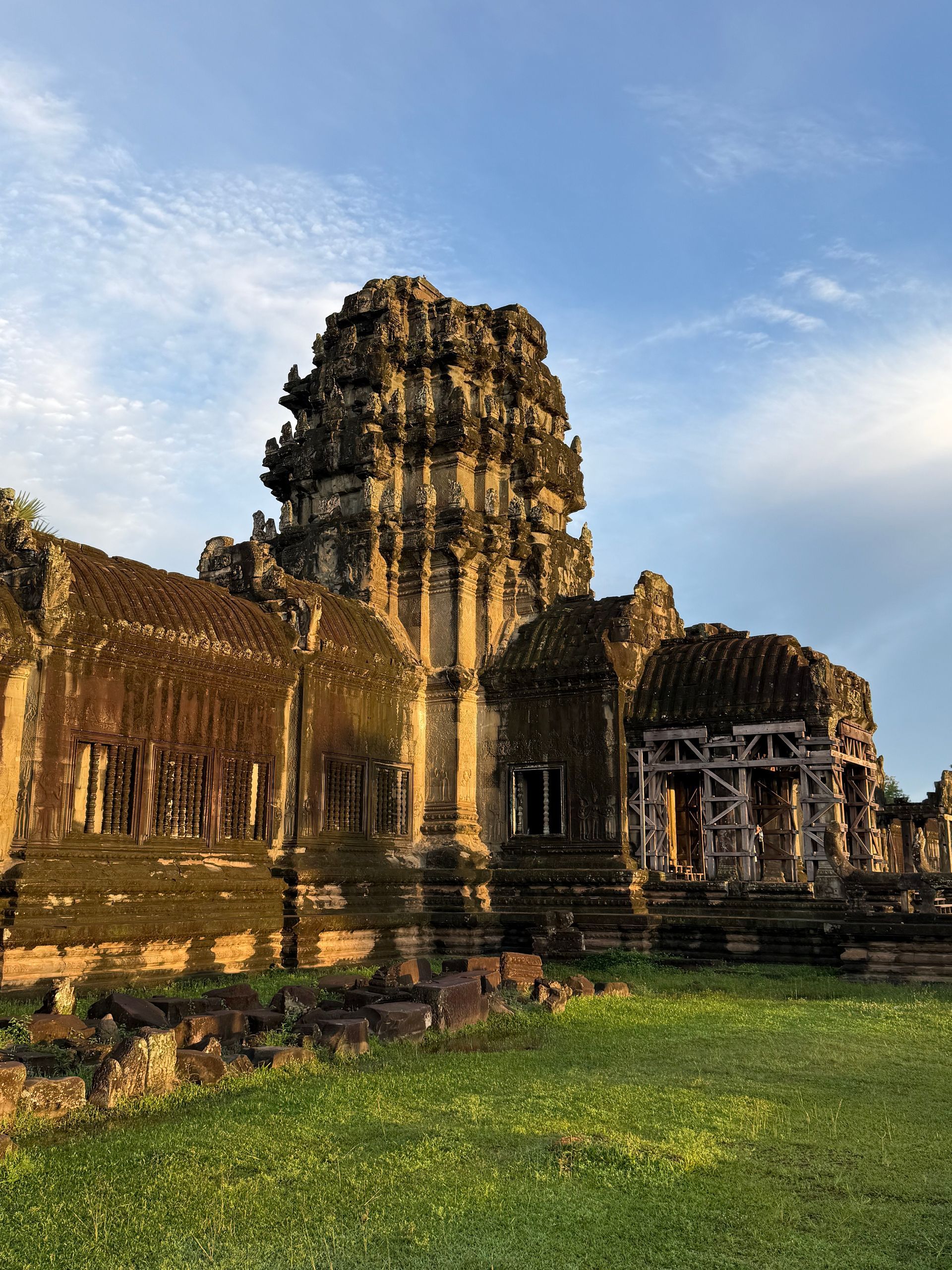
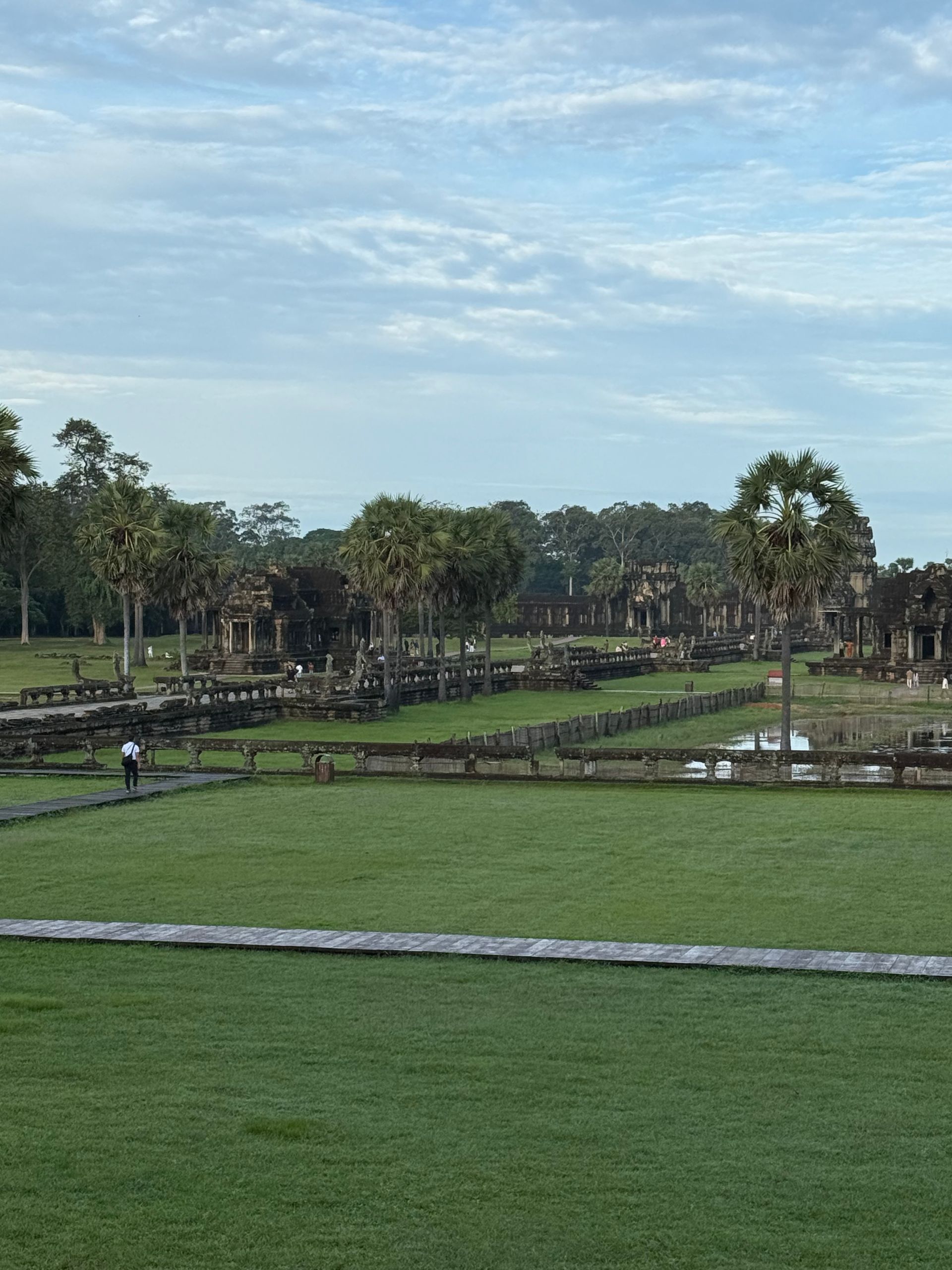
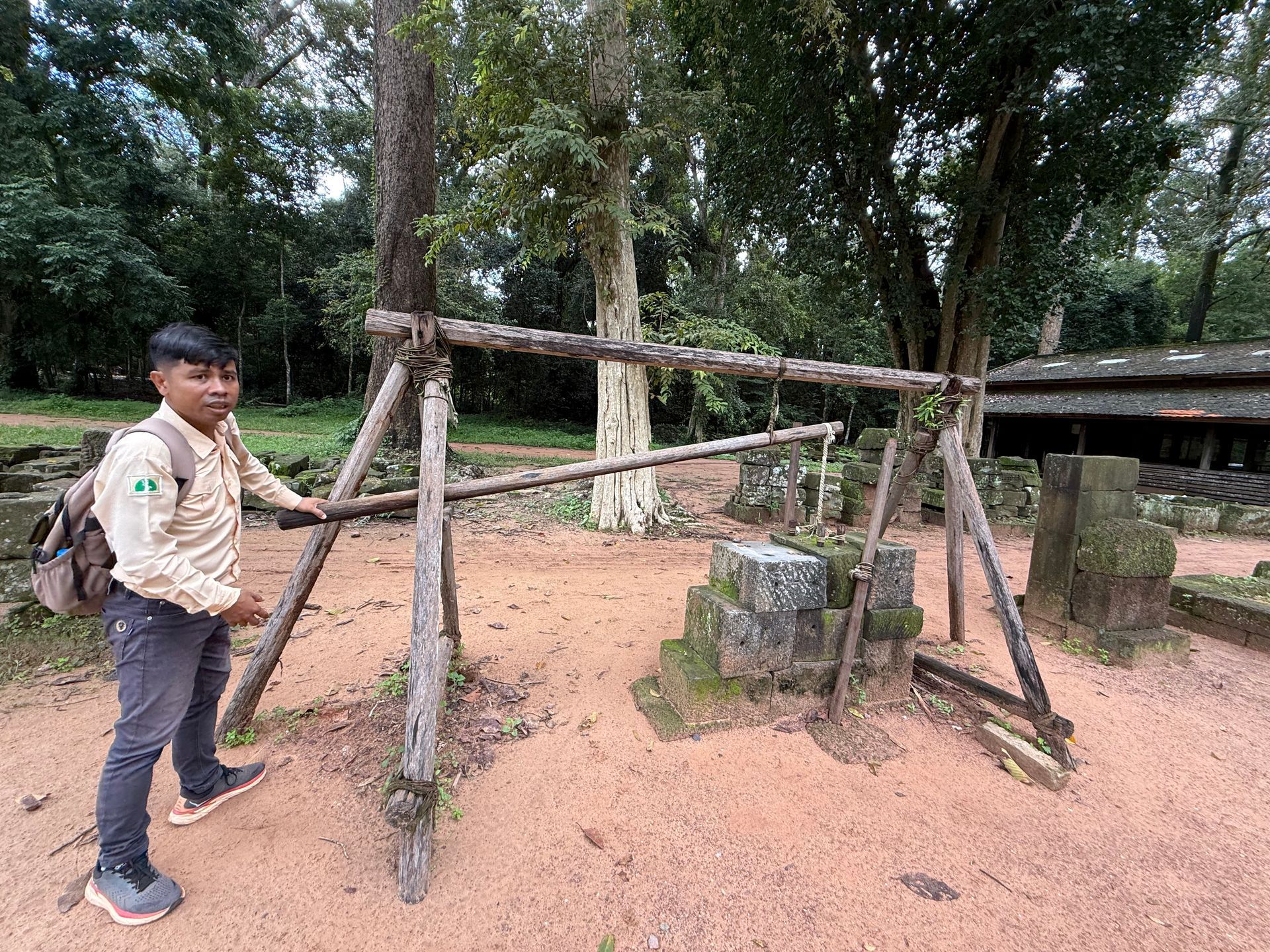
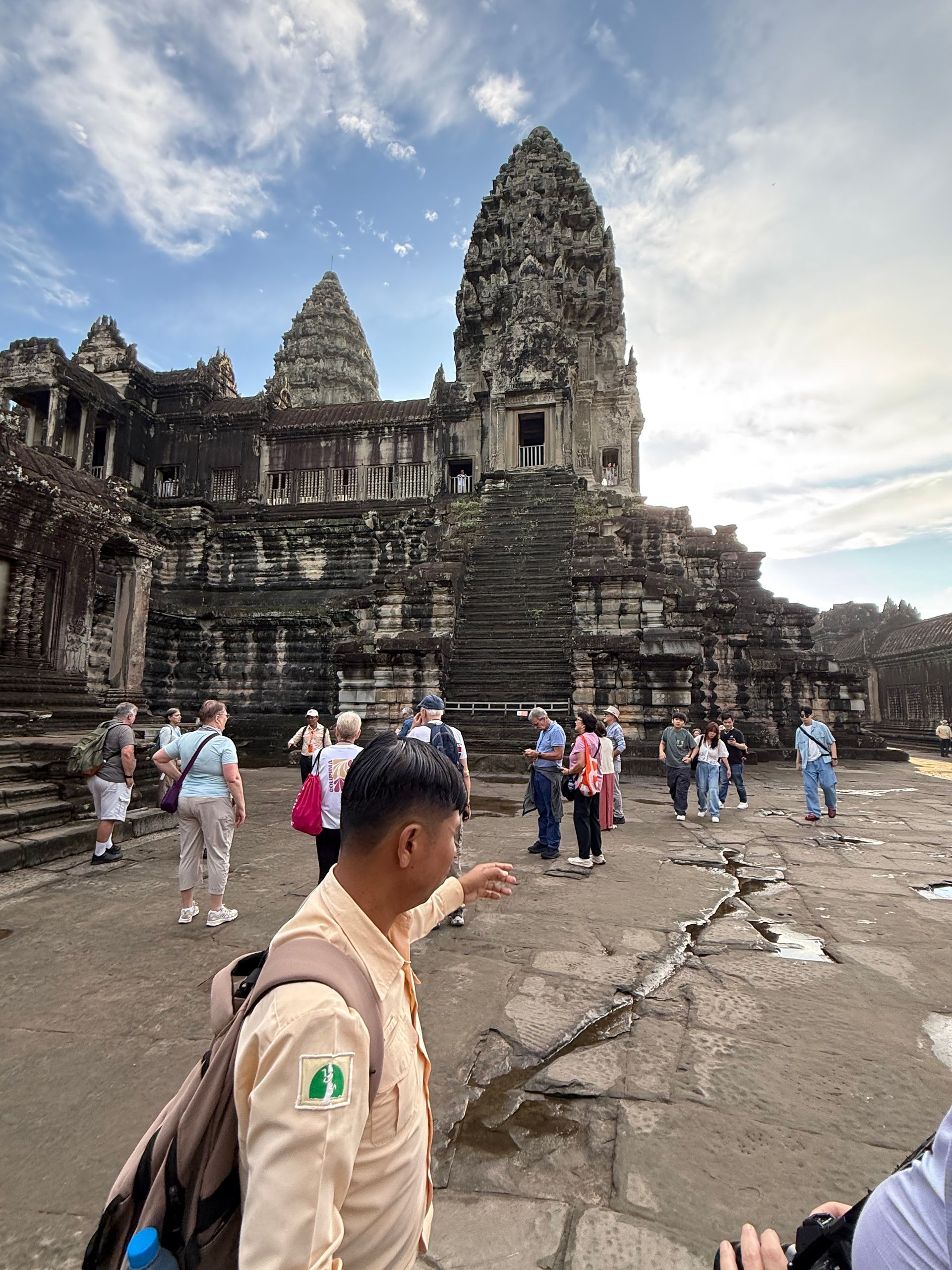
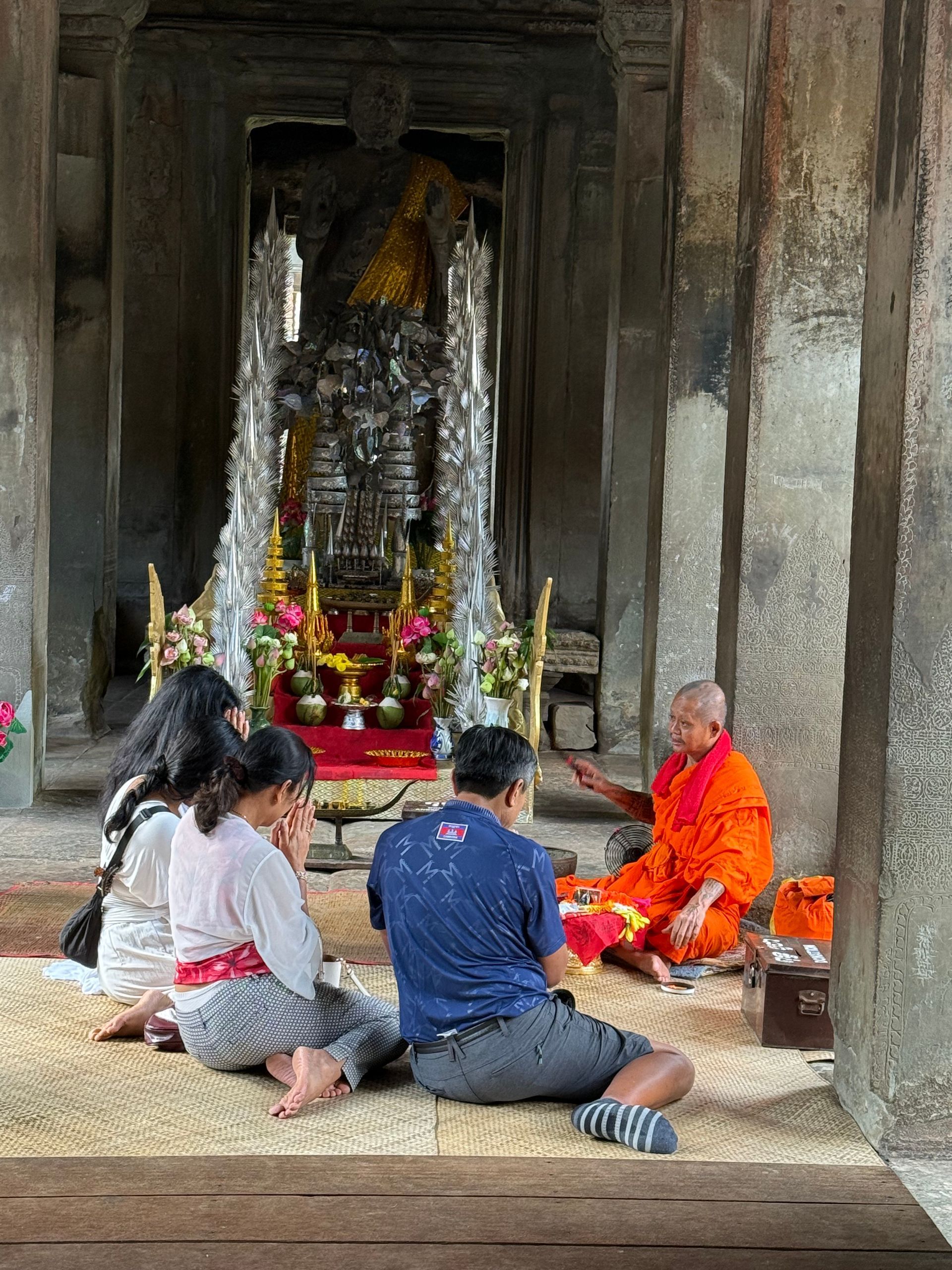
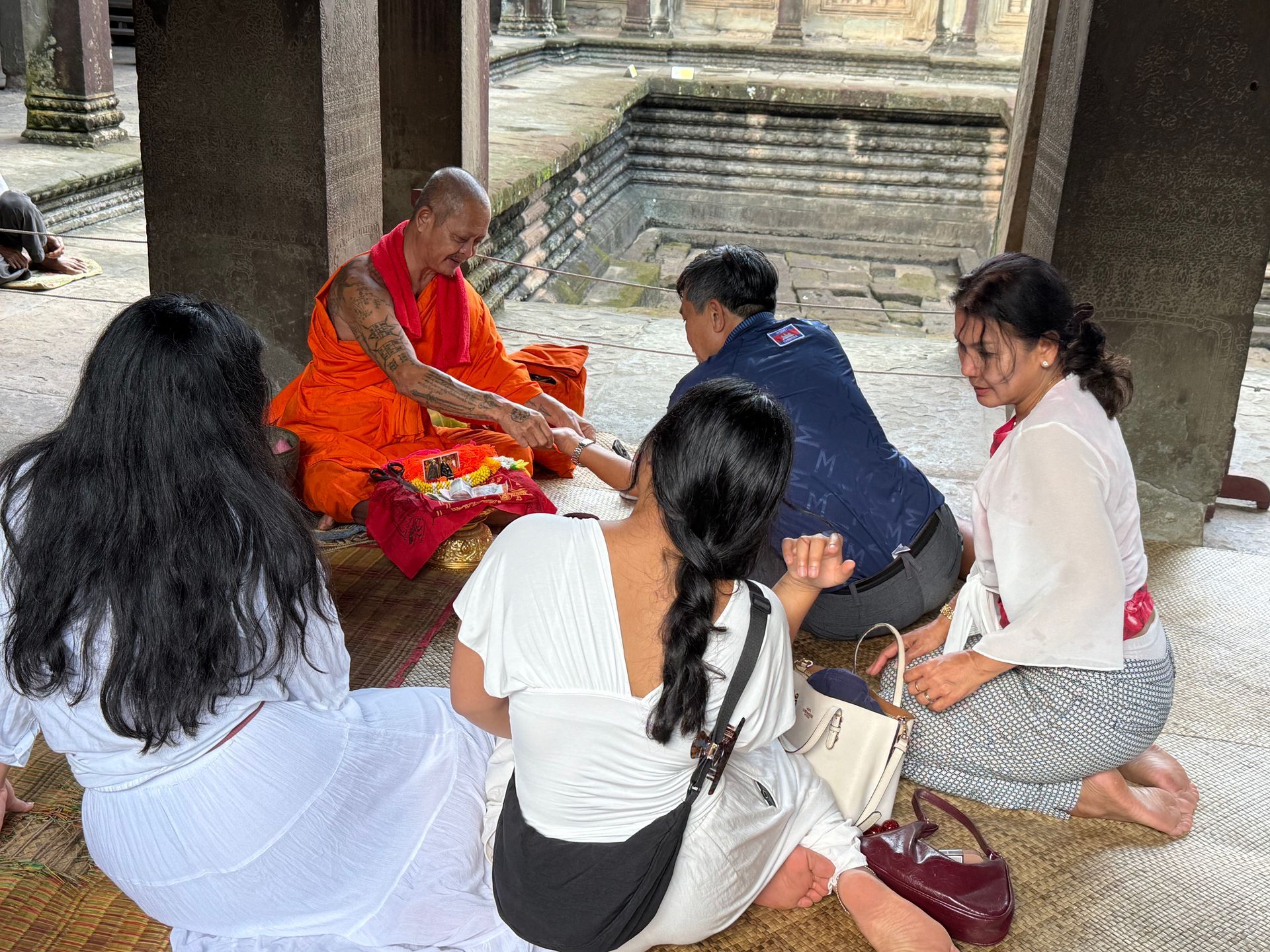
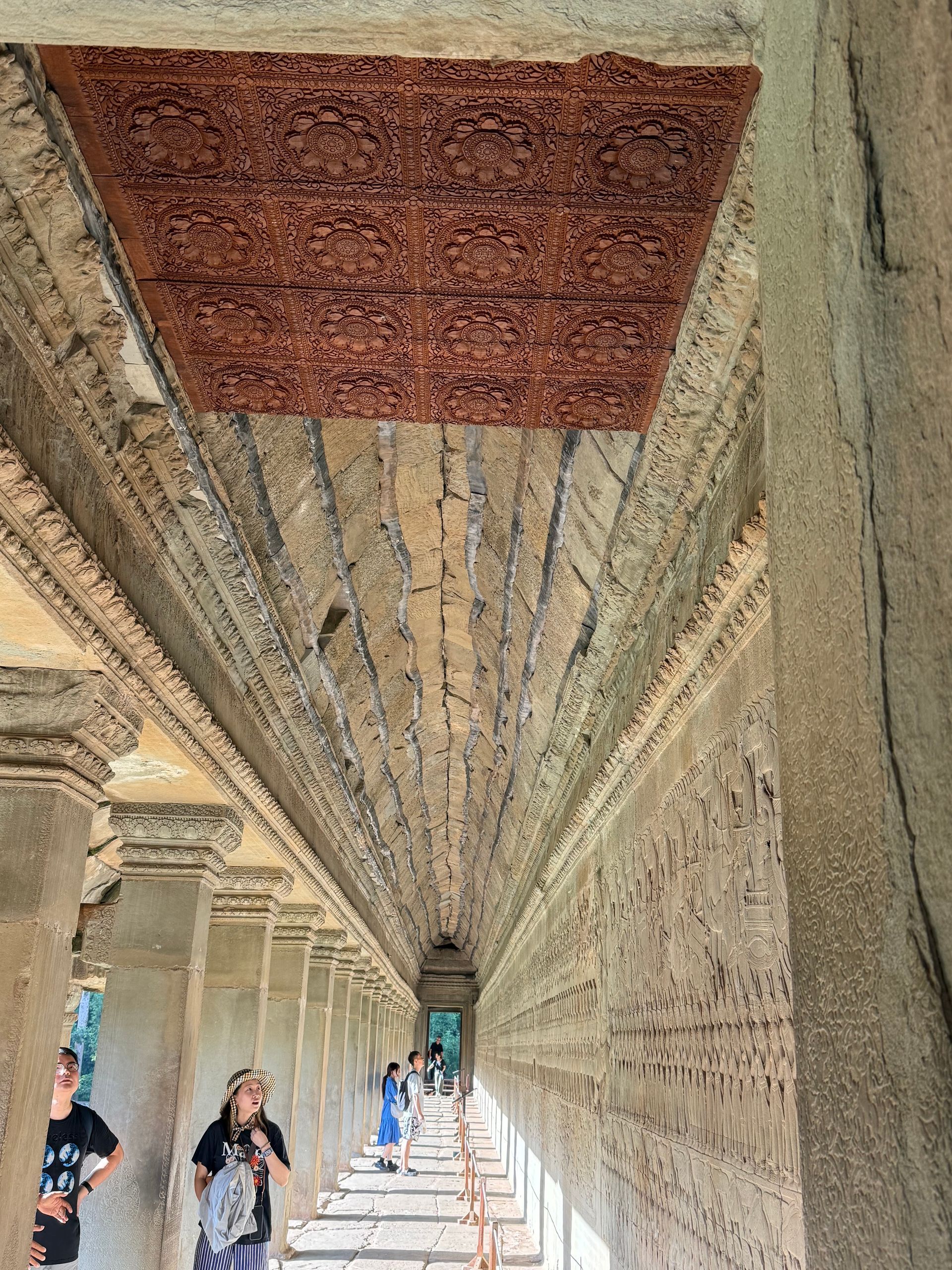
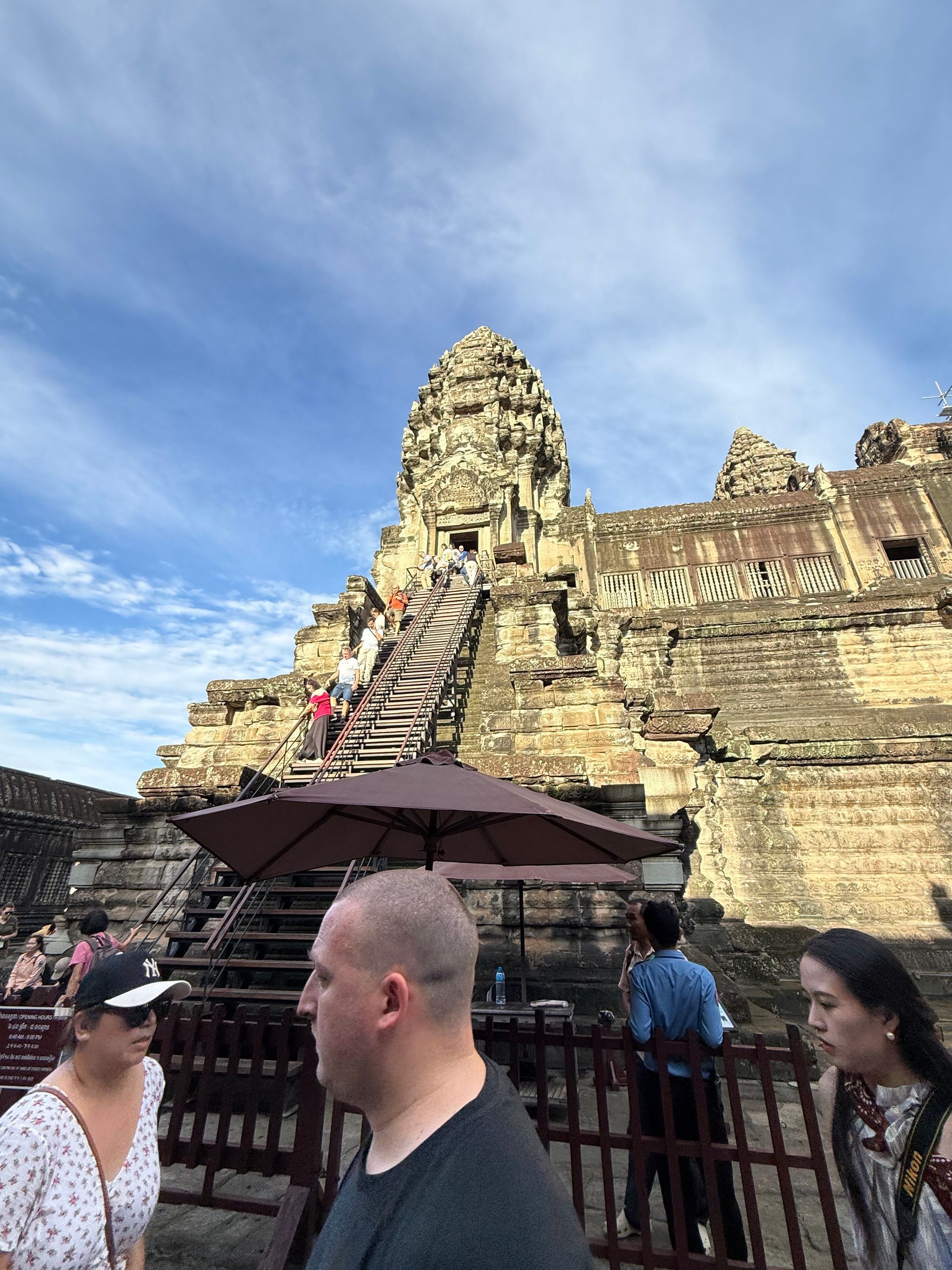
From the late 13th Century onward, the complex was gradually transformed into a Buddhist temple as Khmer kings adopted Buddhism. Angkor Wat has remained a Buddhist monastery and an active center of Buddhist worship into the present day. It is noted for its monumental scale and extensive bas reliefs (carvings). It is a symbol of Cambodia and appears on the national flag.



View more
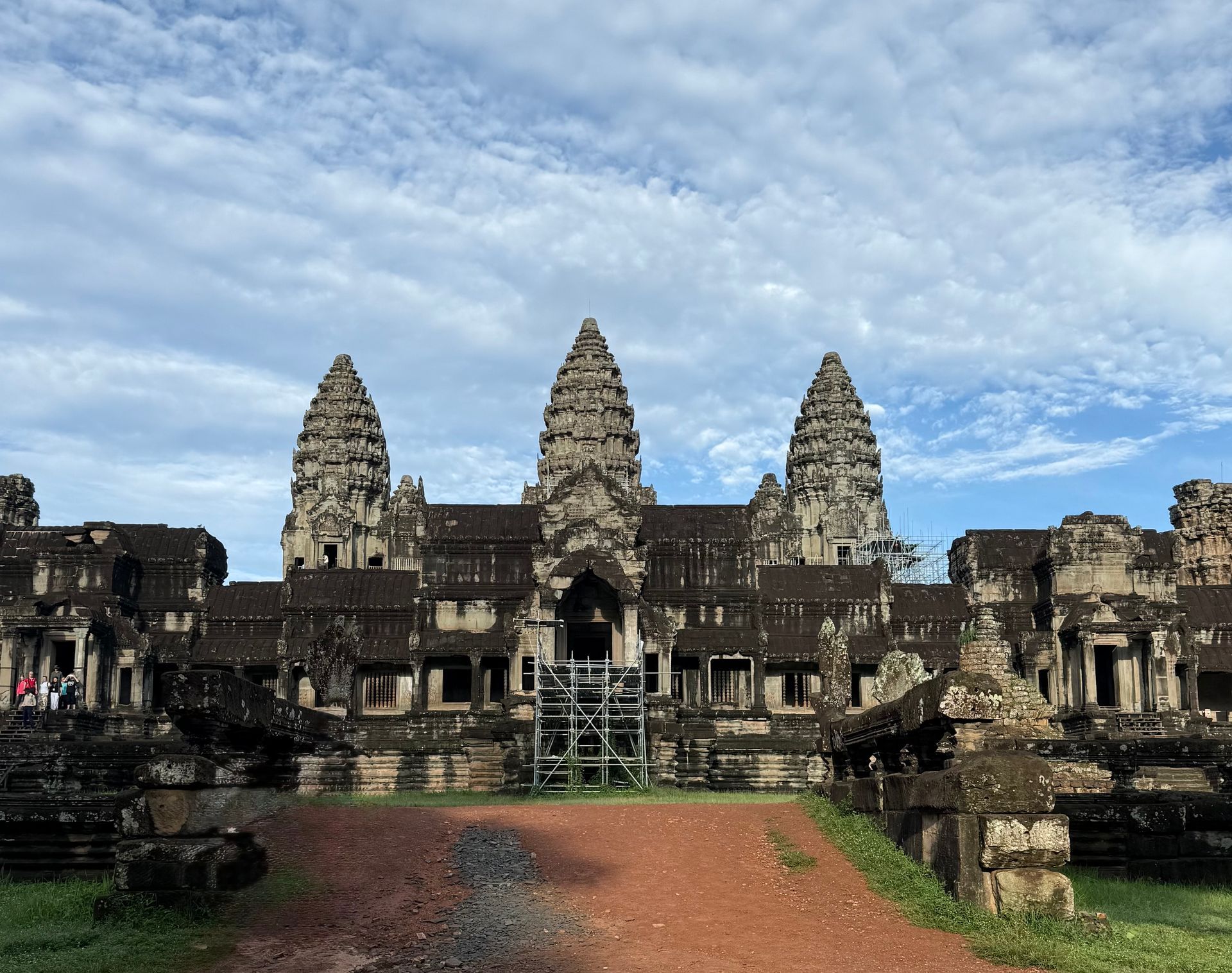
Our last glimpses as we exit hours later throught the east gate.
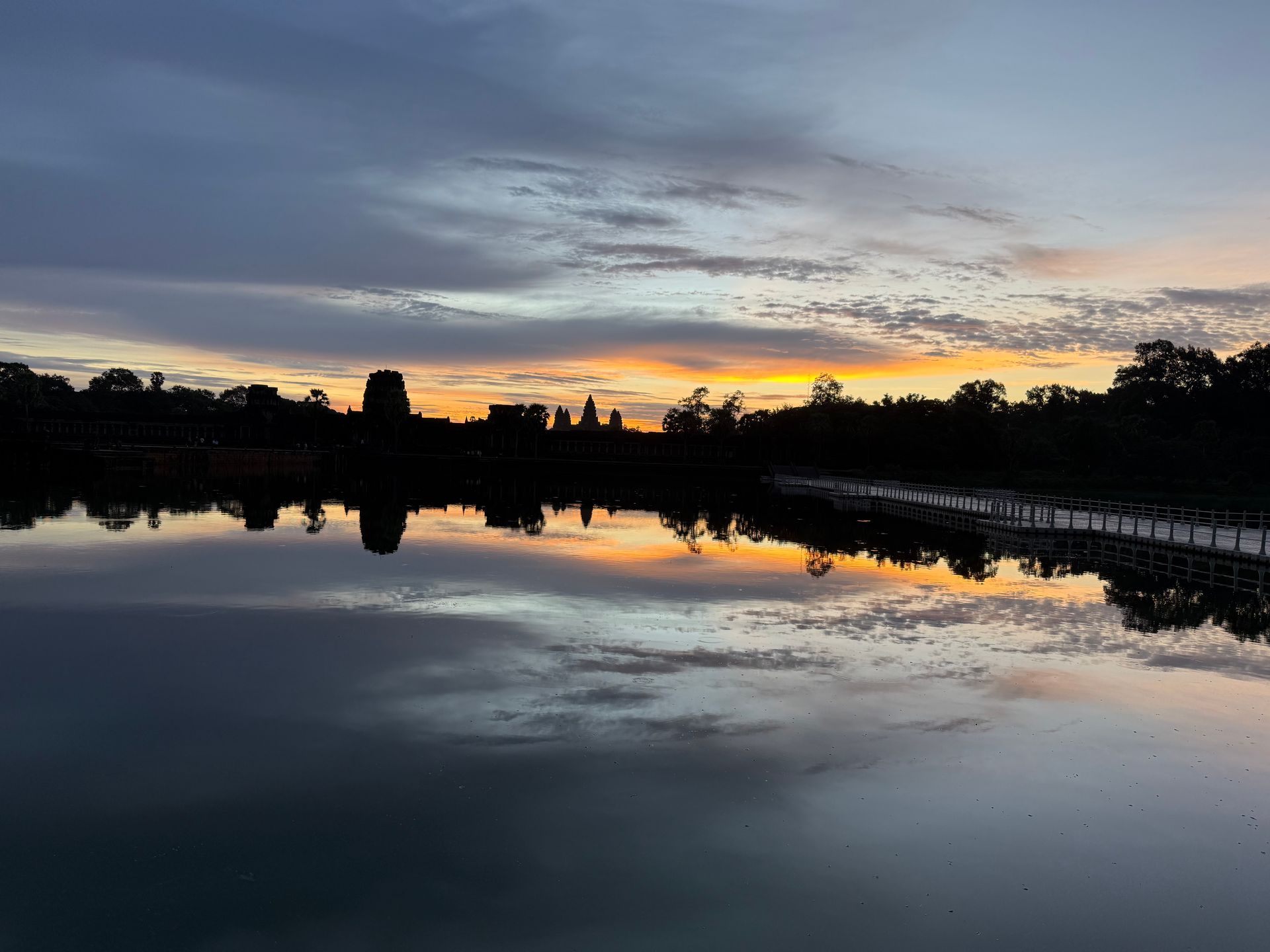
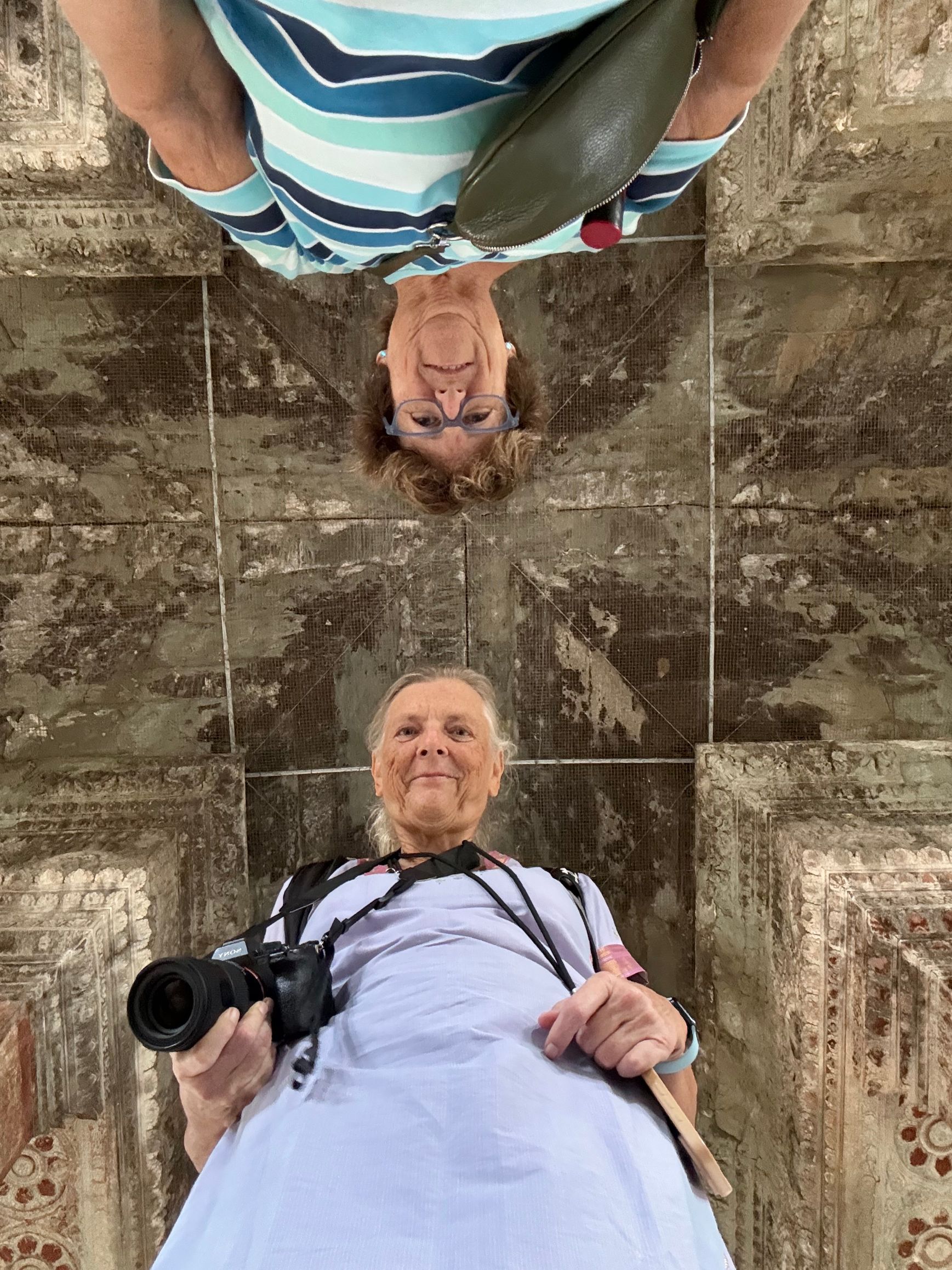
I am doing this getaway with my good buddy Basia, from the Ship. It has worked out beautifully, for a totally last minute throw together. We thought we would be dealing with rain the whole time, but we have been so blessed! Sunset this morning was stunning! Well worth getting up at 4 a.m.!
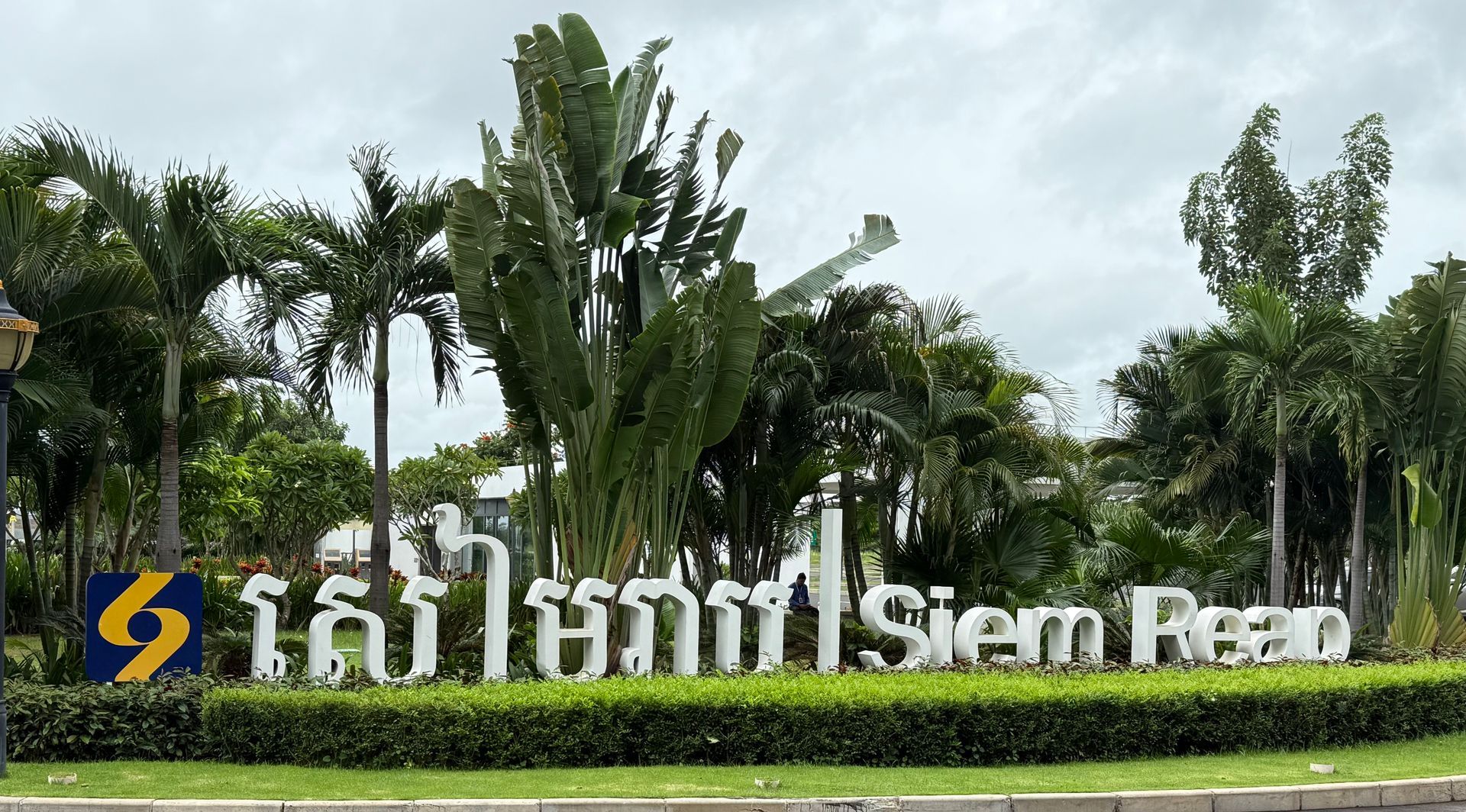
I heard you can't come to Cambodia without seeing Angkor Wat, the largest religious monument in the World and a masterpiece of ancient human engineering, art and spiritual design. So even though I am "templed out"; it's the heaviest part of the Cambodian rainy season (May thru October) and Siem Reap , where Angkor Wat is located, is a hour away by air or 7+ hours by car, I find myself on Air Cambodia , from our port in Sihanoukville , with 40+ ship people traveling to Siem Reap for a quick visit! I'll probably never get here again!
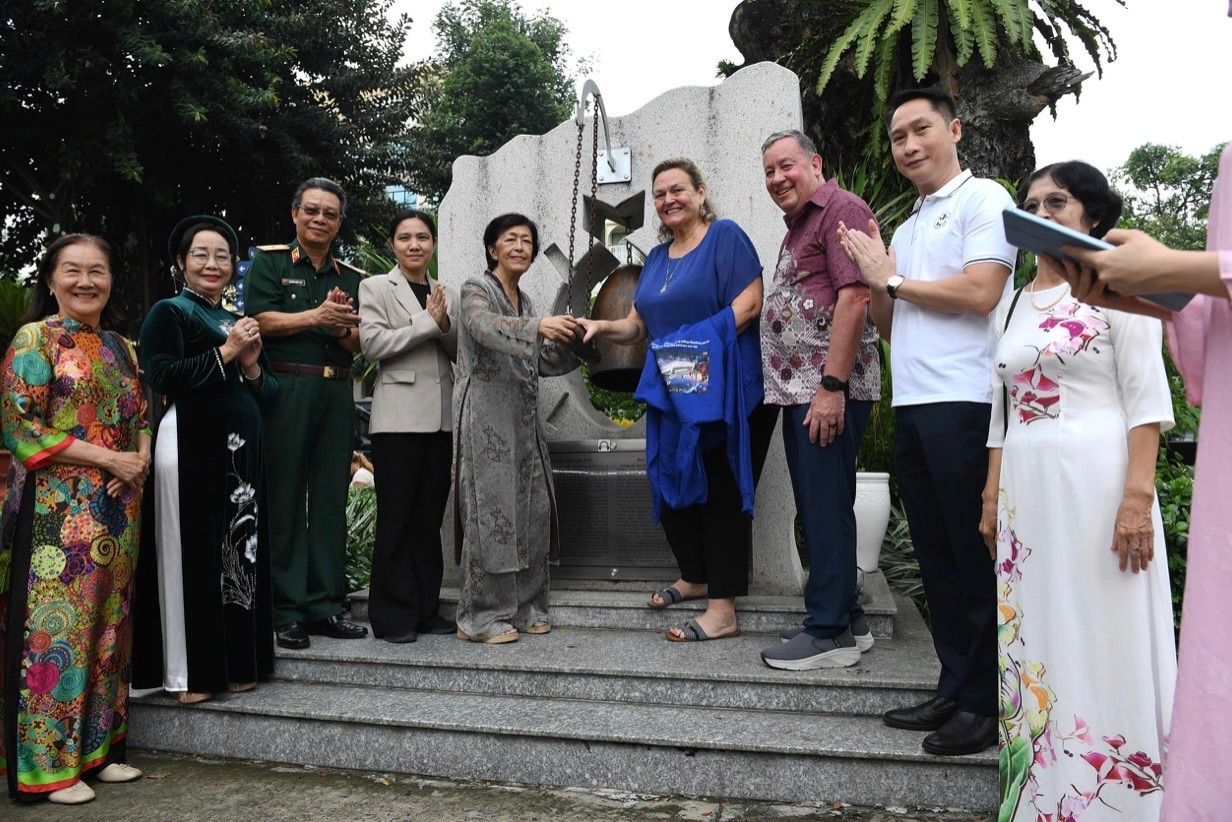
I joined in with 49 other Ship Residents to attend an event the next day at The Vietnam War Remnants Museum also known as The Museum for Peace. This was put together by our residents as part of our ongoing efforts with the Ship's Odyssey Rotary Club and our Global Flagship of Peace initiative.