September 16, 2026
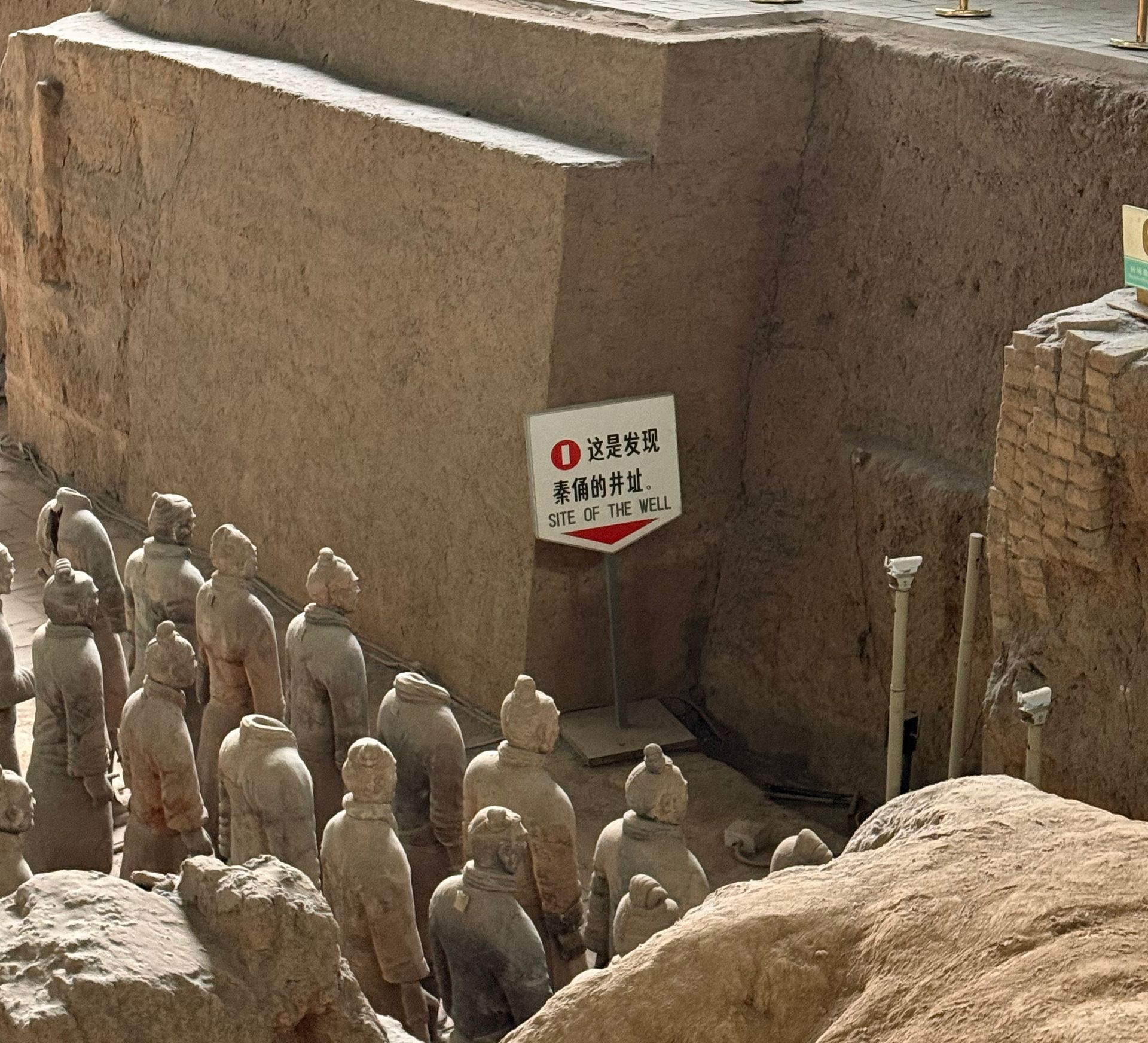
In March of 1974, some local farmers outside Xi'An, China are digging a well and accidentally hit one of the great archaeological sites in the World! They were paid one day's wages for the find, roughly 4 USD! The Terracotta Army was dubbed the 8th Wonder of the World by France's President in 1980 when he came to visit and wanted to meet the farmers, the oldest was then, 89 years old.
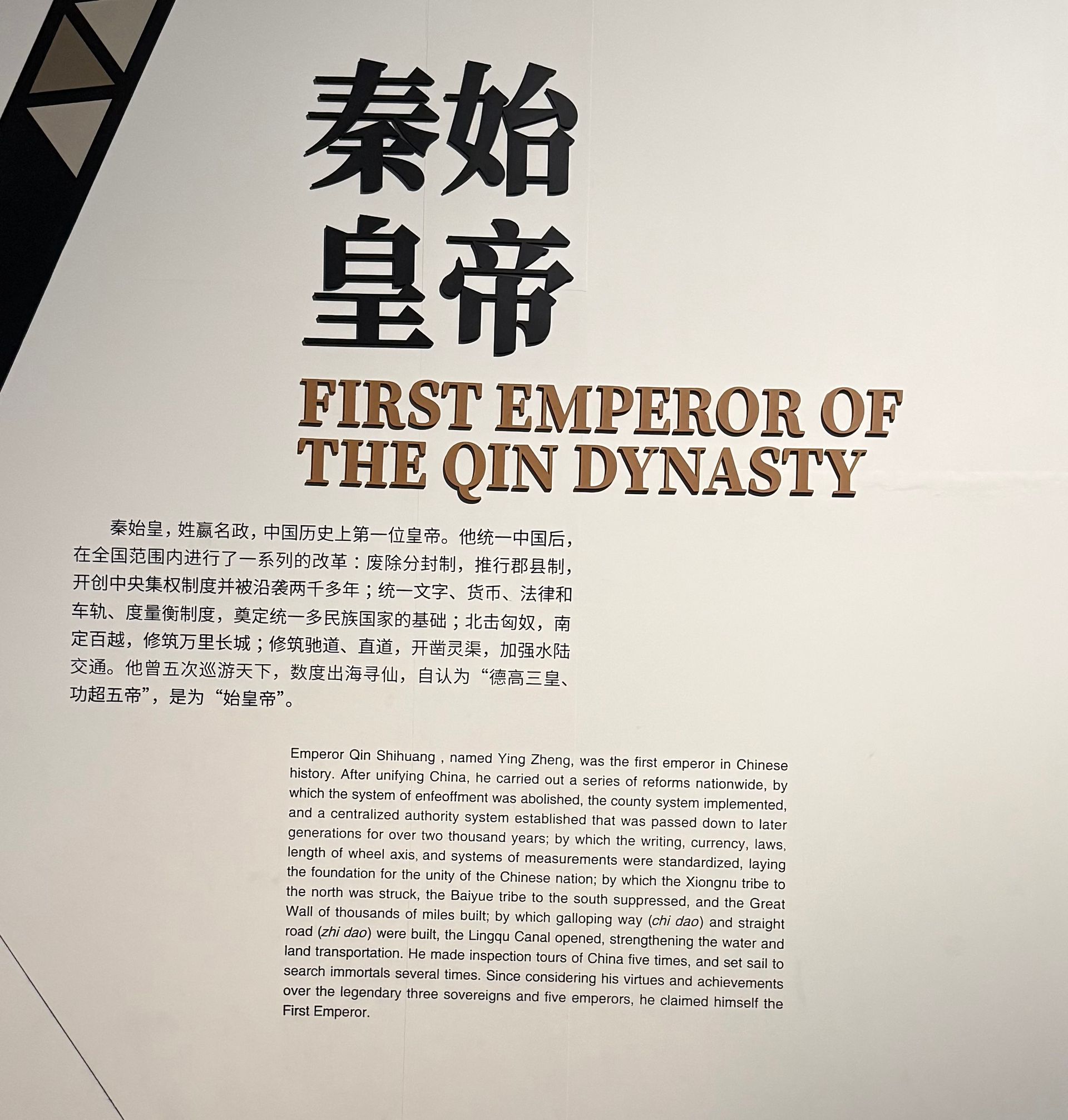
So how it all begins. In 259 B.C. Qin Shi Huang is born. He becomes King at age 13 and starts building his tomb in 246 B.C. Back then it was believed that you needed protection in the afterlife. Prior to this time period, earlier rulers used live human sacrifices, but clay statues replaced this practice. The Mausoleum of Qin Shi Huang's was constructed over 38 years and is buried underneath a 249 foot mound shaped, like a truncated pyramid shown below. Records from 91 B.C. by the dynasty historian, indicate thousands of precious stones were inlaid in the ceiling to resemble a night sky. Craftsmen also built simulated rivers and seas, of flowing liquid mercury, to represent the Yangtze, the Yellow River and the great Sea.
Today, scientist have confirmed there are massive concentrations of toxic mercury, vapor leaking through the Mausoleum. This is one of the main reasons the tomb has been left undisturbed. Technology does not currently exist to handle the toxins and this area also lays in a seismic zone. The Tomb is seven times larger than the size of the Forbidden City, making it the Biggest Tomb on Earth!
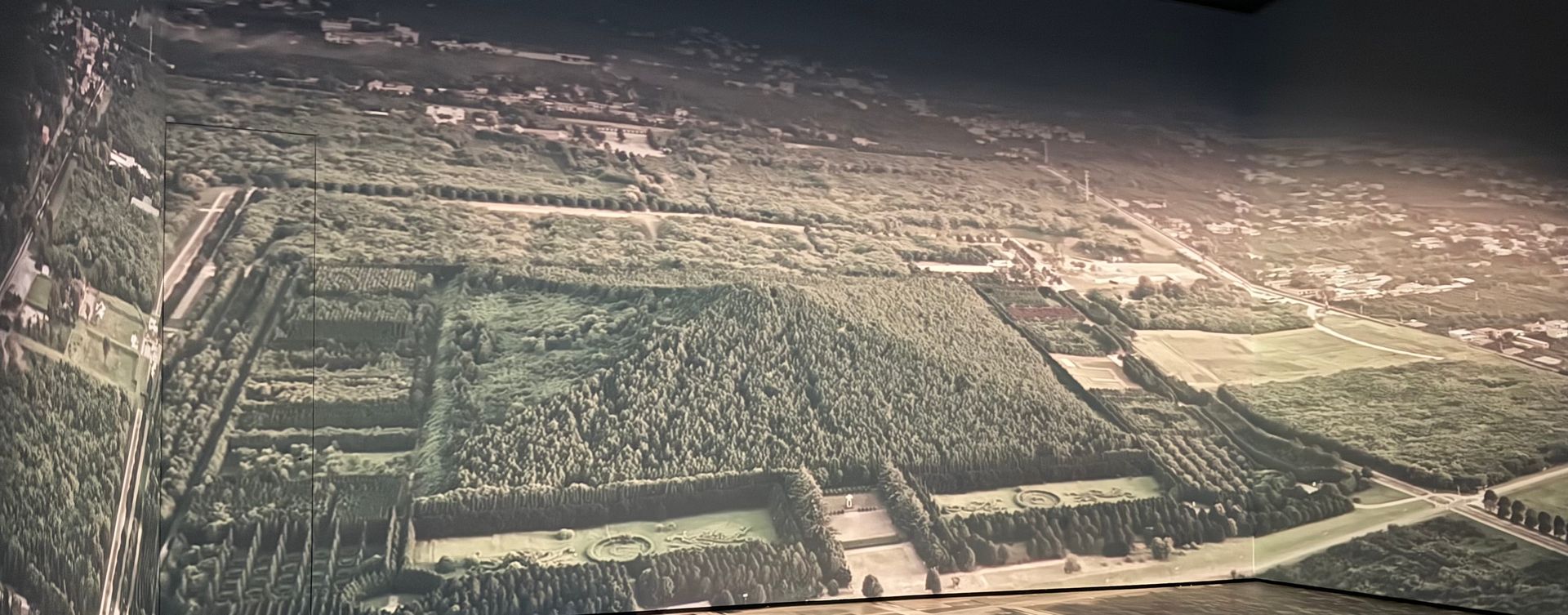
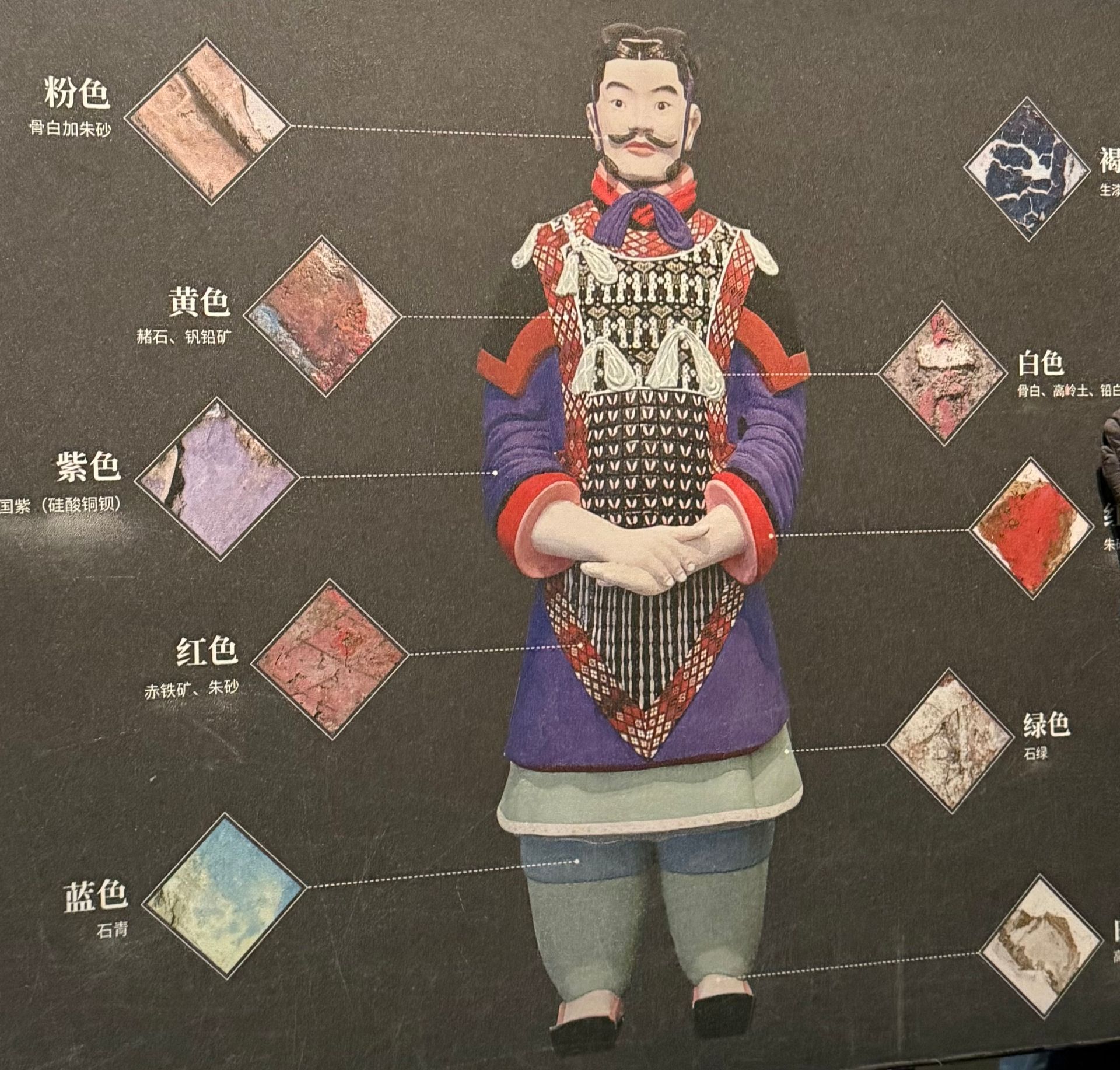
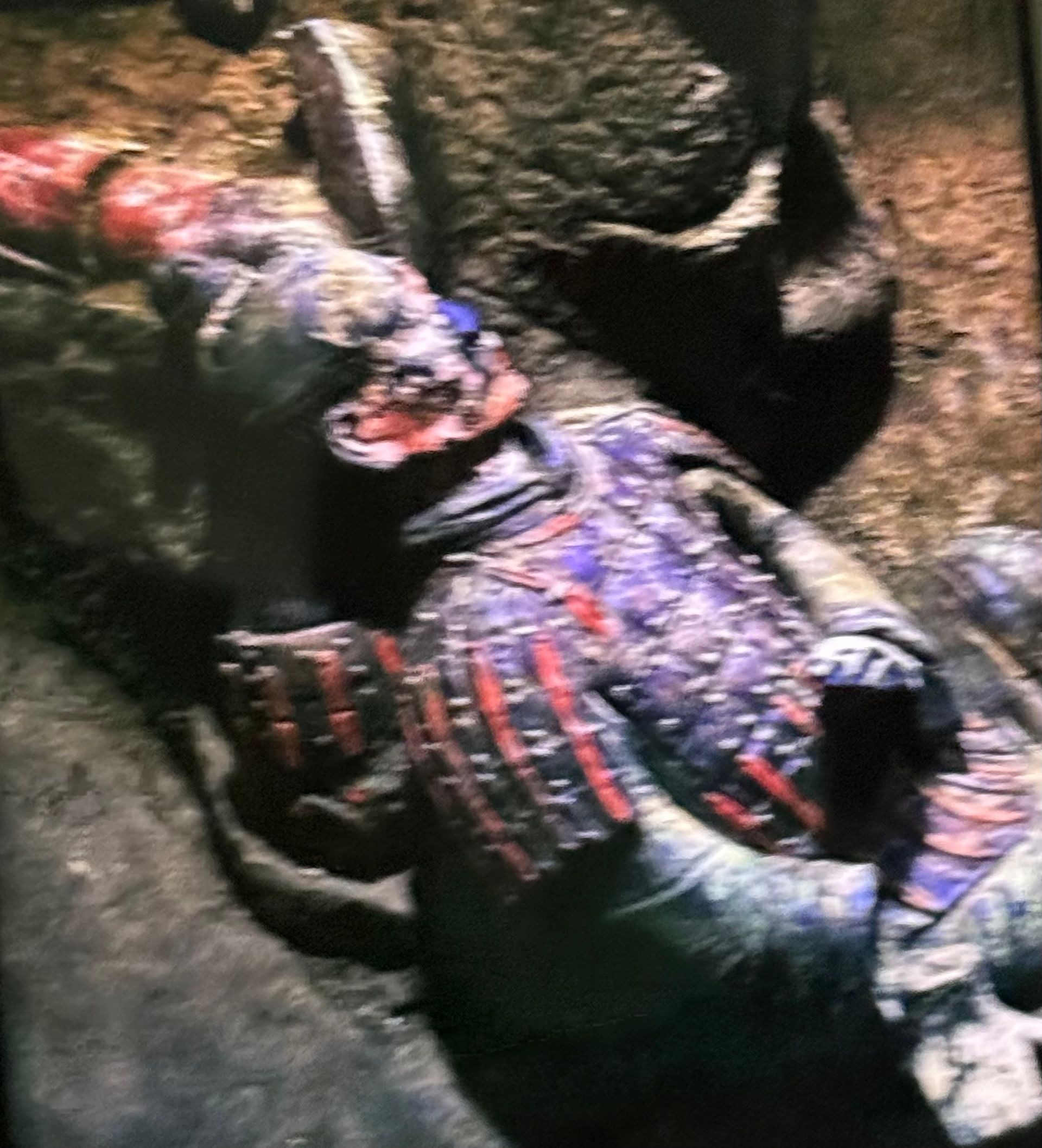
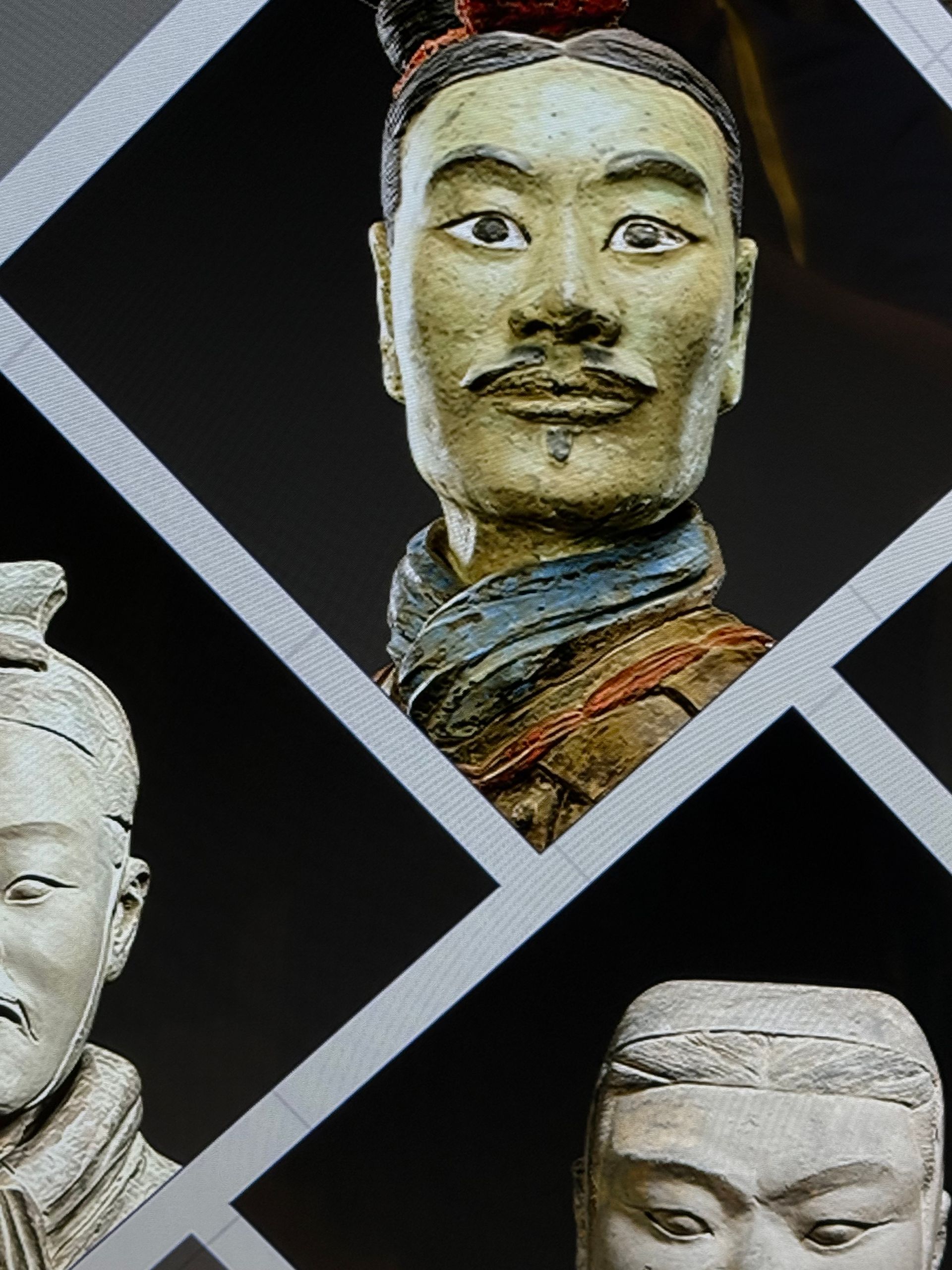
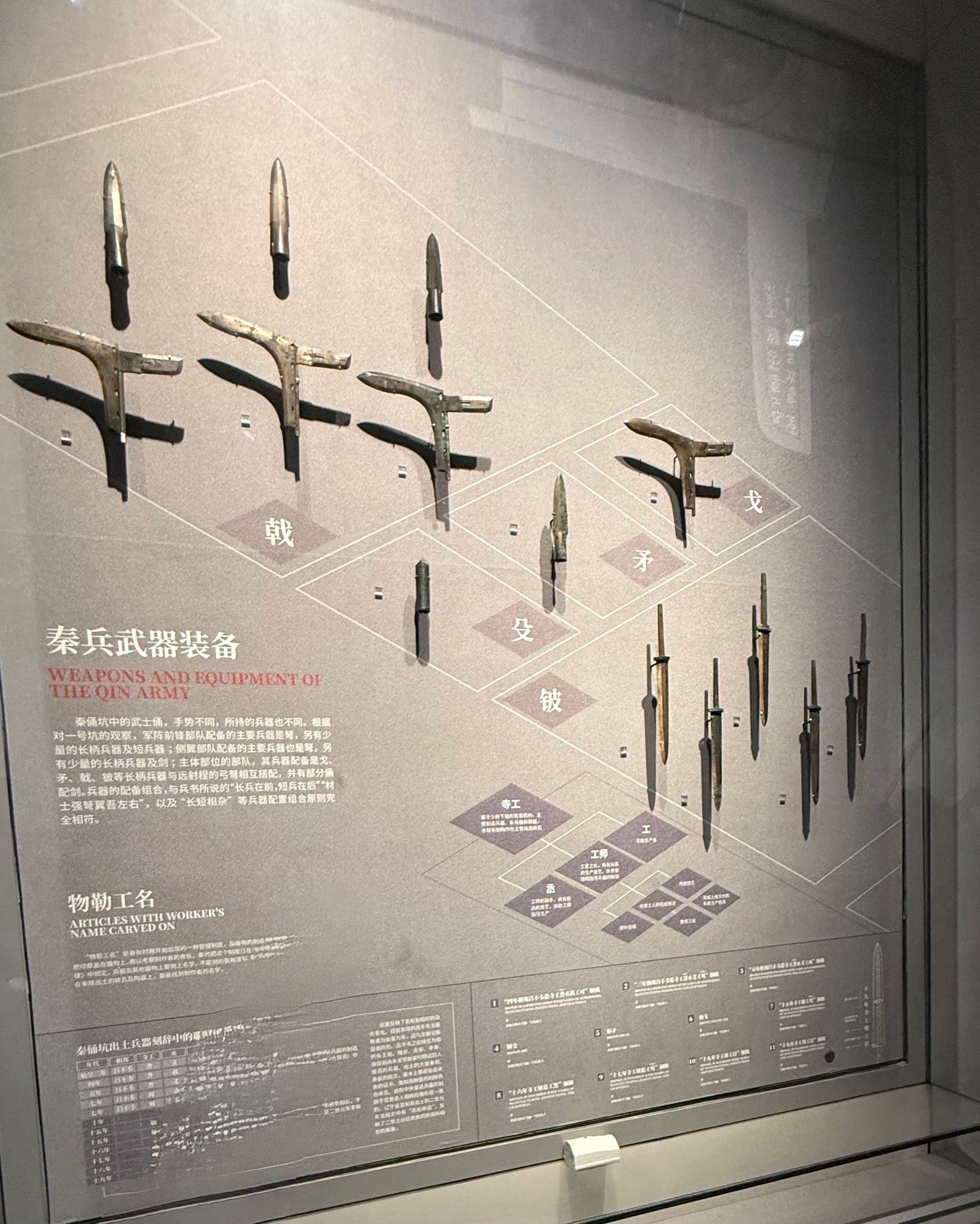
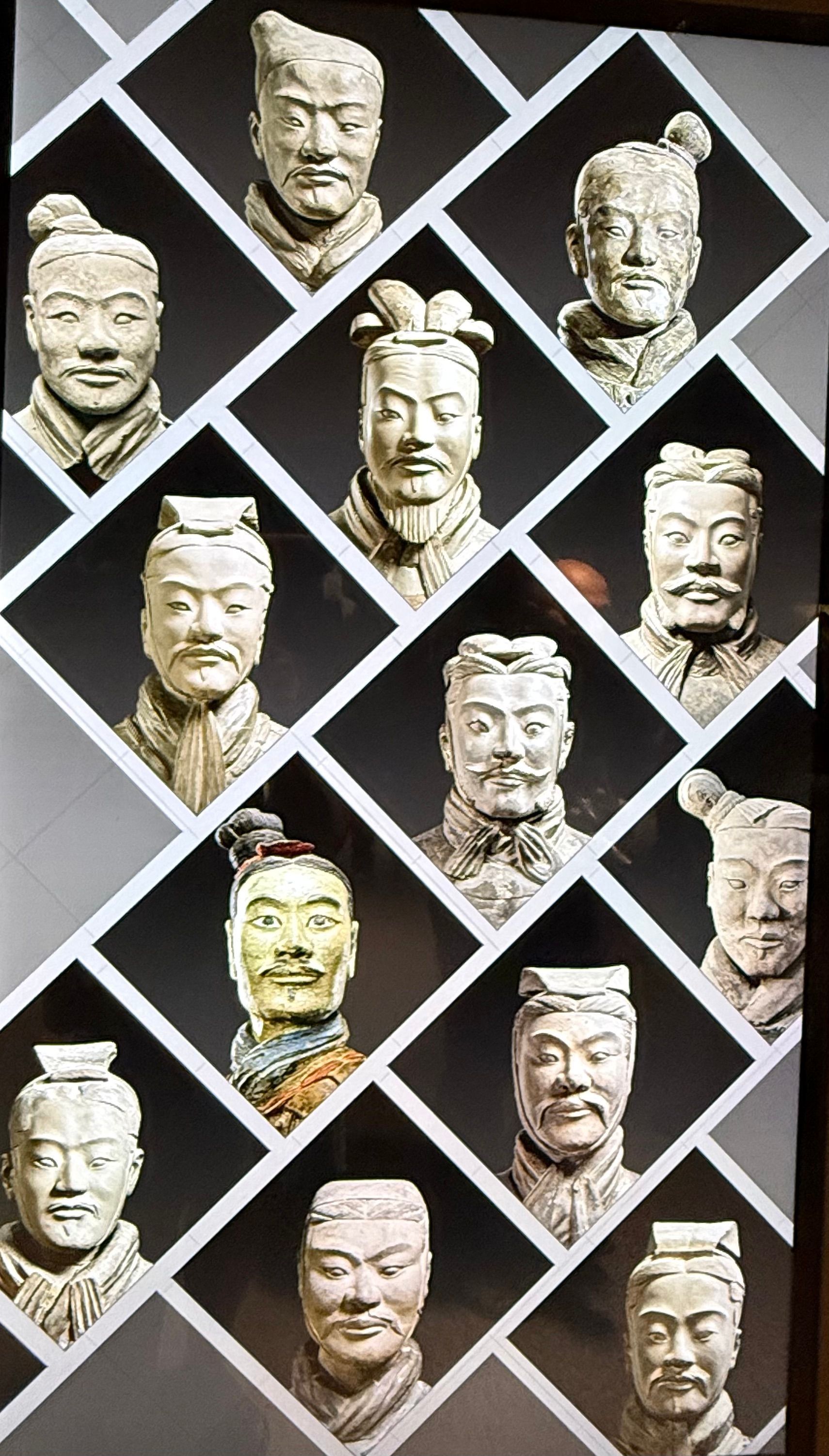
Archaeological explorations currently concentrate on the various sites of the extensive Necropolis surrounding the tomb, including the Terracotta Army to the east of the tomb mound. TheTerracotta Army serves as a garrison to the mausoleum and has yet to be completely excavated. The Terracotta Army is a collection of more than 8,000 life sized clay sculptures. Every soldier has a distinct facial expression, hairstyle and uniform that shows their rank. The figures vary in height according to their rank, the tallest being the generals. The statues were originally painted in bright colors like red, green, blue and purple but the paint fades rapidly when exposed to air. The army was equipped with tens of thousands of real bronze weapons, such as swords and crossbows.
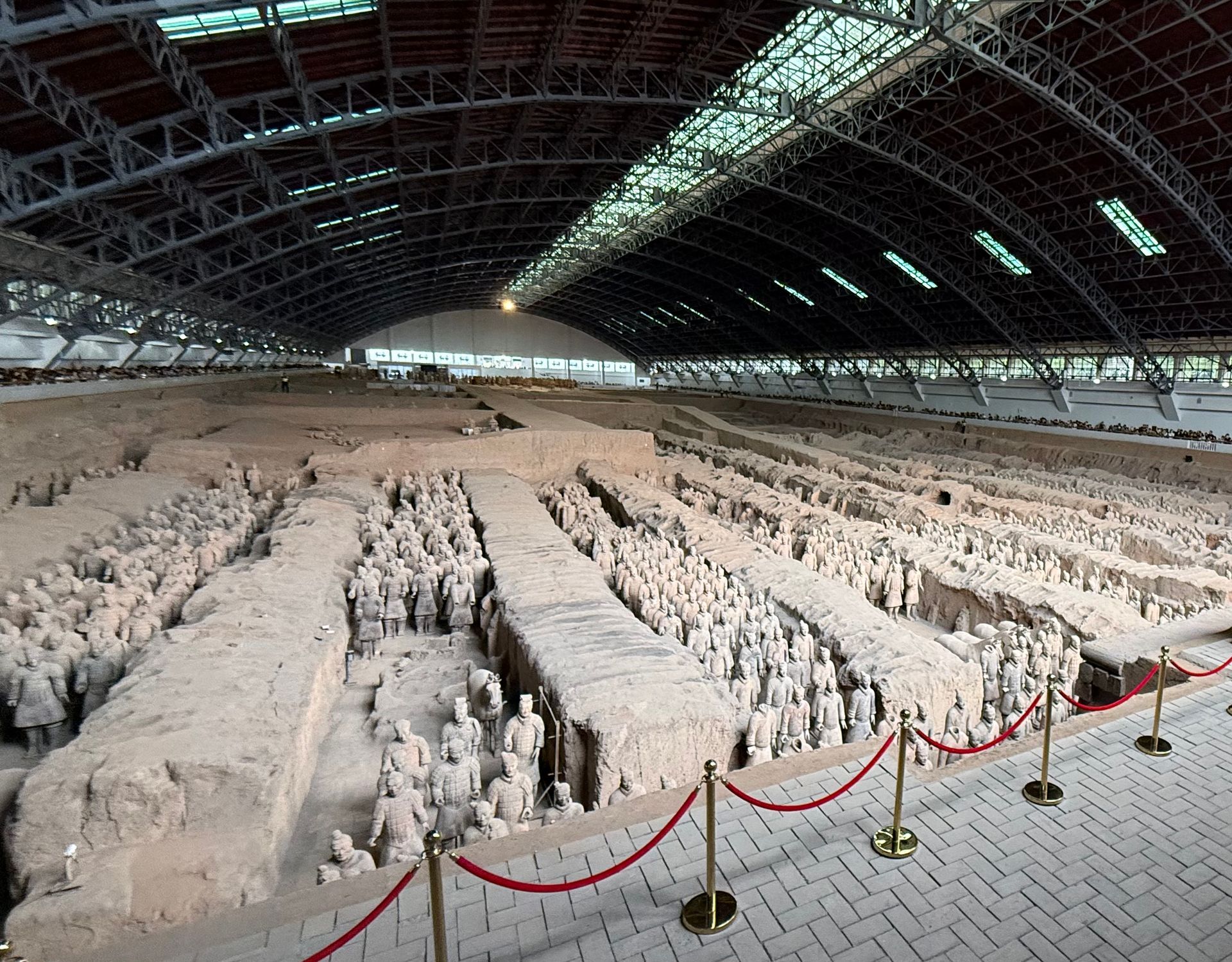
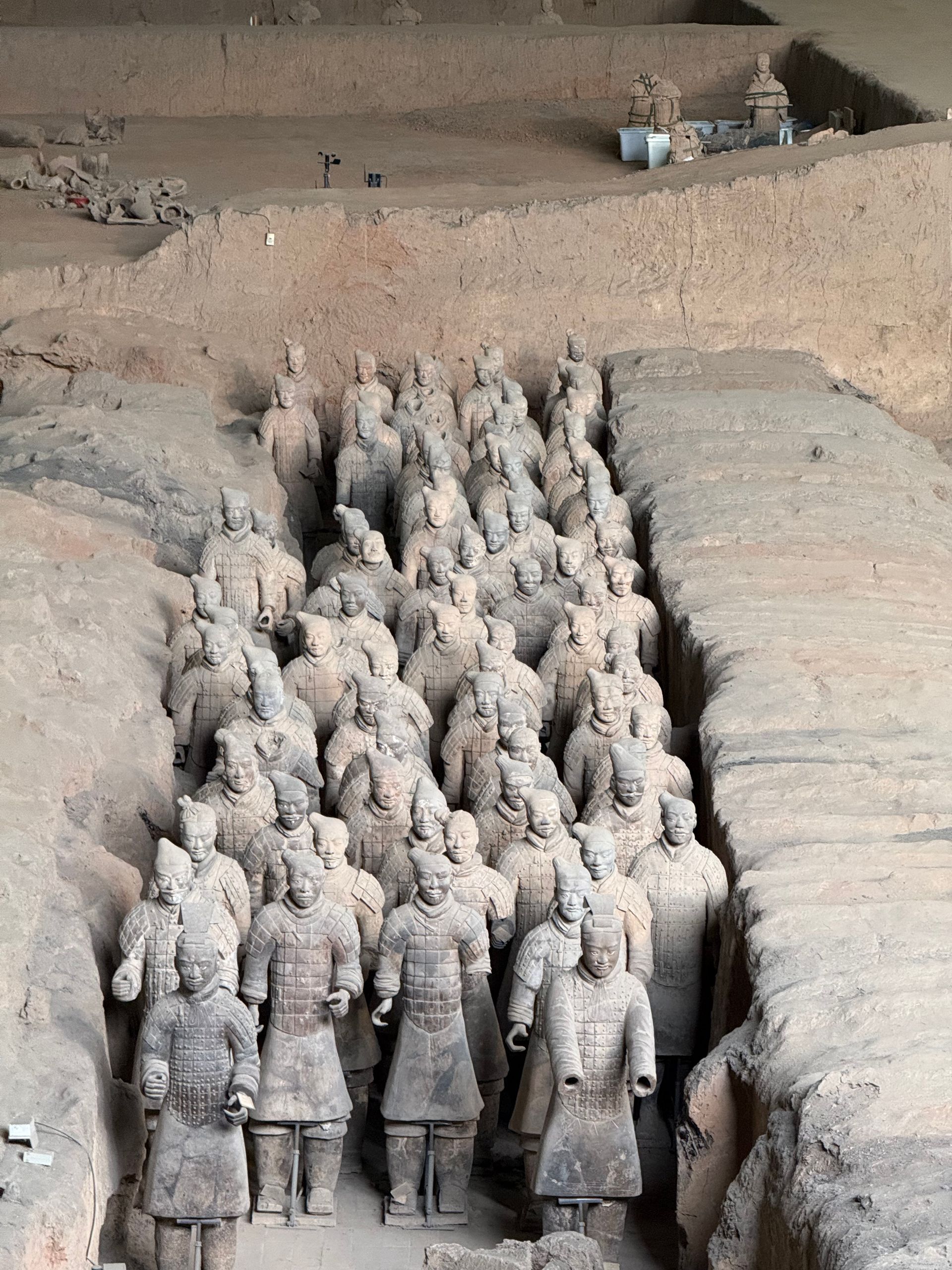
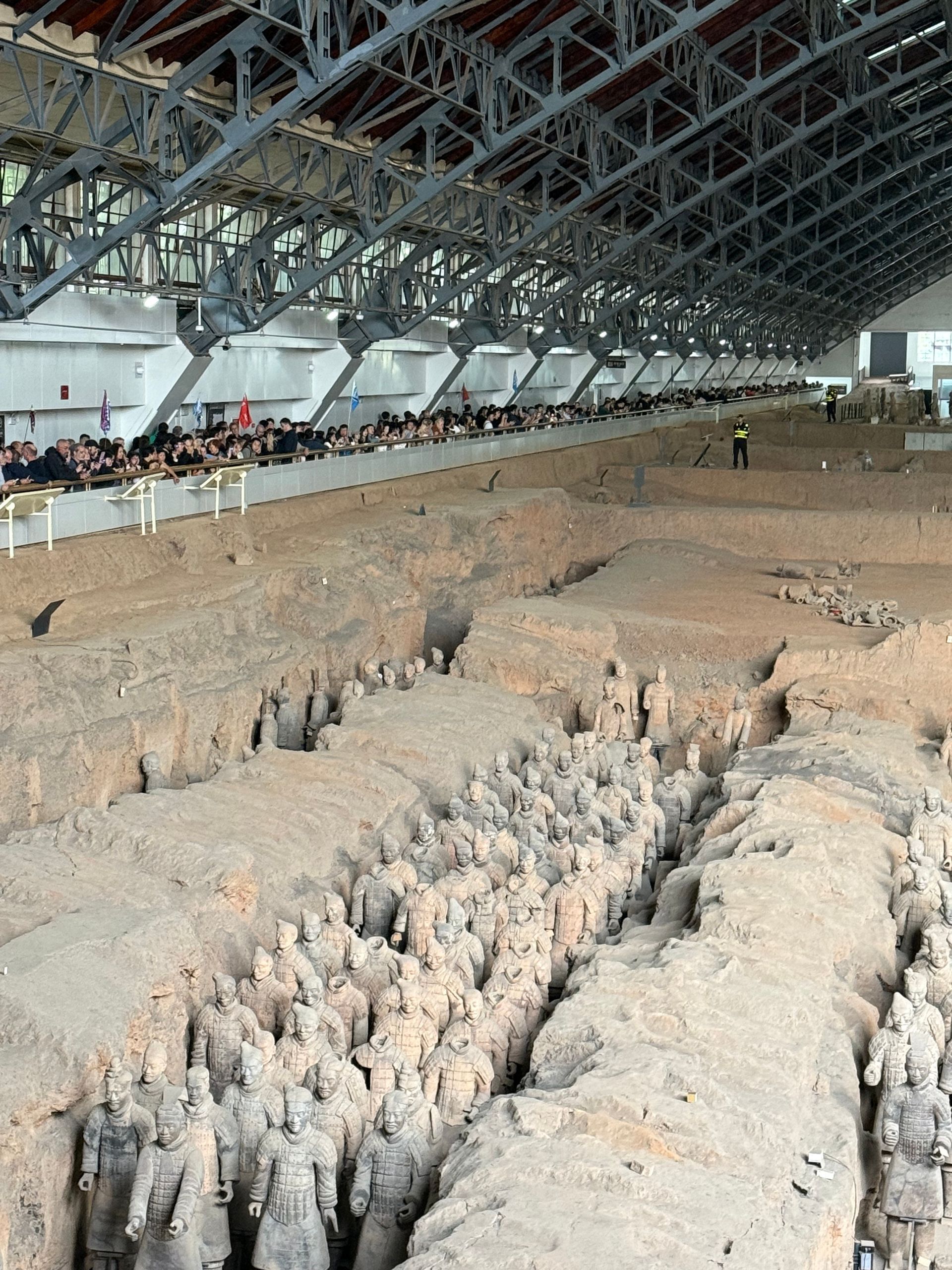
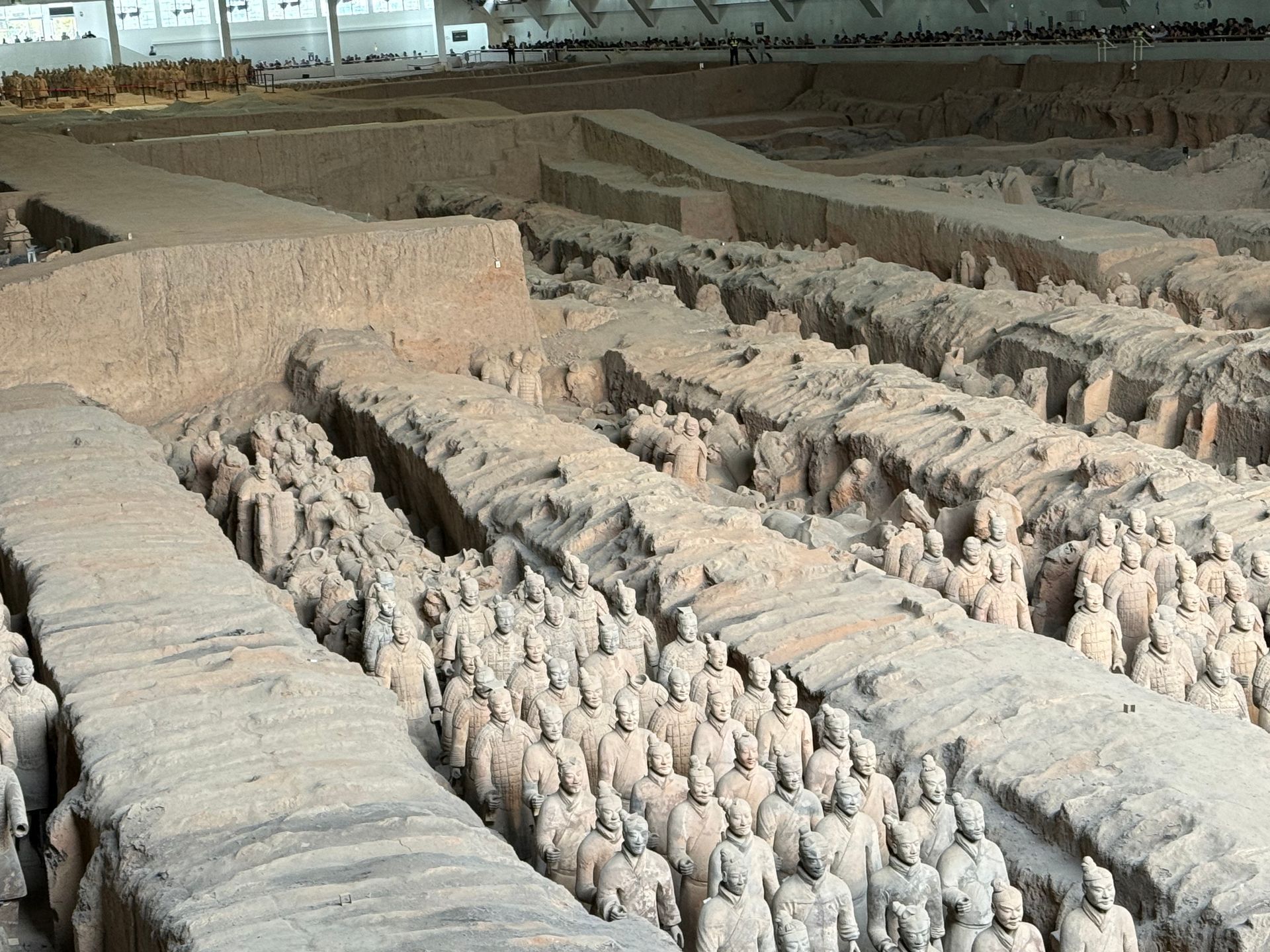
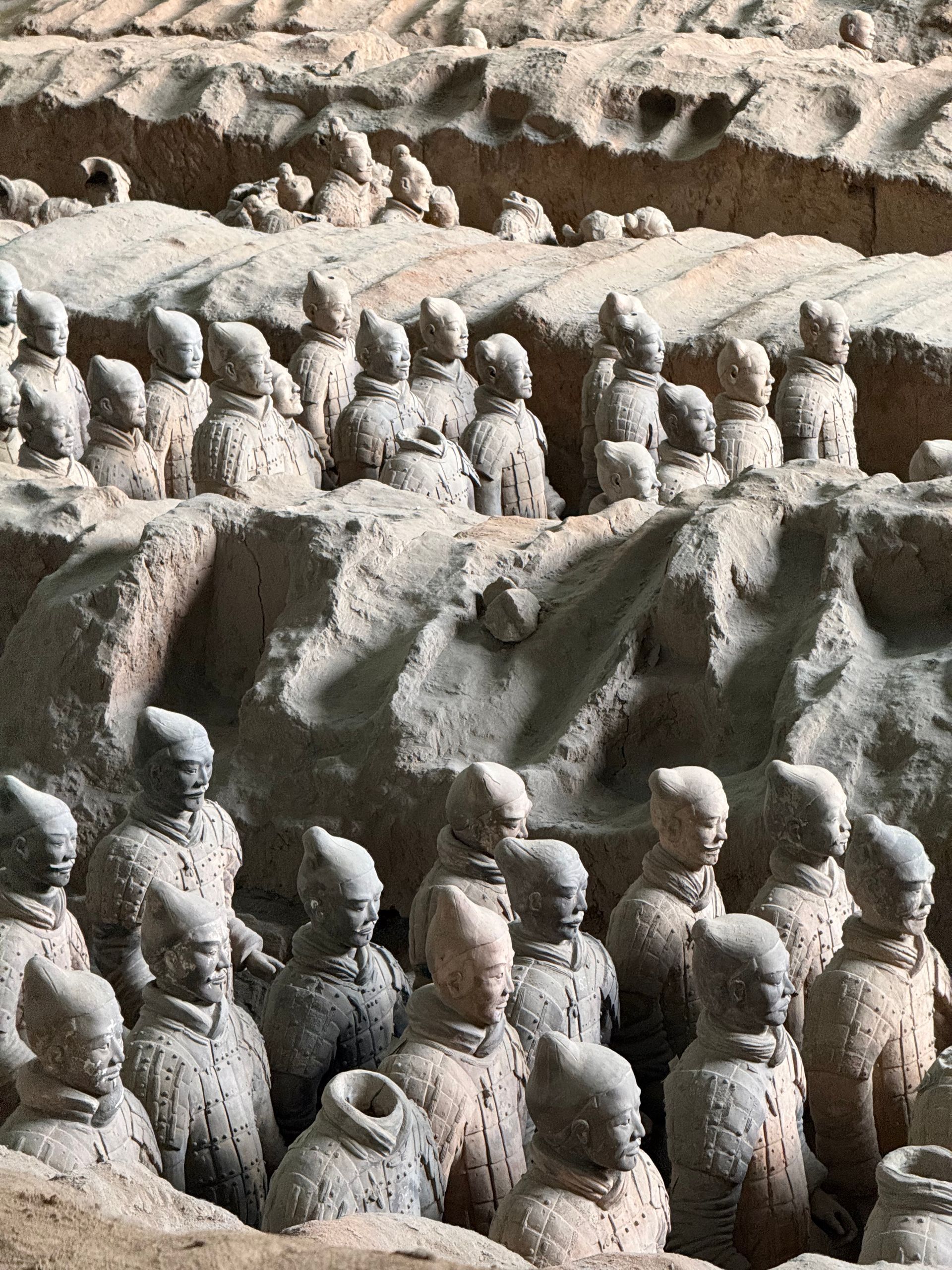
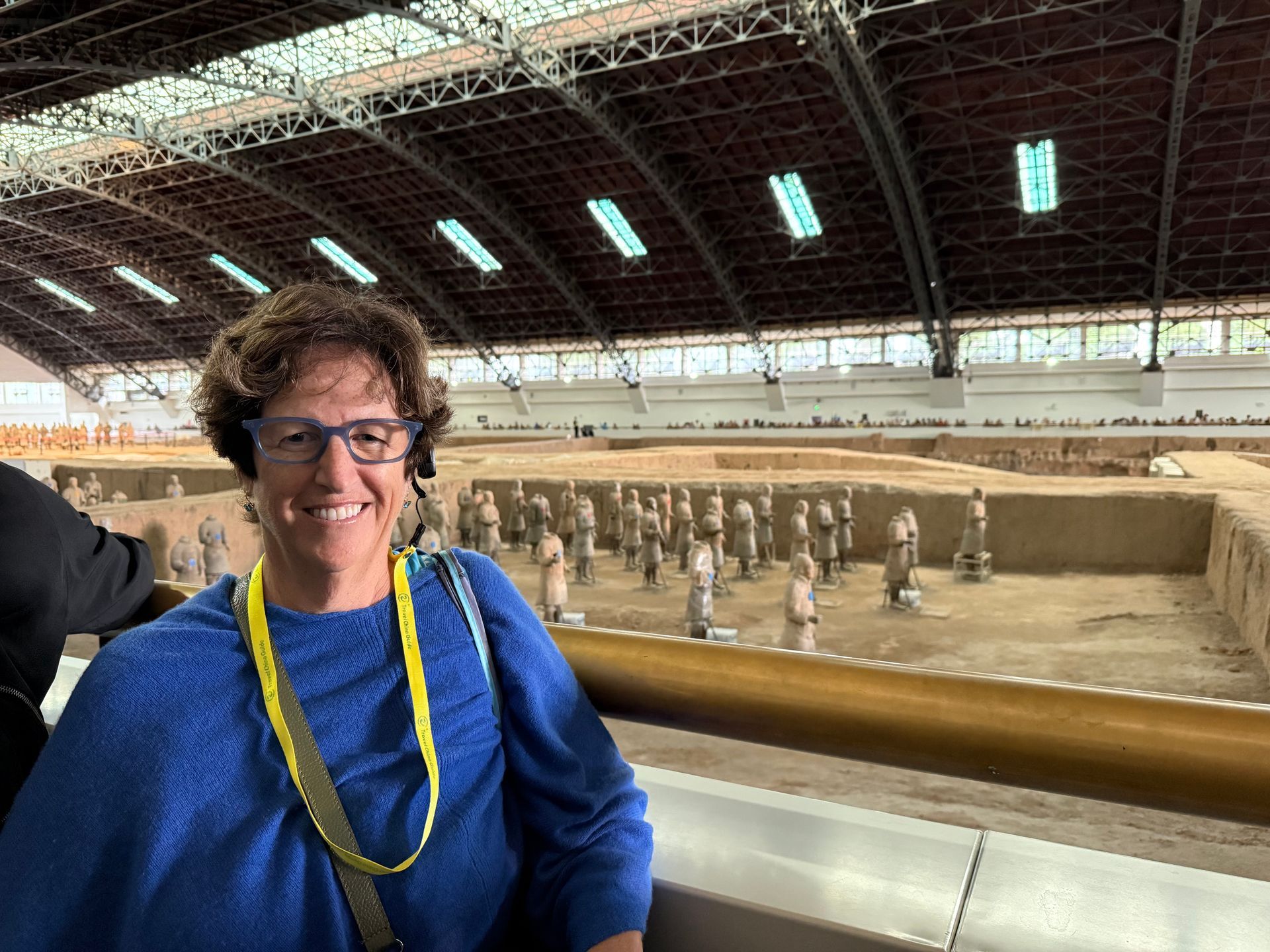
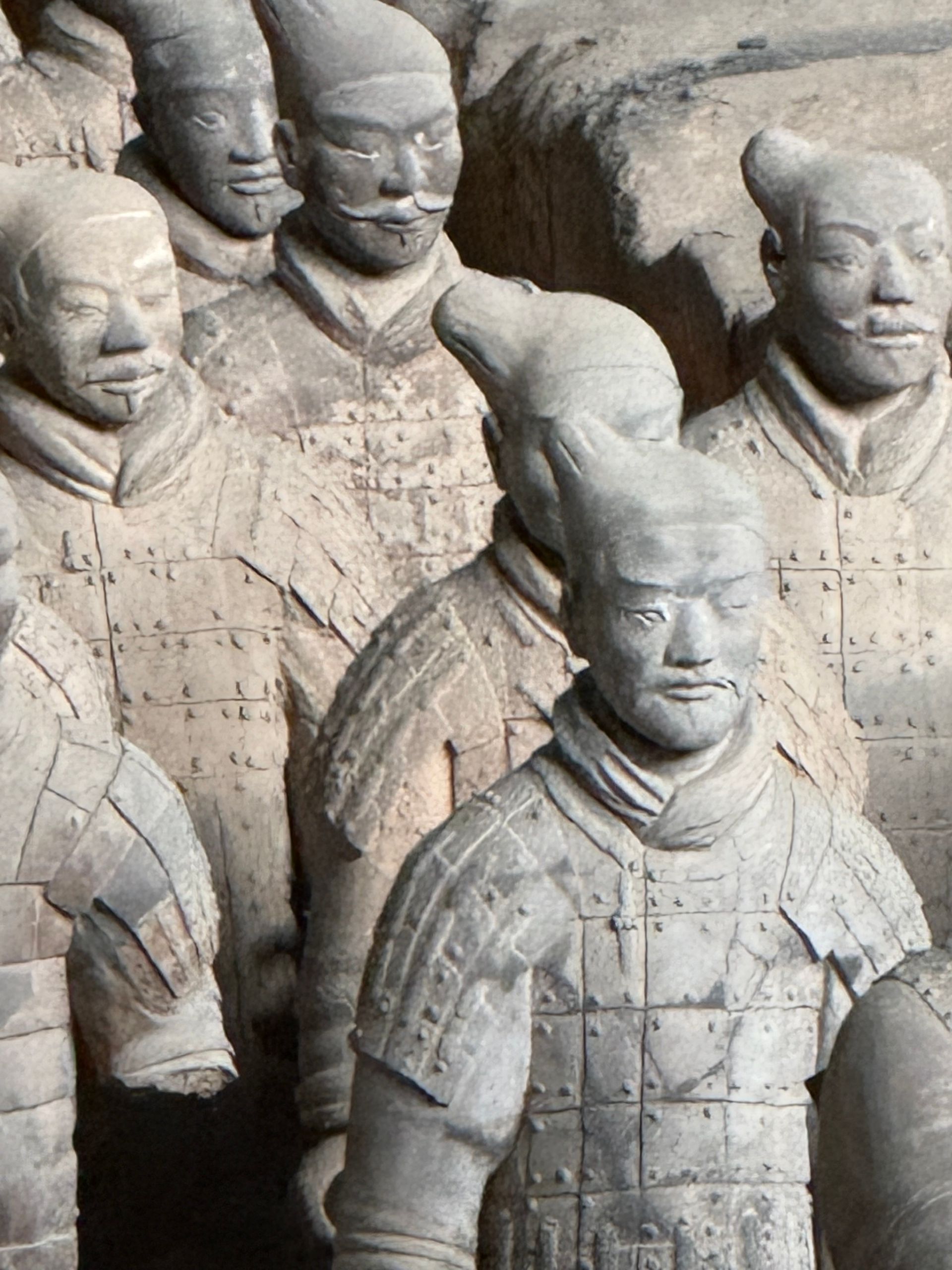
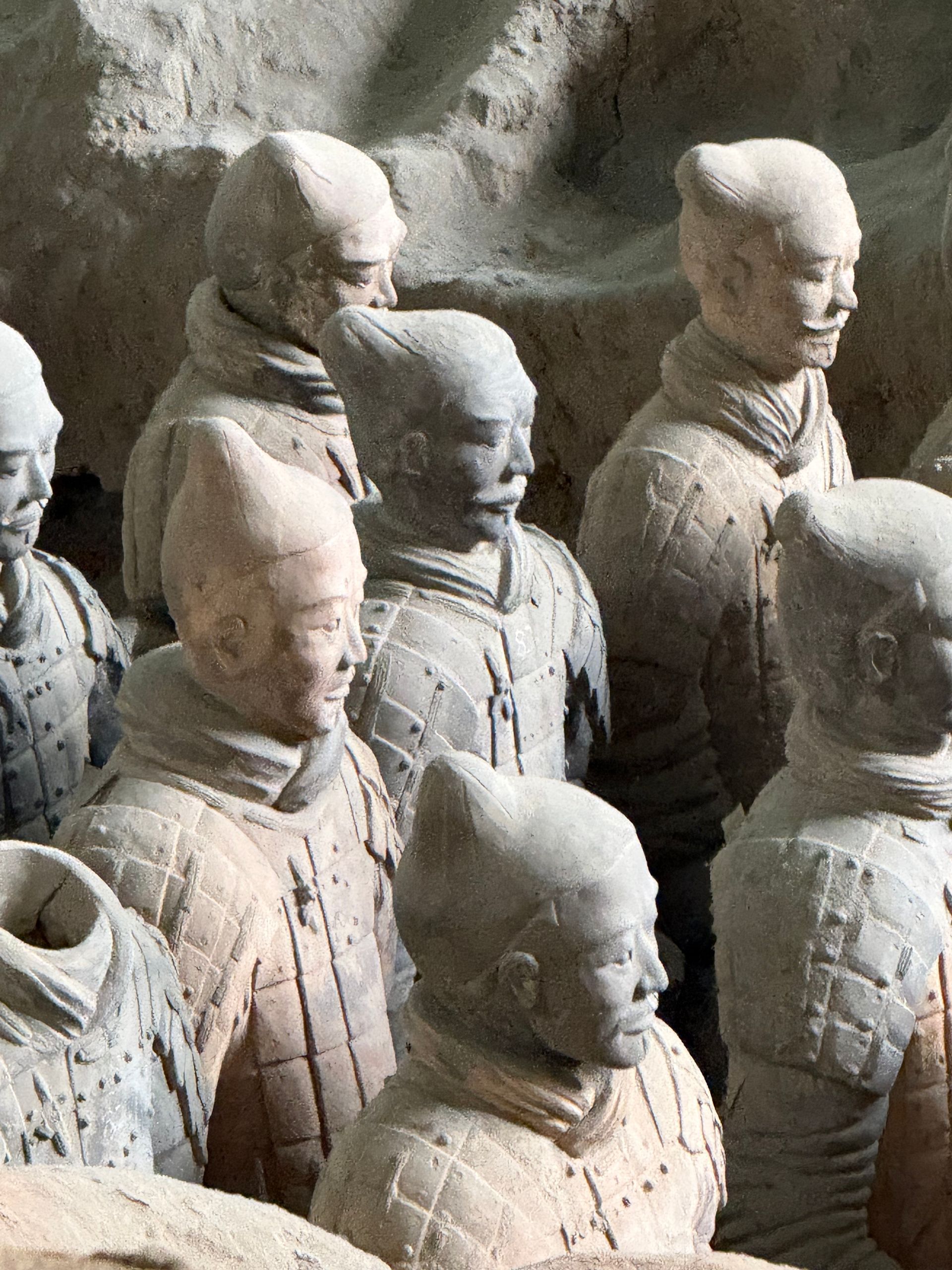
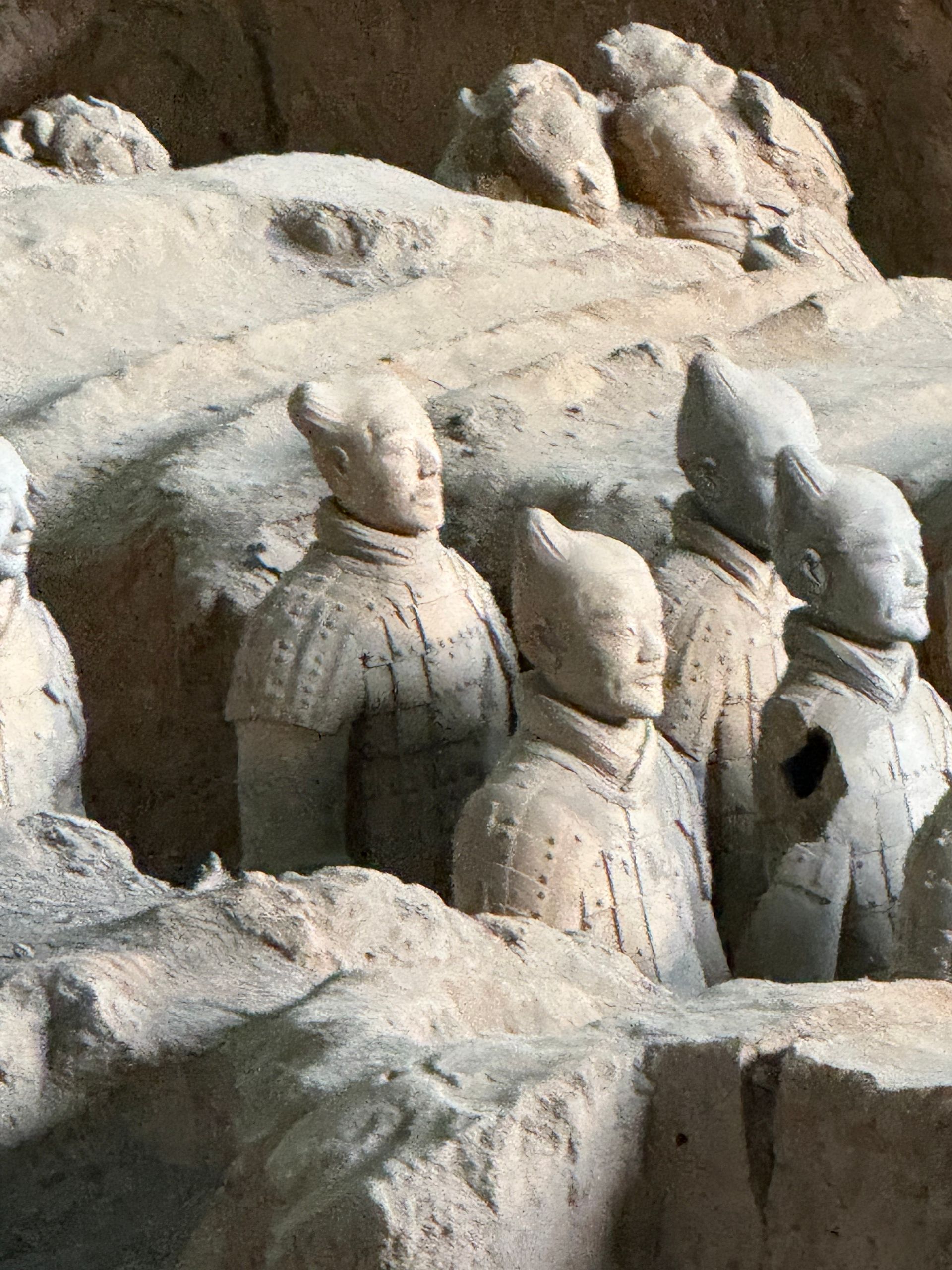
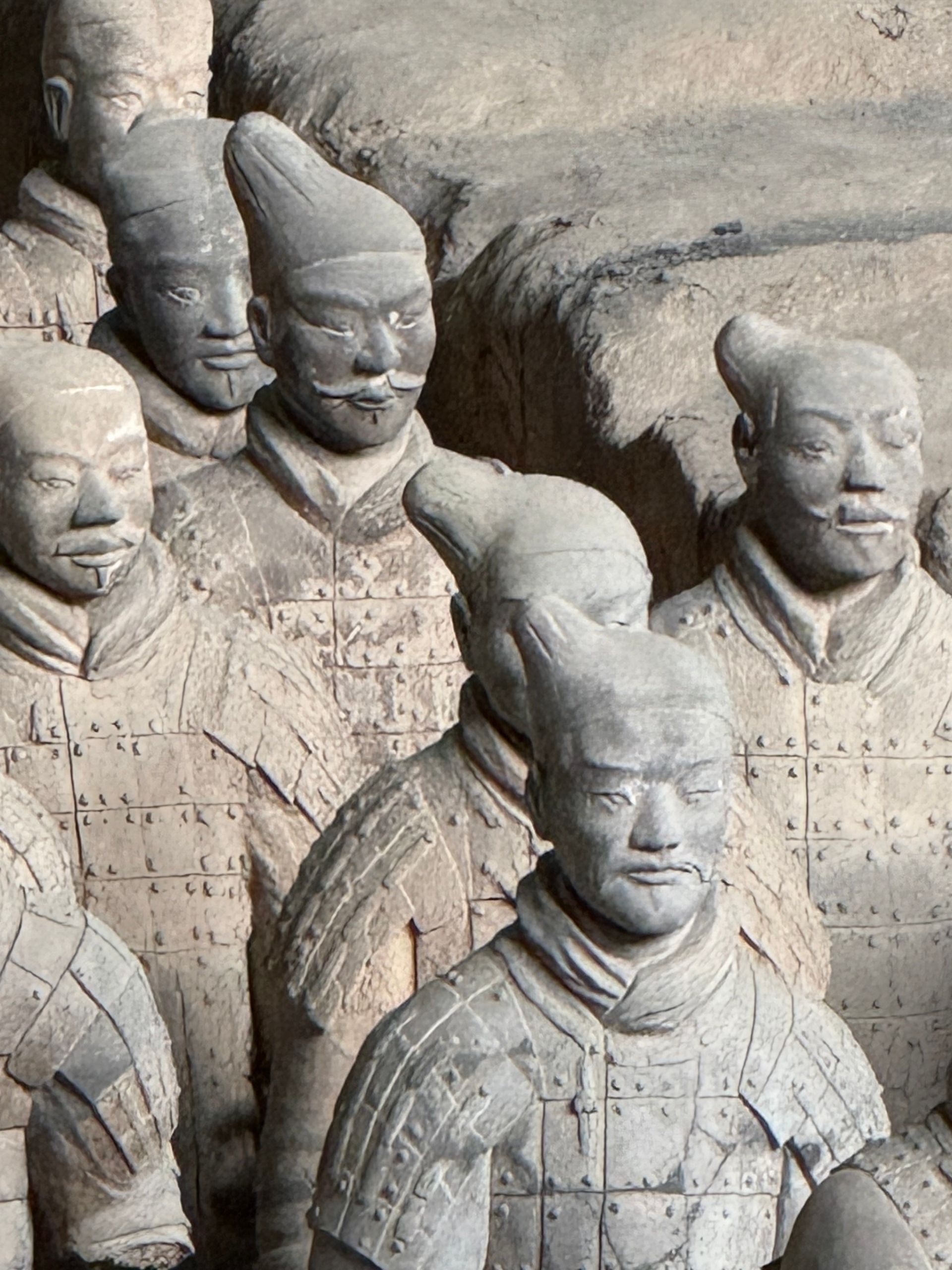


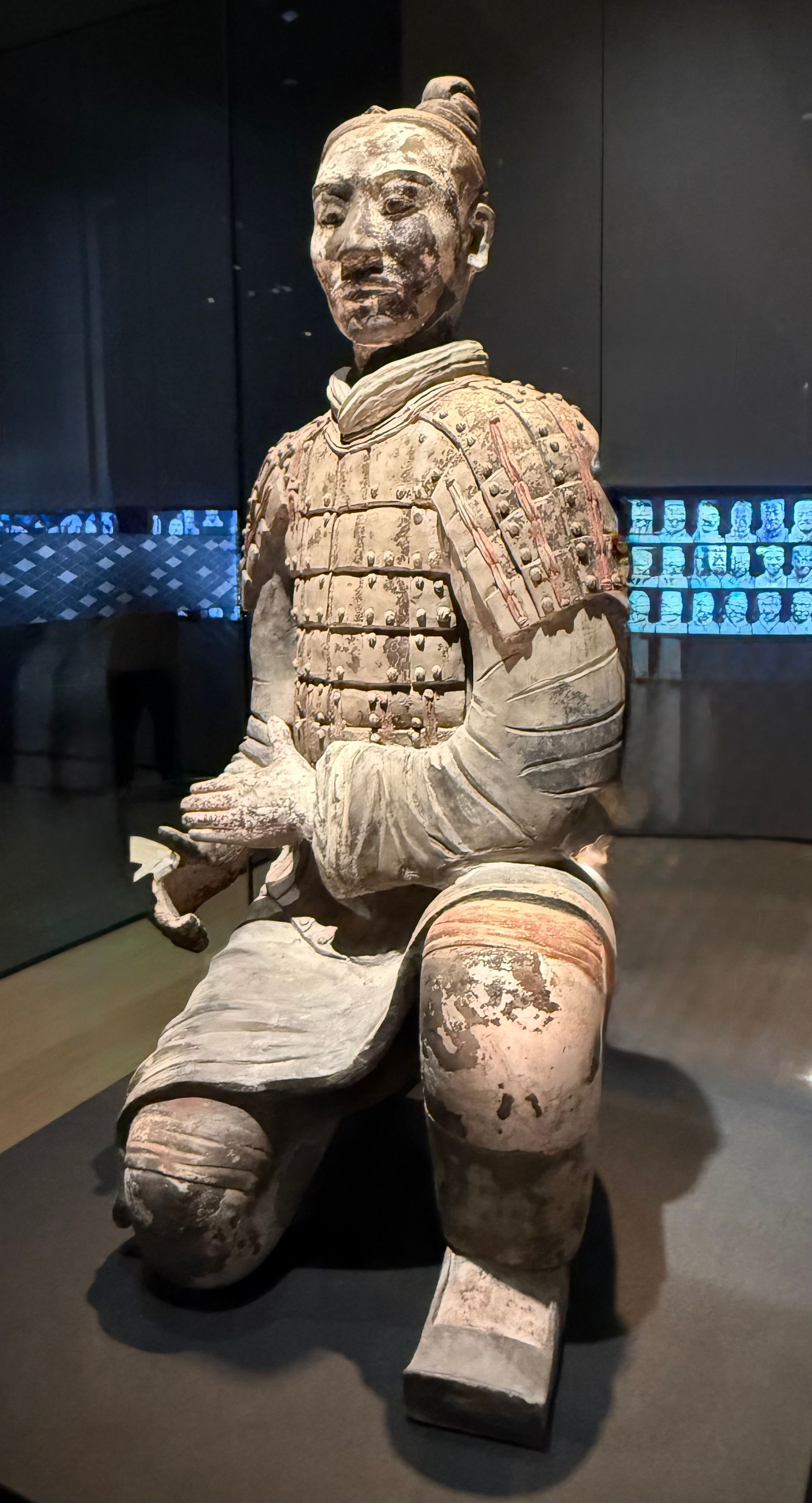
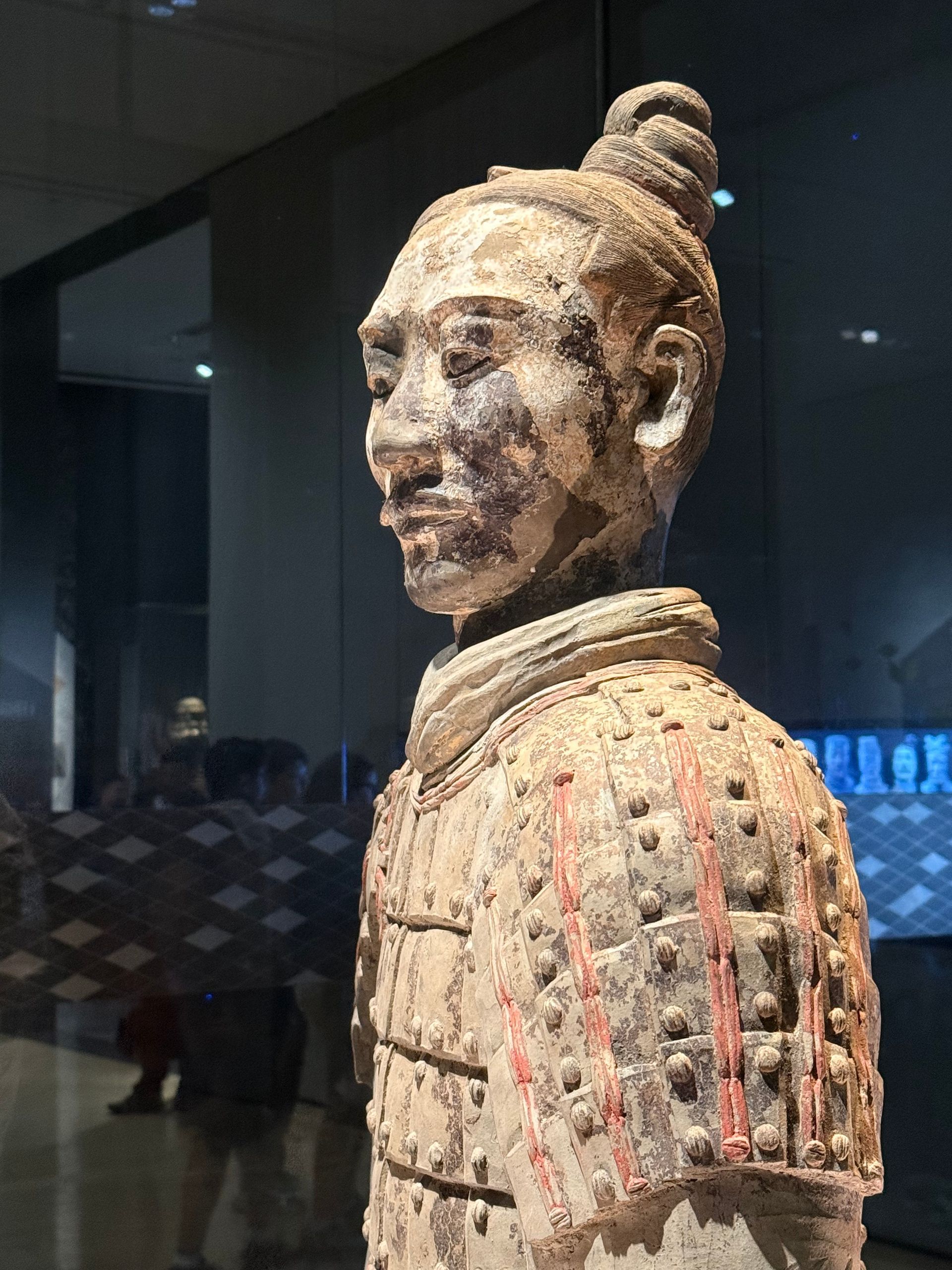
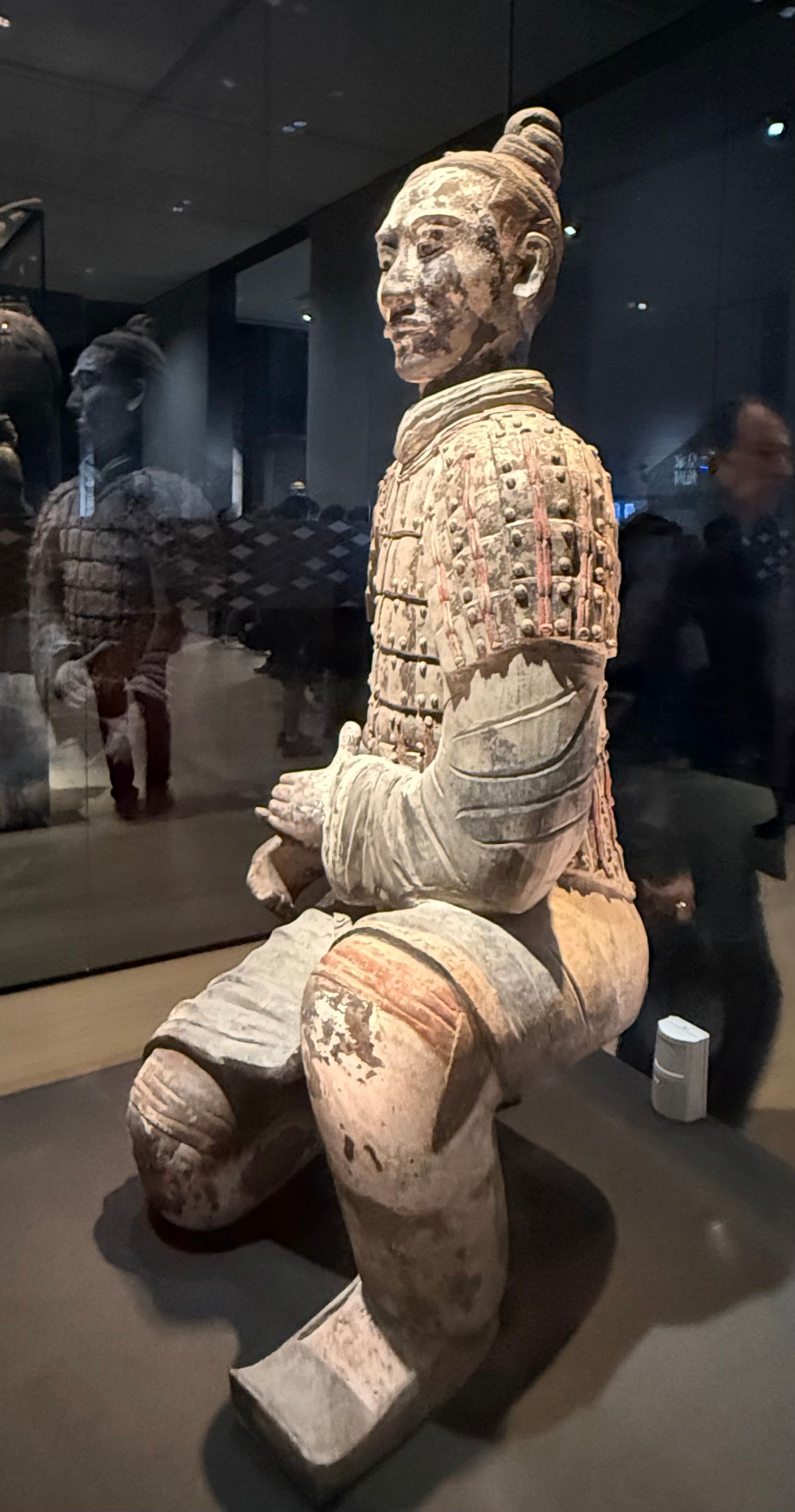
The above is Pit #1, about 3,000 warriors are excavated here. The place is massive (750' x 203'). This pit is the largest of the four uncovered so far. There are 11 parallell corridors, more than 10 feet wide and paved with small bricks. They had wooden ceilings supported by large beams and posts. They were meant to resemble palace hallways. The wooden ceilings were covered with reed mats and layers of clay for waterproofing, and then mounded with more soil raising them 6-9 feet above the surrounding ground level.
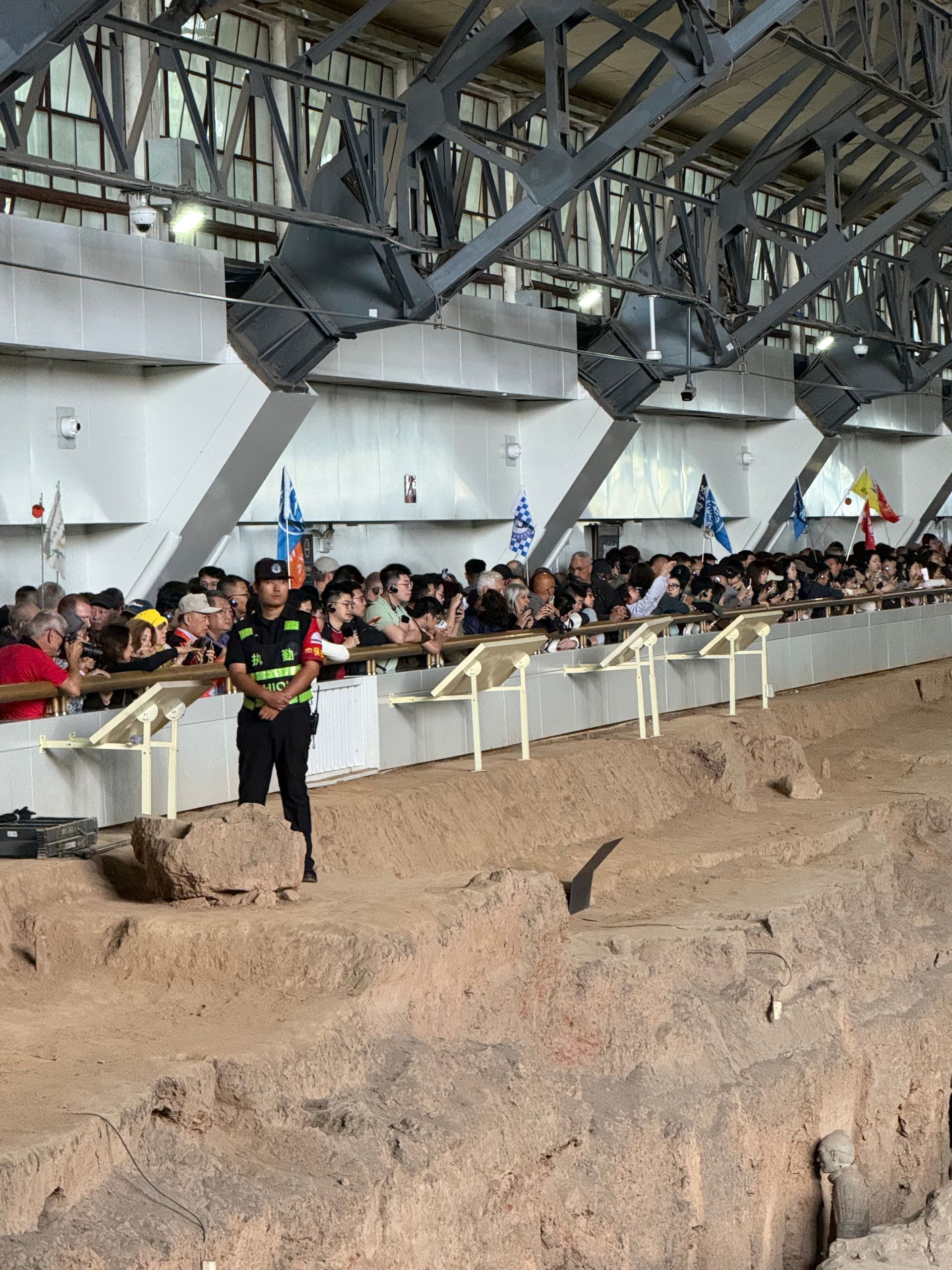
There were approximately 20,000 visitors the day we were there, in the summer months, the crowds grow to 85,000! So glad we came in the off season! The viewing spots were dense with people, but our guide skillfully directed us. If you waited a few minutes, spots would open up along the rails, to get your turn to view. The Chinese do tend to tend to be pushy and oblivious, but our Viator guide, for our small group of 15, was awesome!
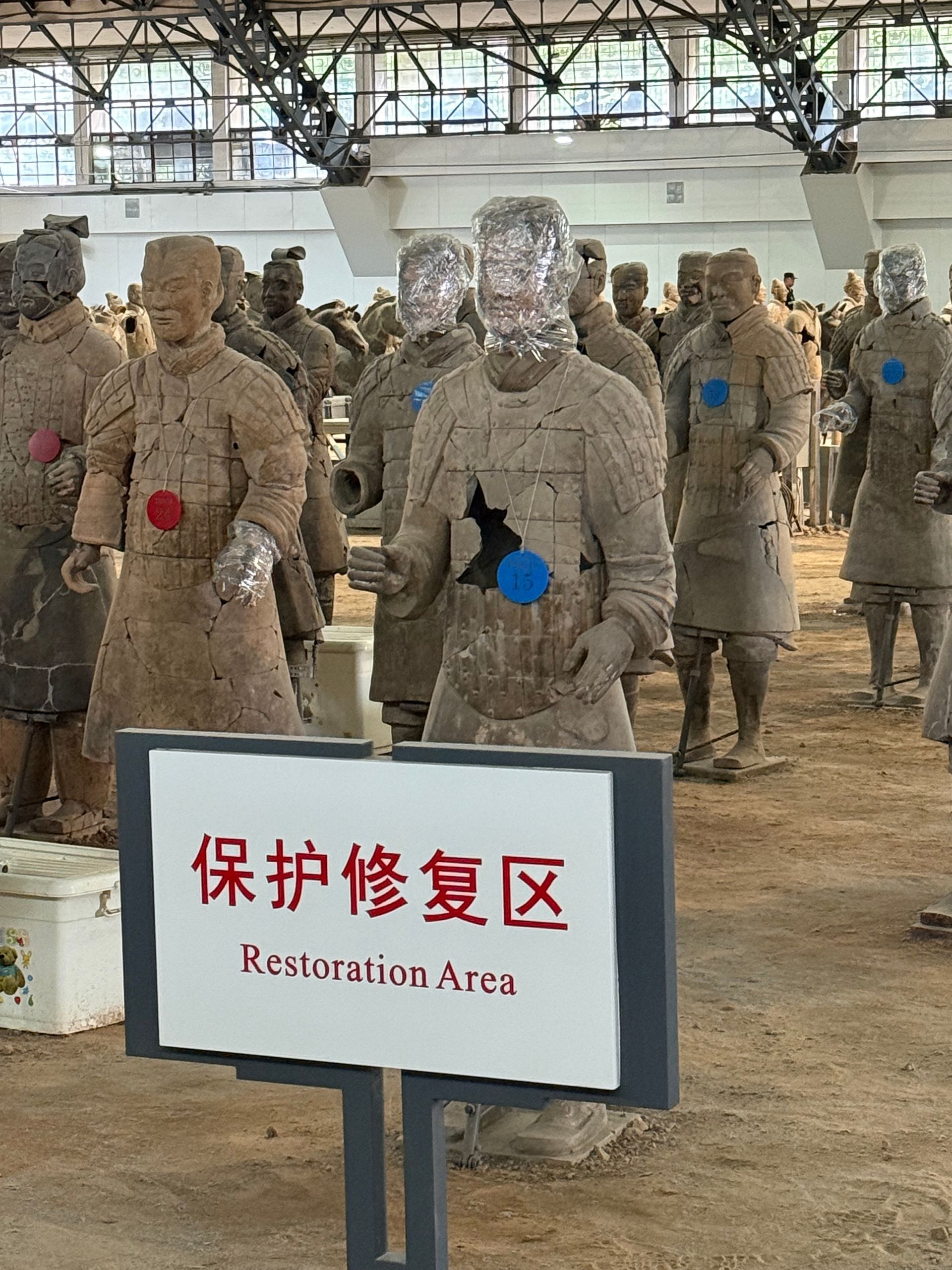
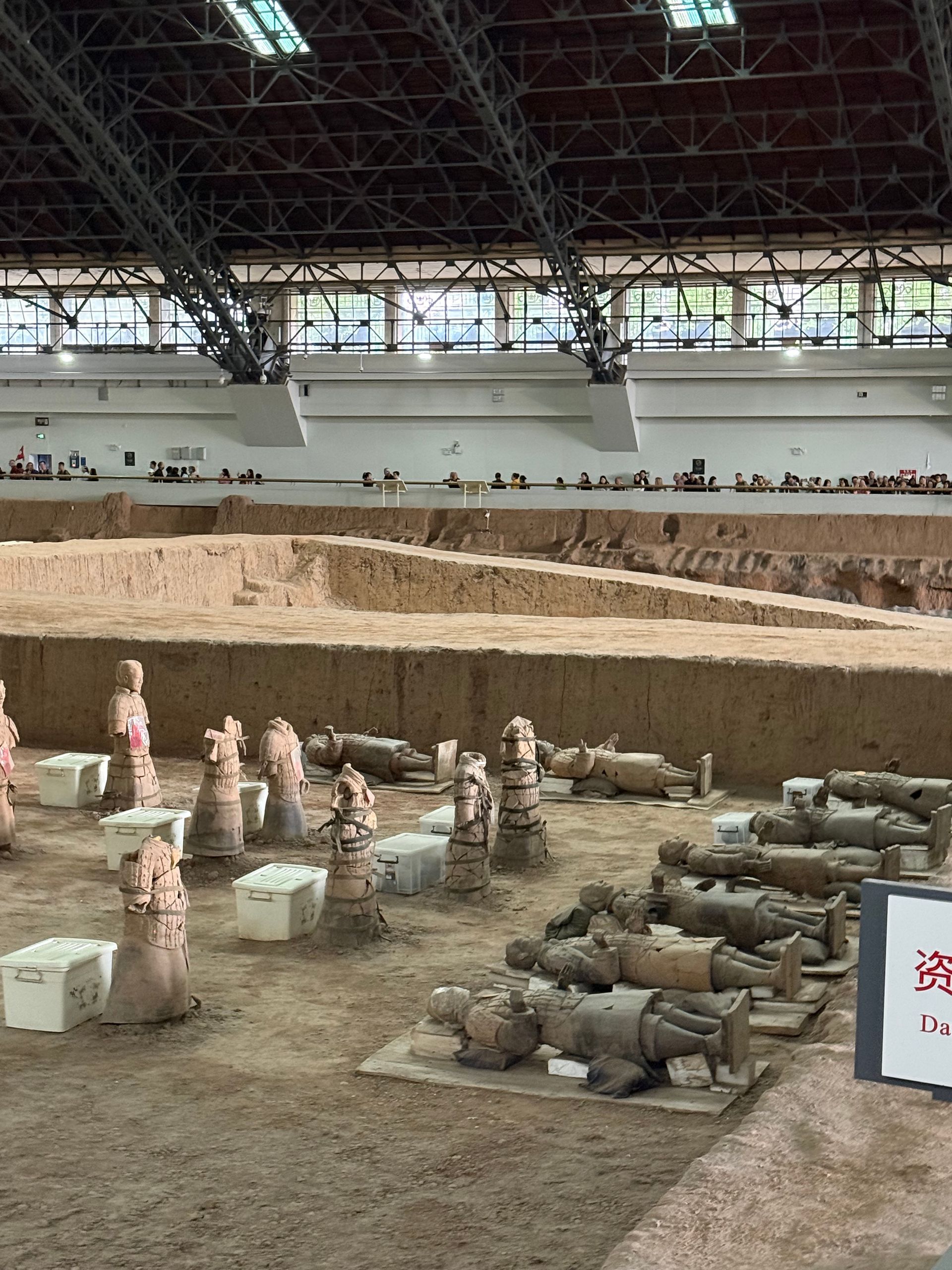
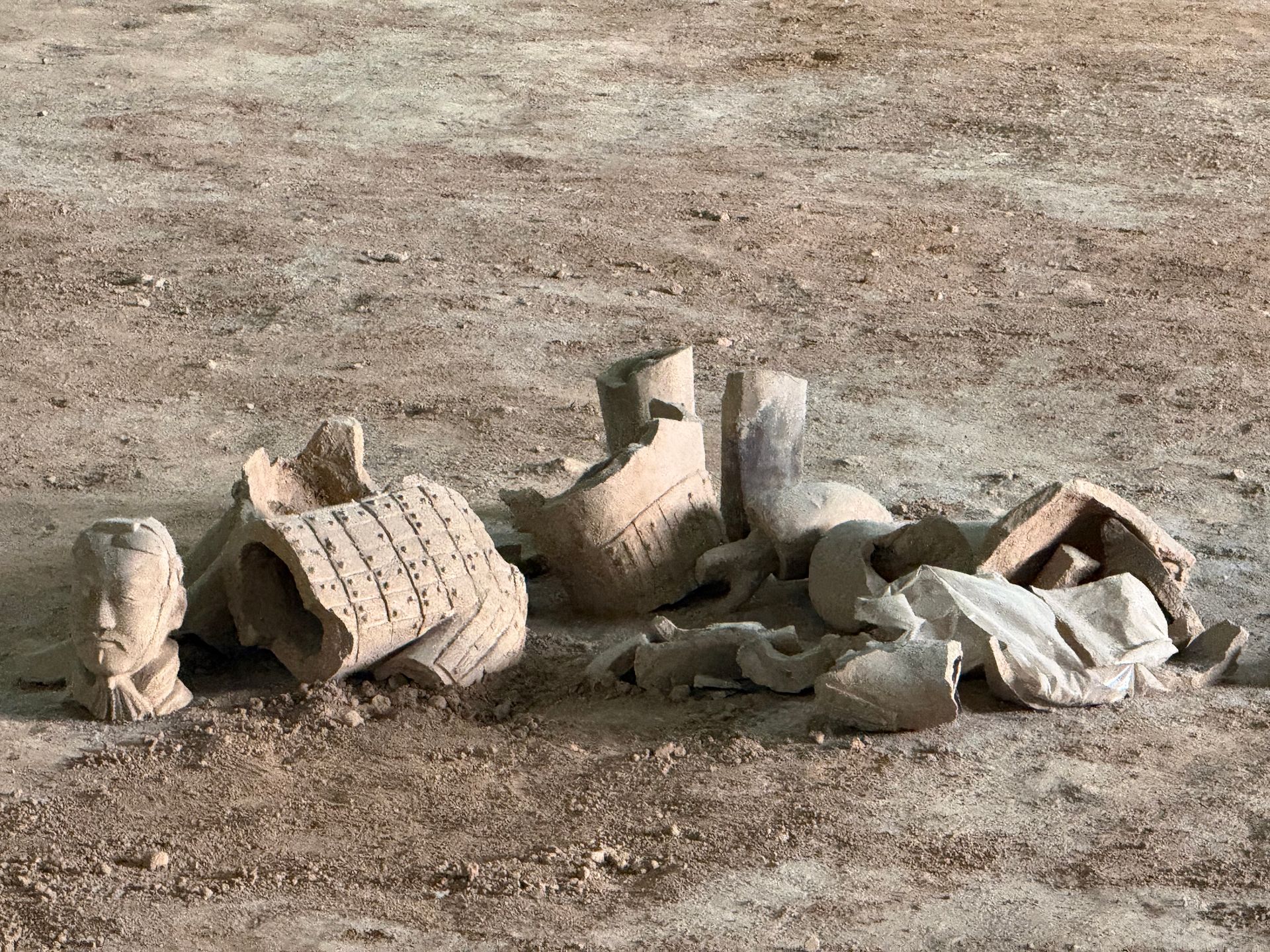
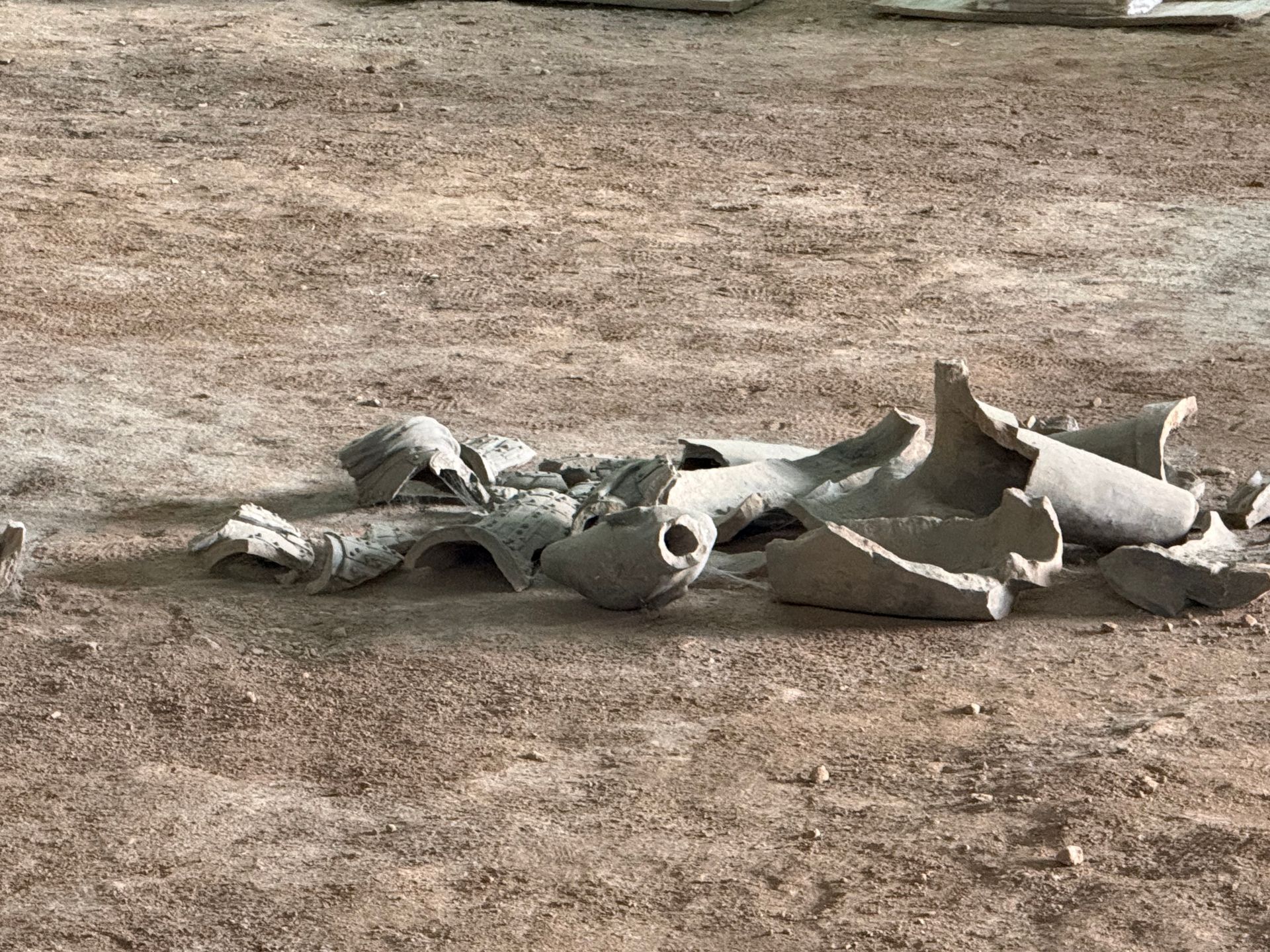
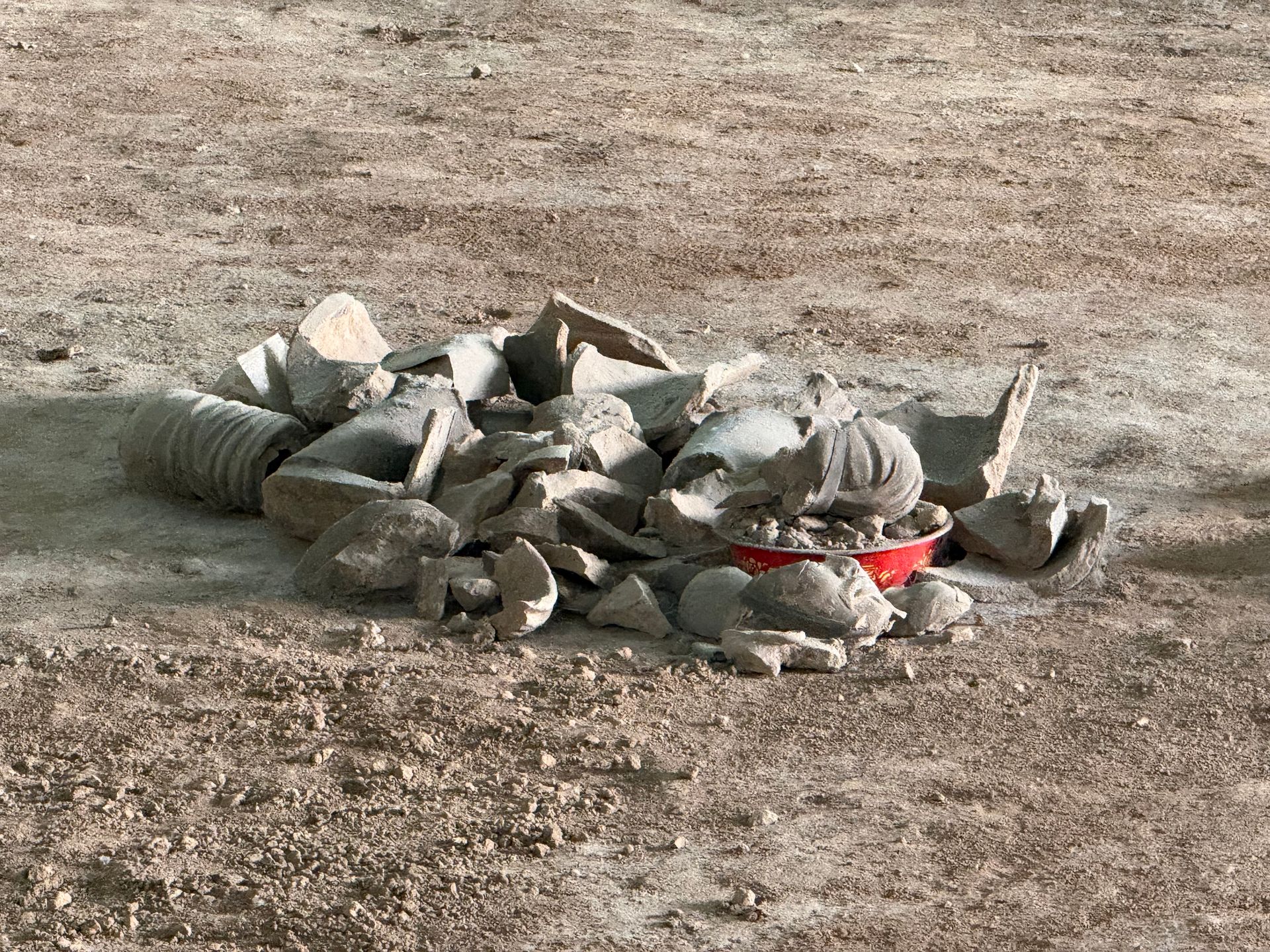
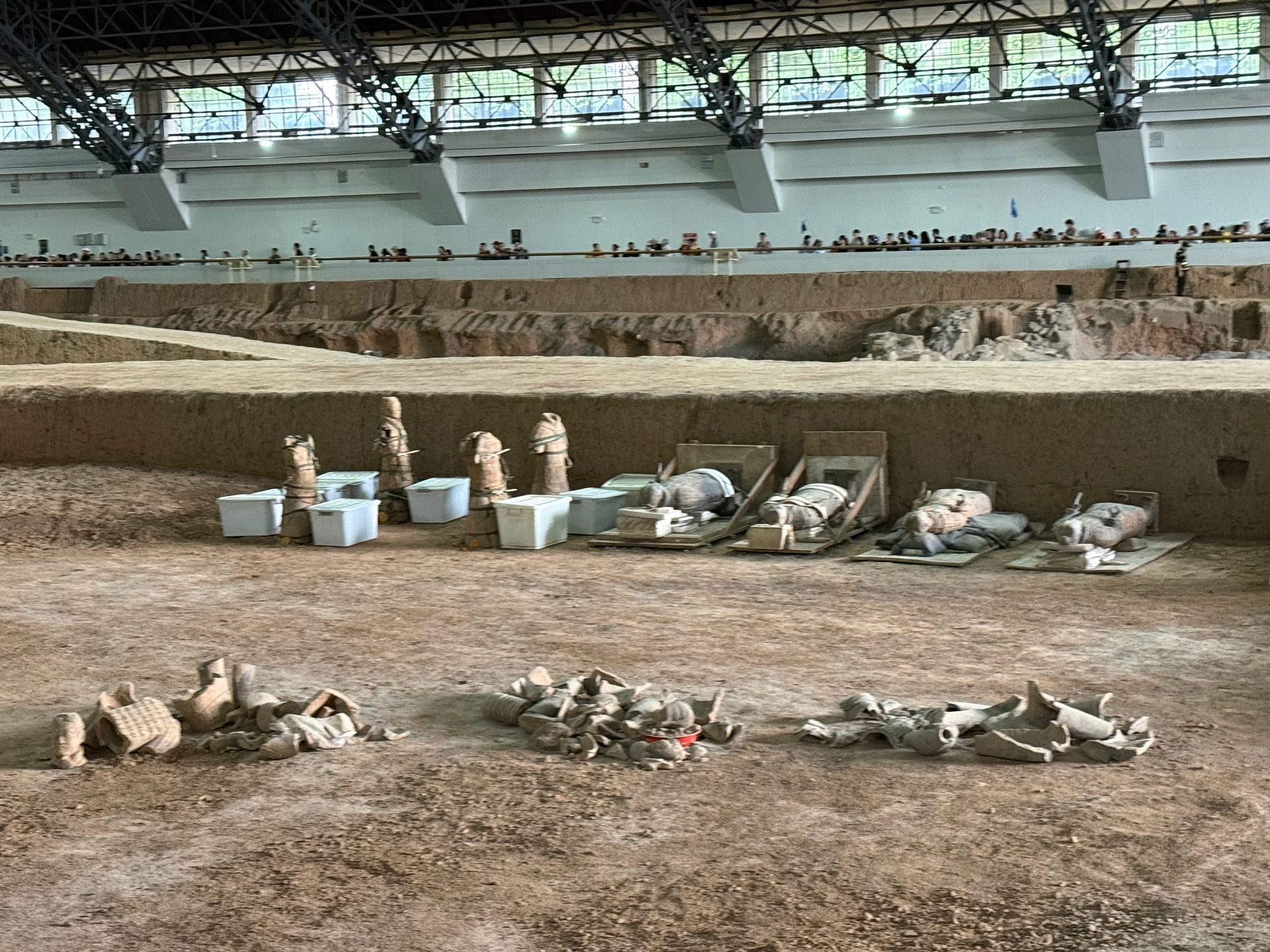
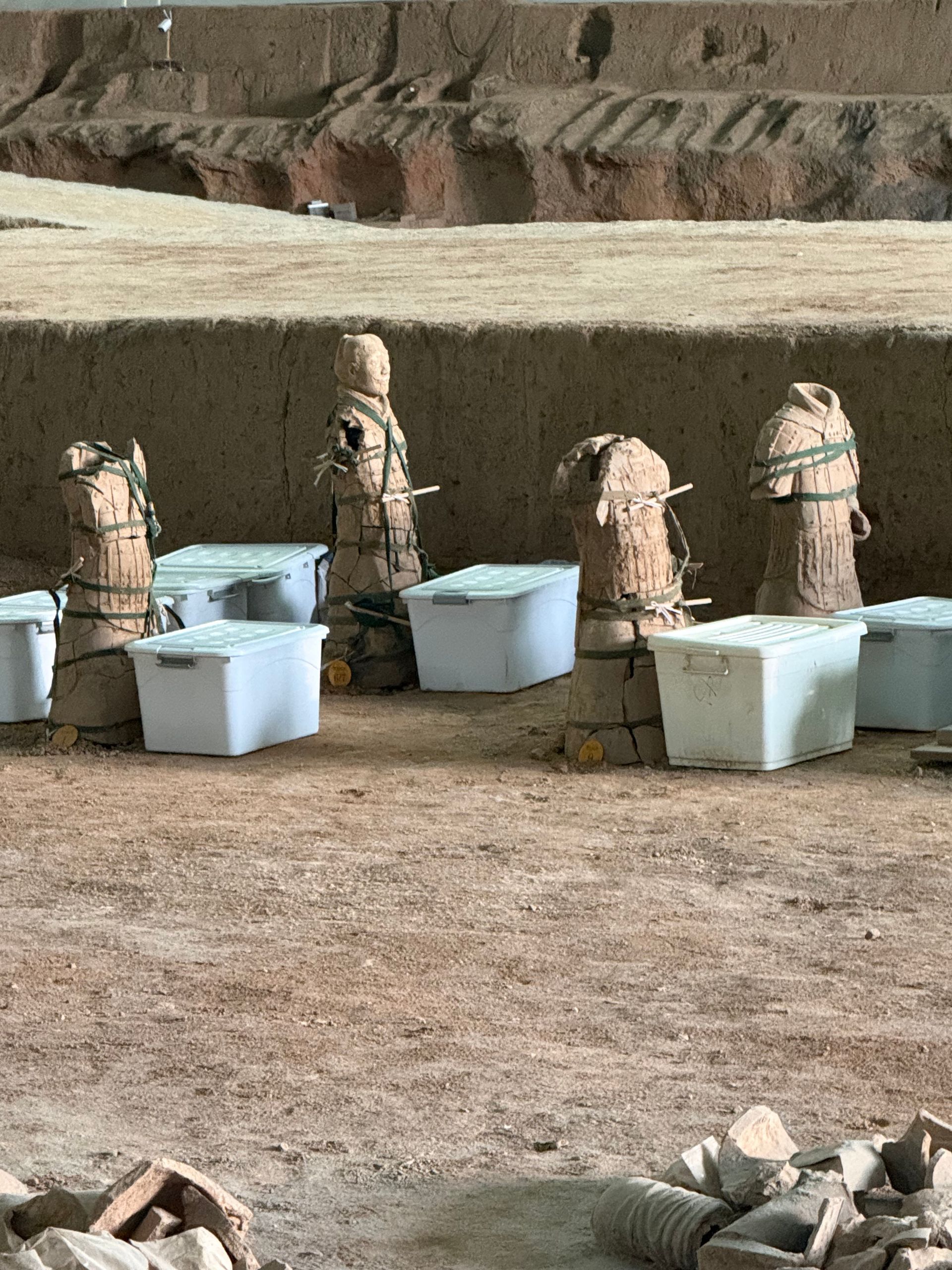
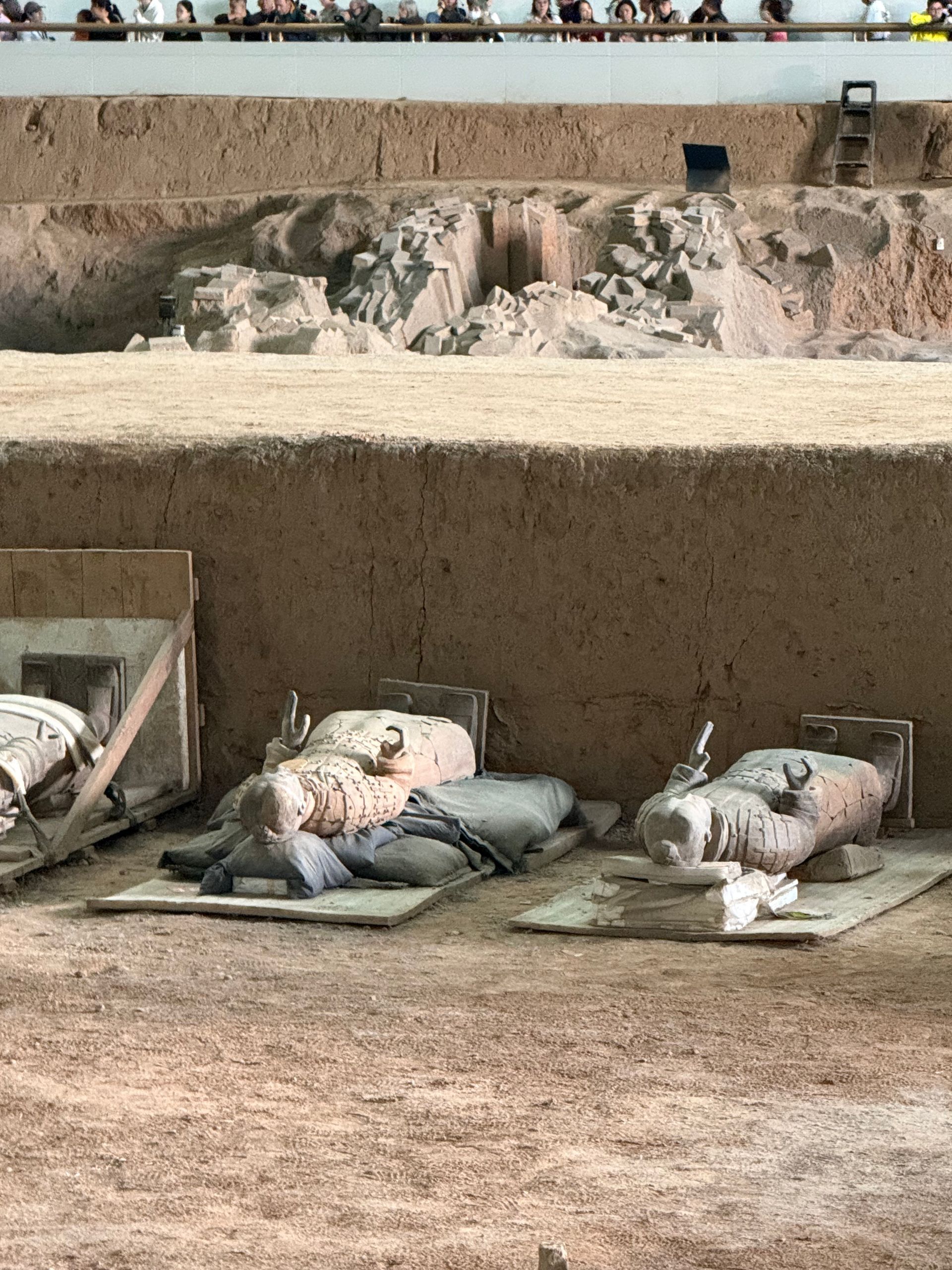
They have at least 50 archeologist working at the site currently. The statues have color coded tags denoting the amount of restoration needed. It is estimated that there are 8,000 soldiers, 130 chariots with 520 horses and 150 calvary horses. Some of the figures show fire damage and there are the remains of burnt ceiling rafters in Pit 1 and 2. These together with the missing weapons, have been taken as evidence of the reported looting by Xiang Yu ( warlord who came after Qin) and the subsequent burning of the site, which is thought to have caused the roof to collapse and crush the army below. Only one of the 8,000 warriors ,so far, has been found without their head decapitated.
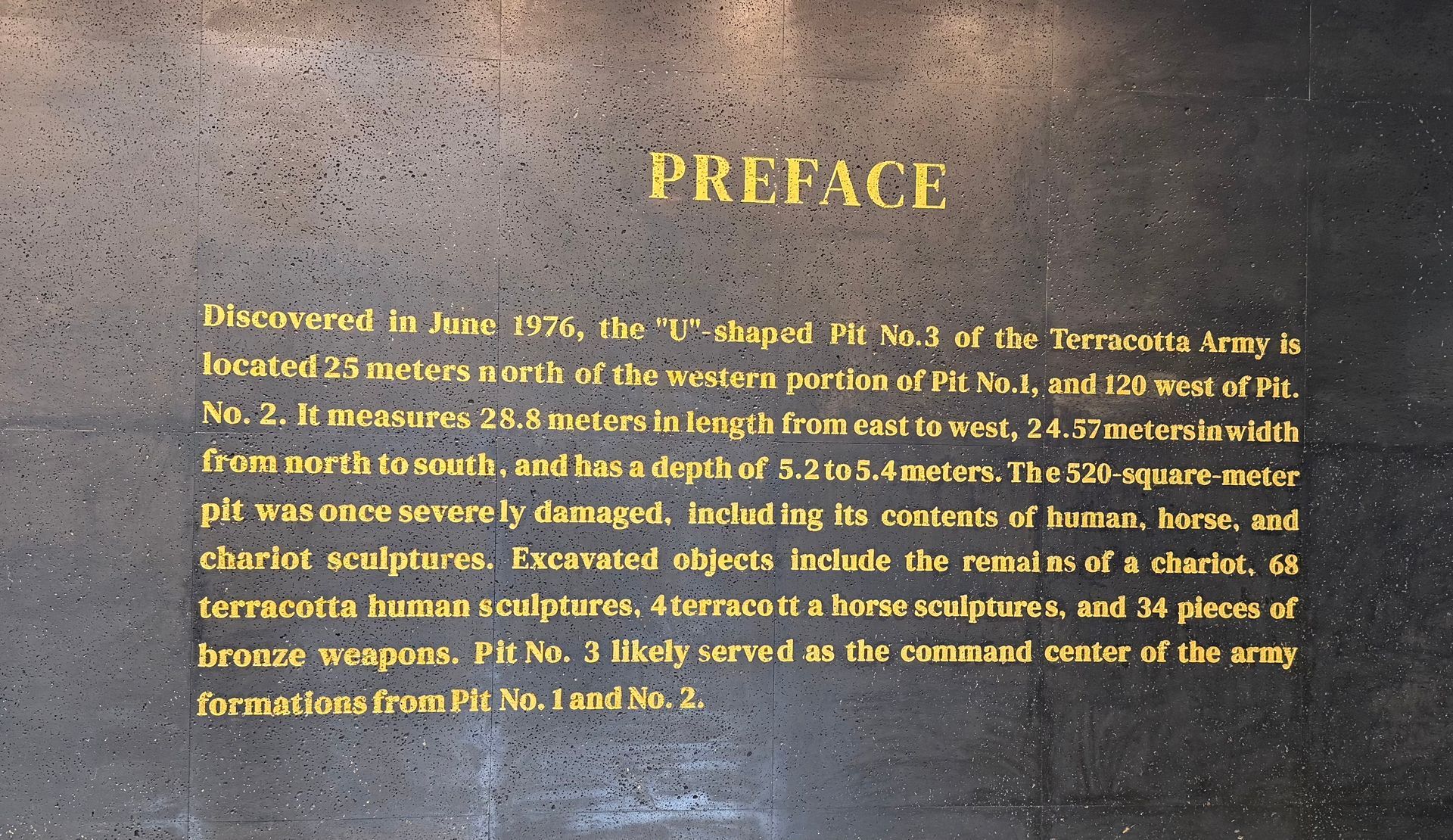
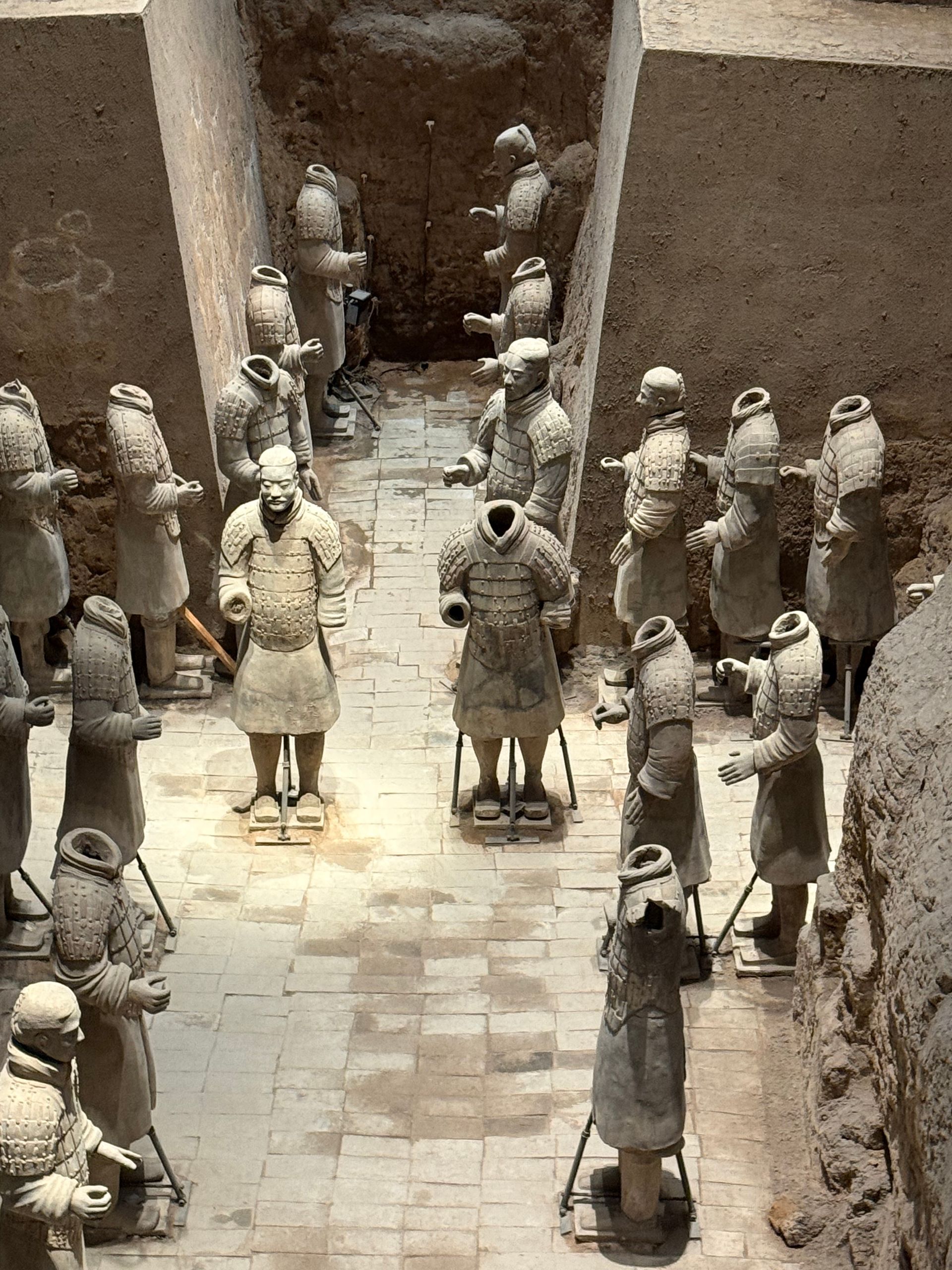
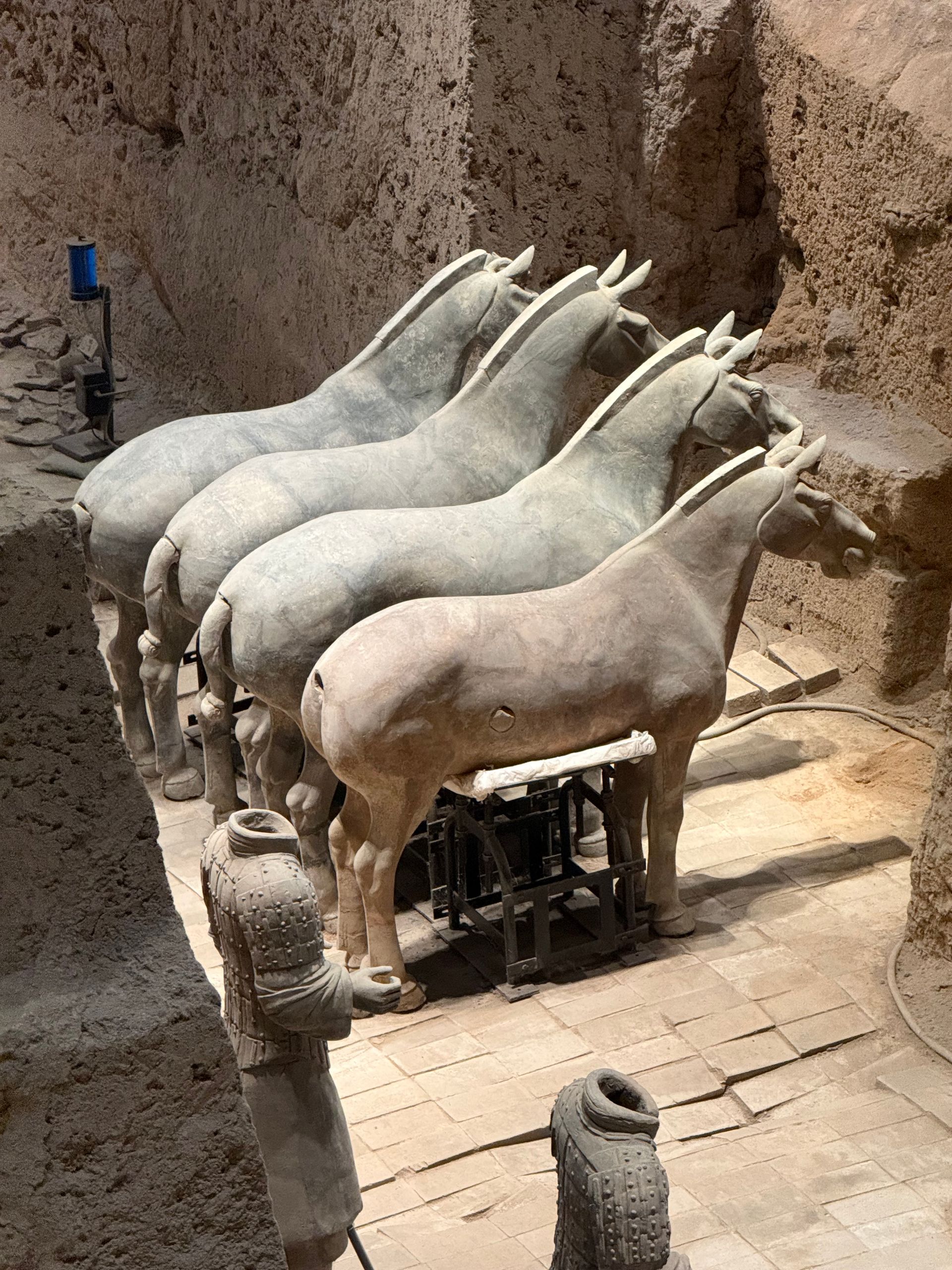
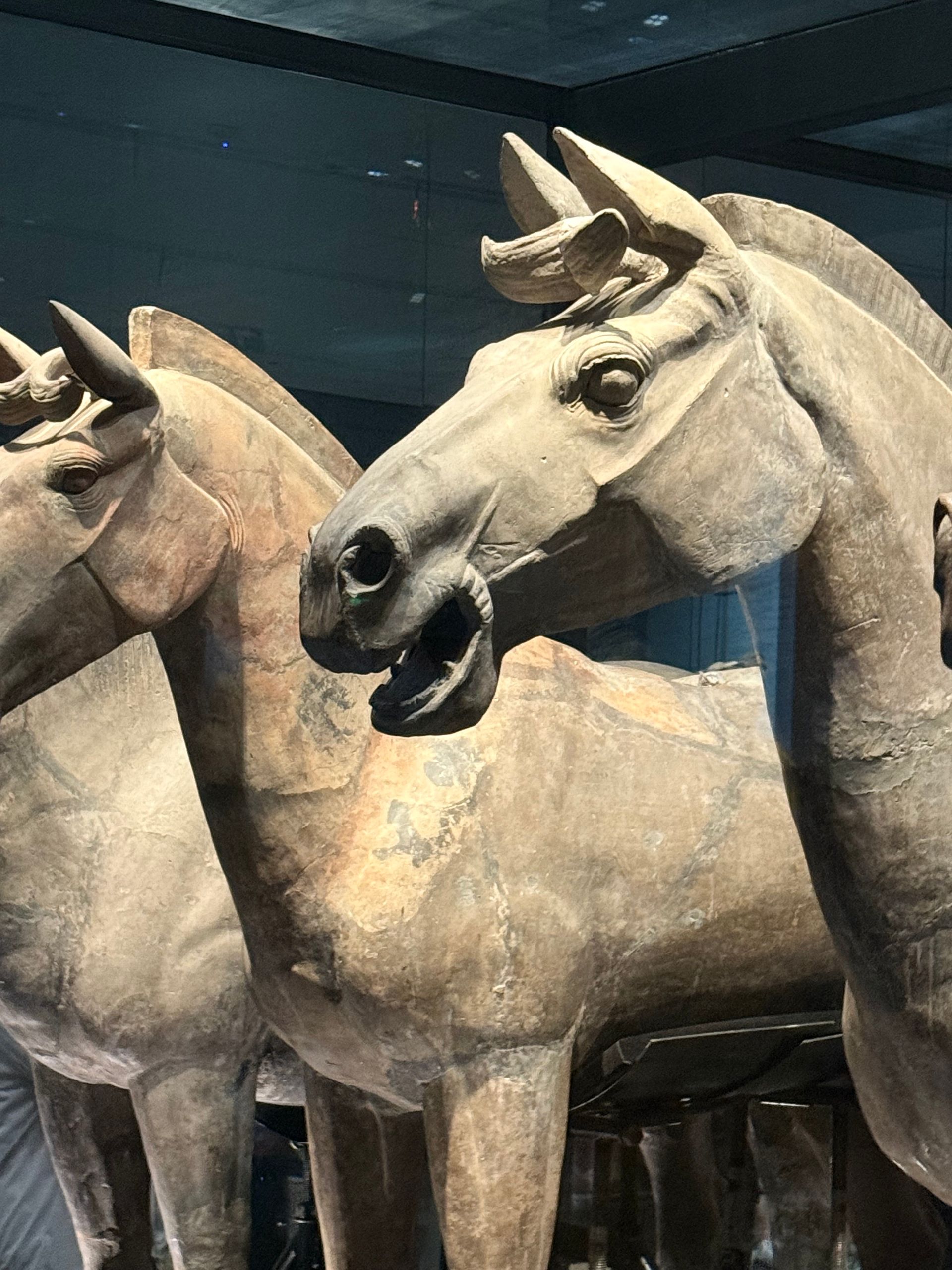
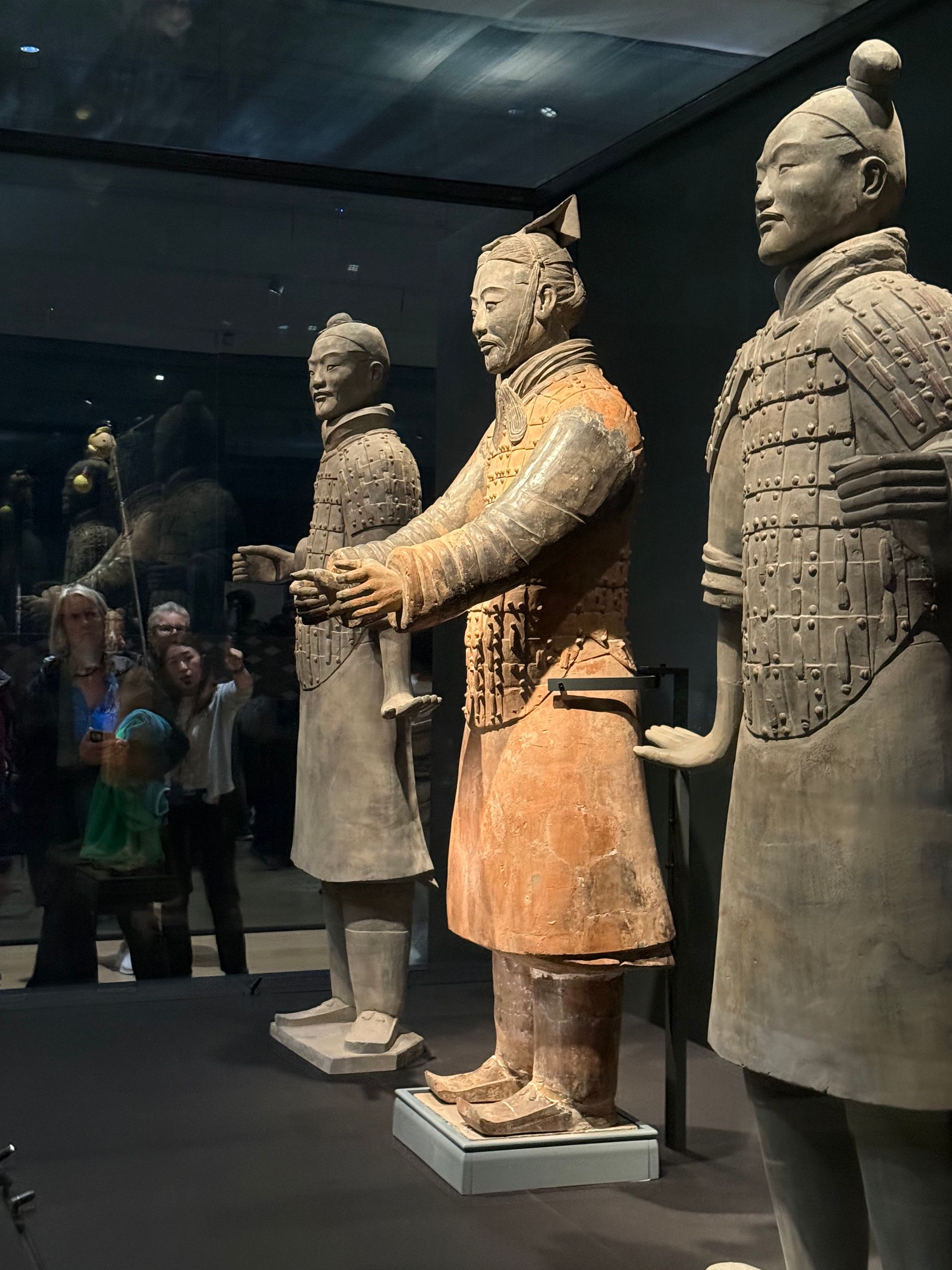
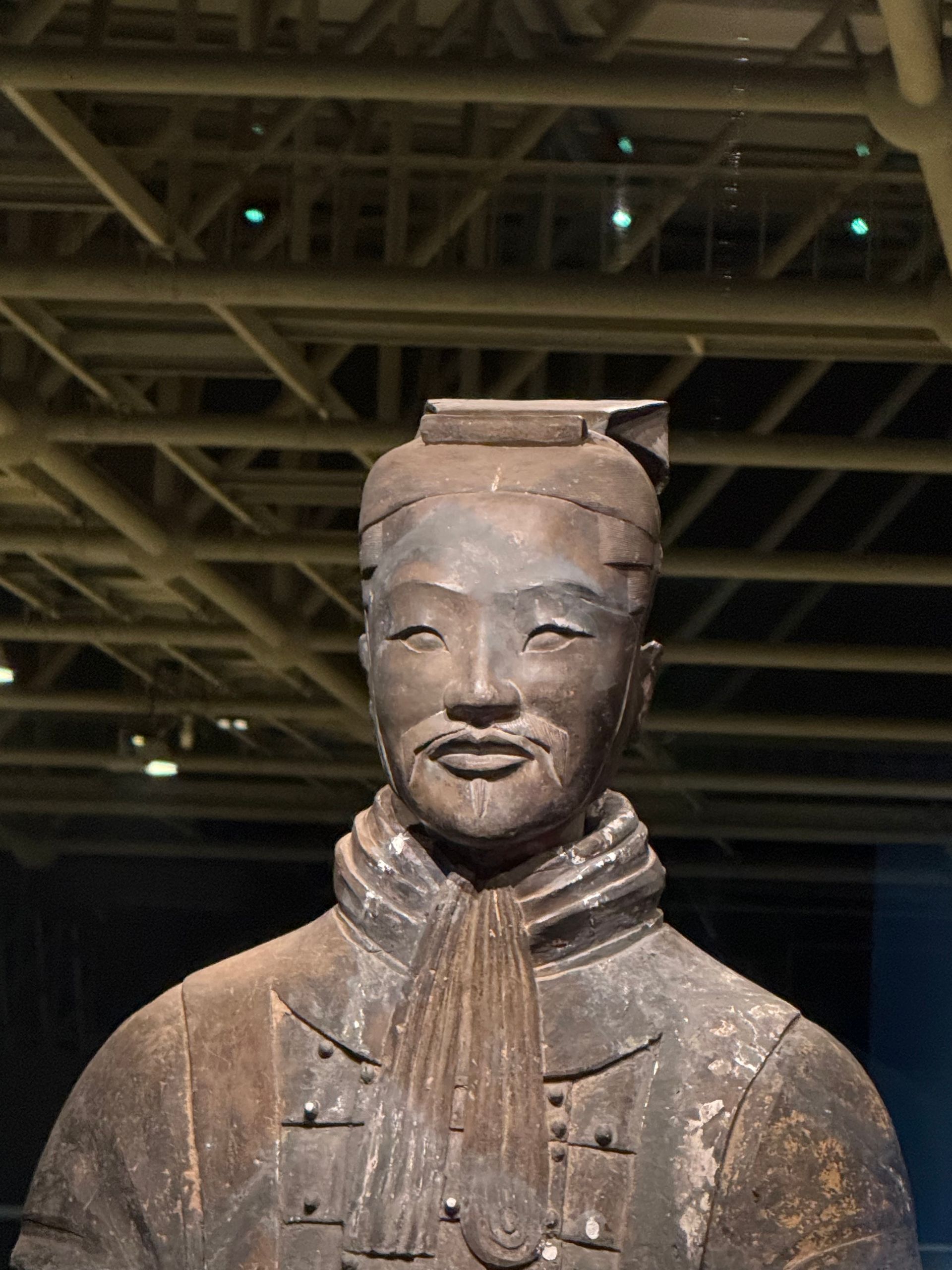
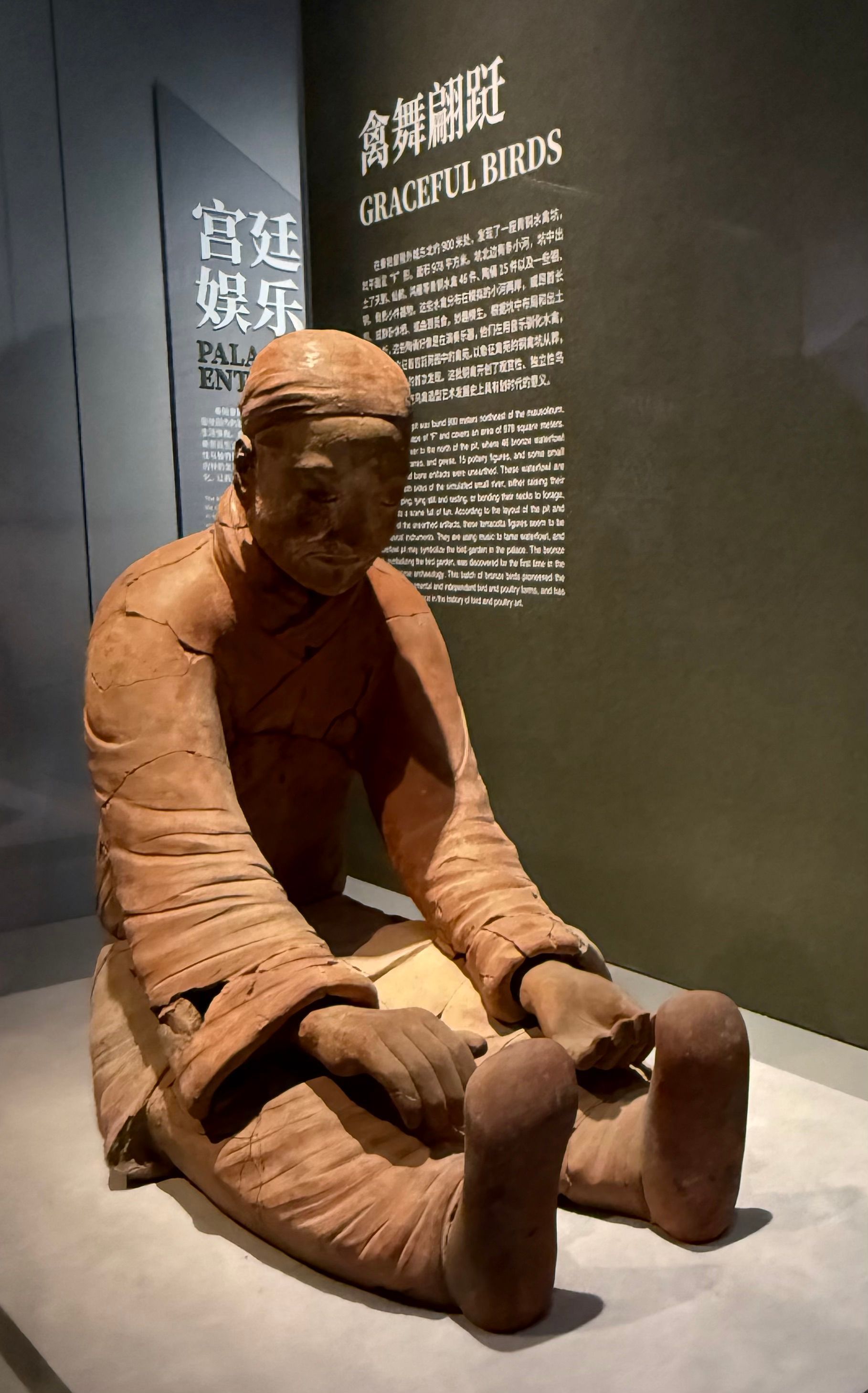
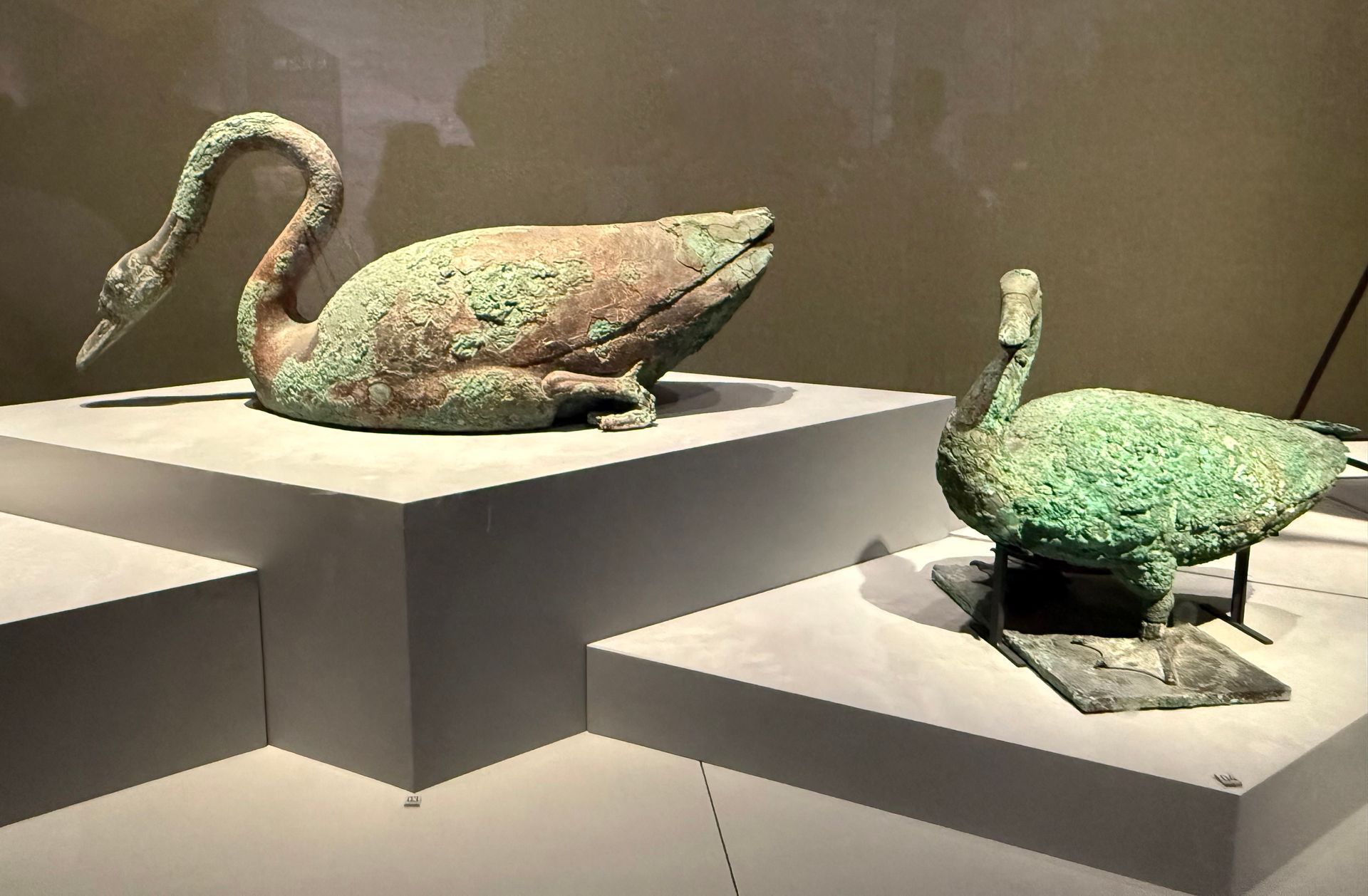

Pit #2 had calvary and infantry units as well as war chariots and is believed to be a military guard. Pit #3 is the command post, with high ranking officiers and a 4 horse war chariott. Pit #4 is empty , perhaps left unfinished by its builder. Other smaller pits were found with bronze cranes, ducks and rare animal along with entertainers like acrobats and strongmen believed to be there for the Emperor's entertainment in the afterlife.
SUCH A FASCINATING STORY AND PLACE!