September 12, 2026
LONGJI RICE TERRACES were just a short drive from the Red Yao Village. We had originally planned to view the terraces from a cable car ride, but it was raining and too windy for that operation. The alternative was to take a shuttle bus about 1/2 way up the mountain and walk pathways along the terraces. I think we actually lucked out with this change, because the views were spectacular! The mist and rain added another element and since we were inside the terraces, we could really appreciate how they were painstakingly engineered!


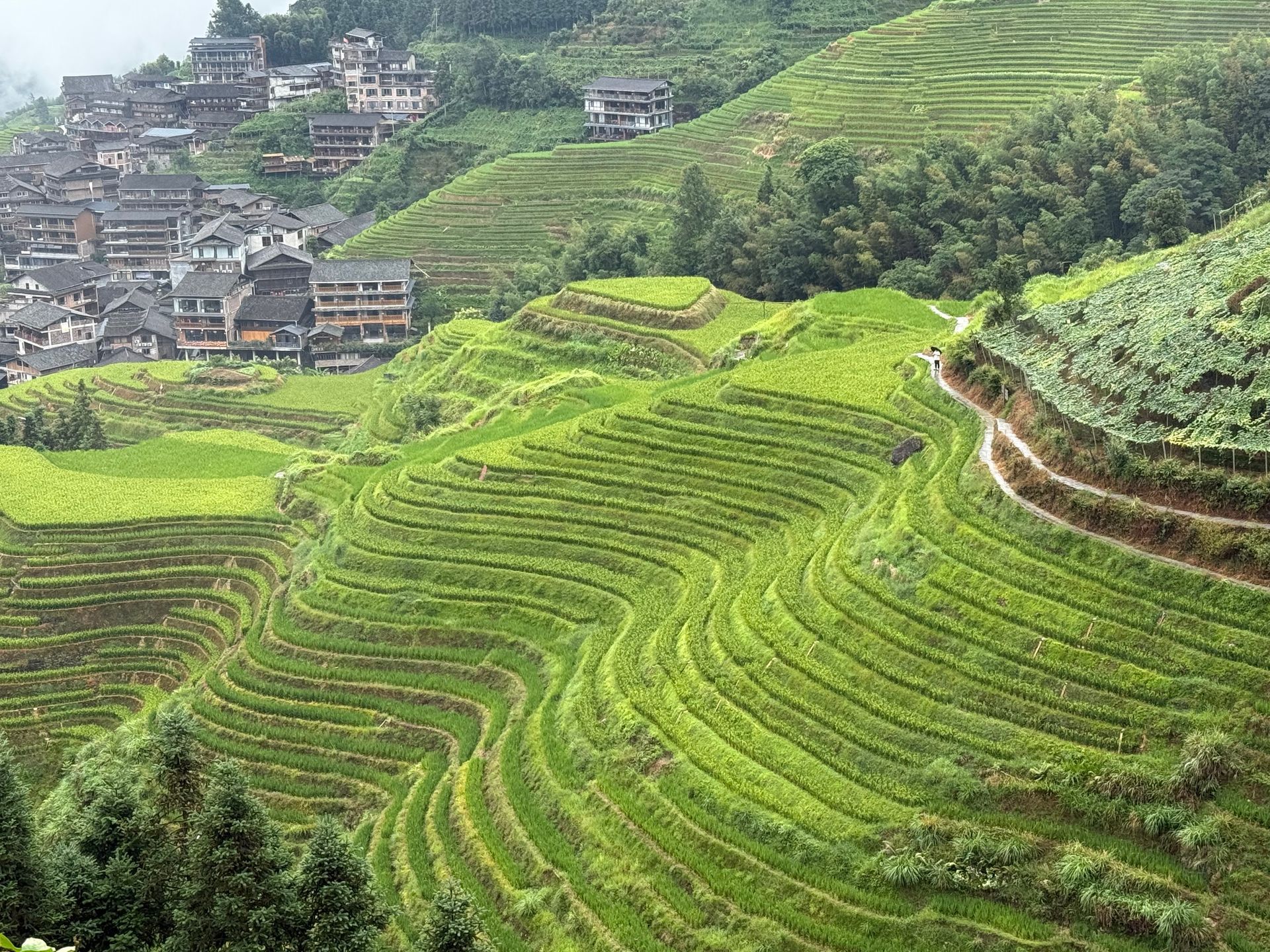


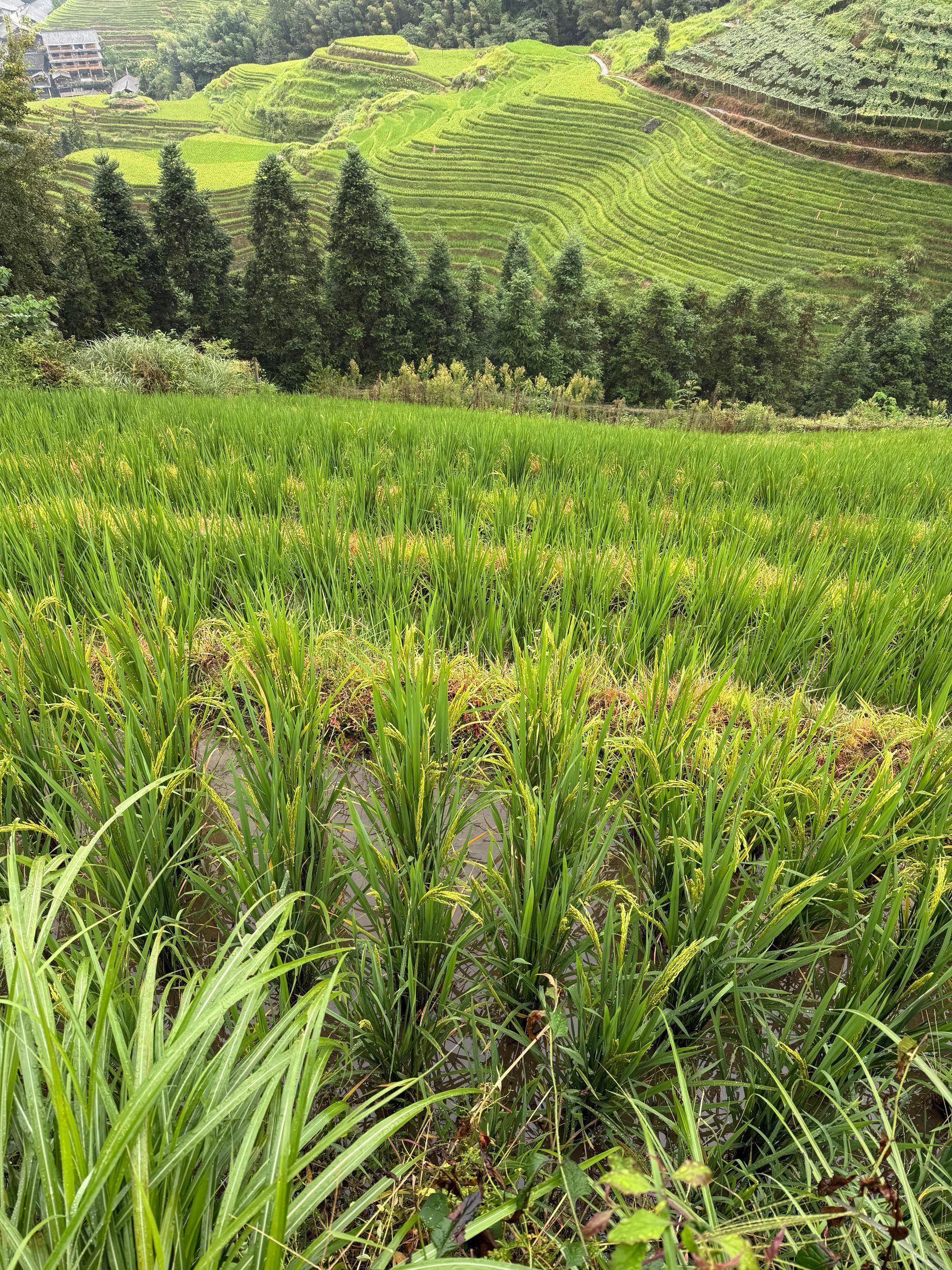
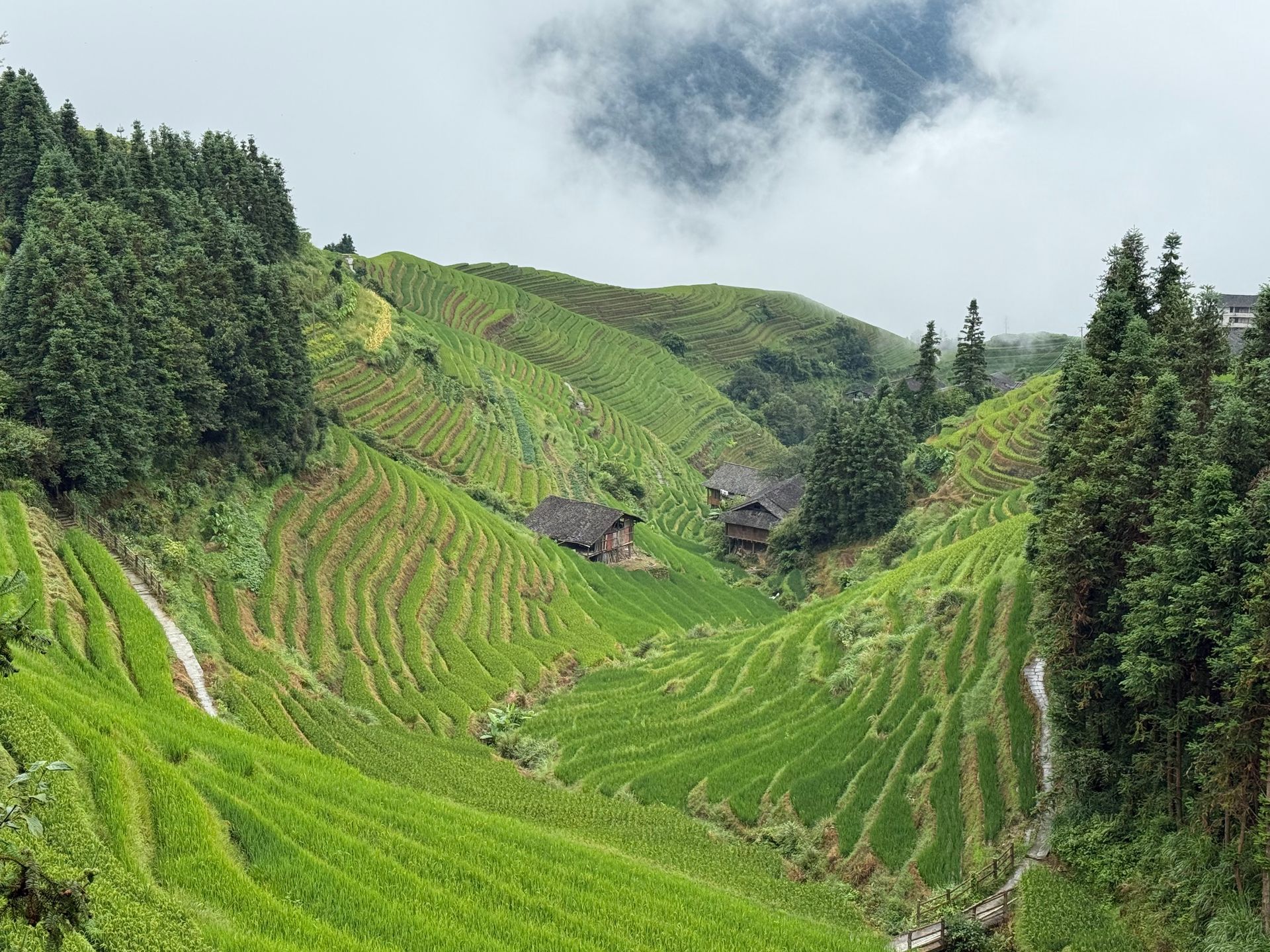

We walked the terraces for a couple of hours. It was so interesting! These terraces were hand cut by local people hundreds of years ago and this system of farming has been diligently maintained. The government stepped in when they realized what a tourist draw the area commanded. They now get a piece of the fees, but the majority still goes to the locals.The government put in regulations for conservation of natural resources, particularily along the tops of the hills.
The way the rice terraces work: water comes into the top terrace box from the mountain rainwater run off above it - some naturally, some via man installed pvc piping and more through man-made trenches. The terrace boxes, which are create by stone walls that are sealed with soil, feed water to each other as they go down the mountainside. They put carp fish in the terrace boxes, with the rice samplings each season, to eat away the elements harmful to the rice growth. They plant the rice in Spring and Harvest once in the Fall. When they cut the rice stacks they leave the bases, drain the boxes of water and set fire to the roots. The ash stays in the boxes as part of the future fertilizer. Over the winter months they rotate in other crops to the boxes.
The variations you see in color in the boxes is the difference between types of rice used - one is a longer grain than the other (used for sticky rice) and also the age of the plants, in their growth cycle. Note that several family farms are involved in each of the terraces. It is hard for us to tell where one families set of boxes starts and ends. They have them marked and mapped.