July 21, 2026

The house tour and story of Jim Thompson was so fascinating! The  guide had tons of details and was very good.I loved my afternoon in this hidden oasis.
  • Slide title

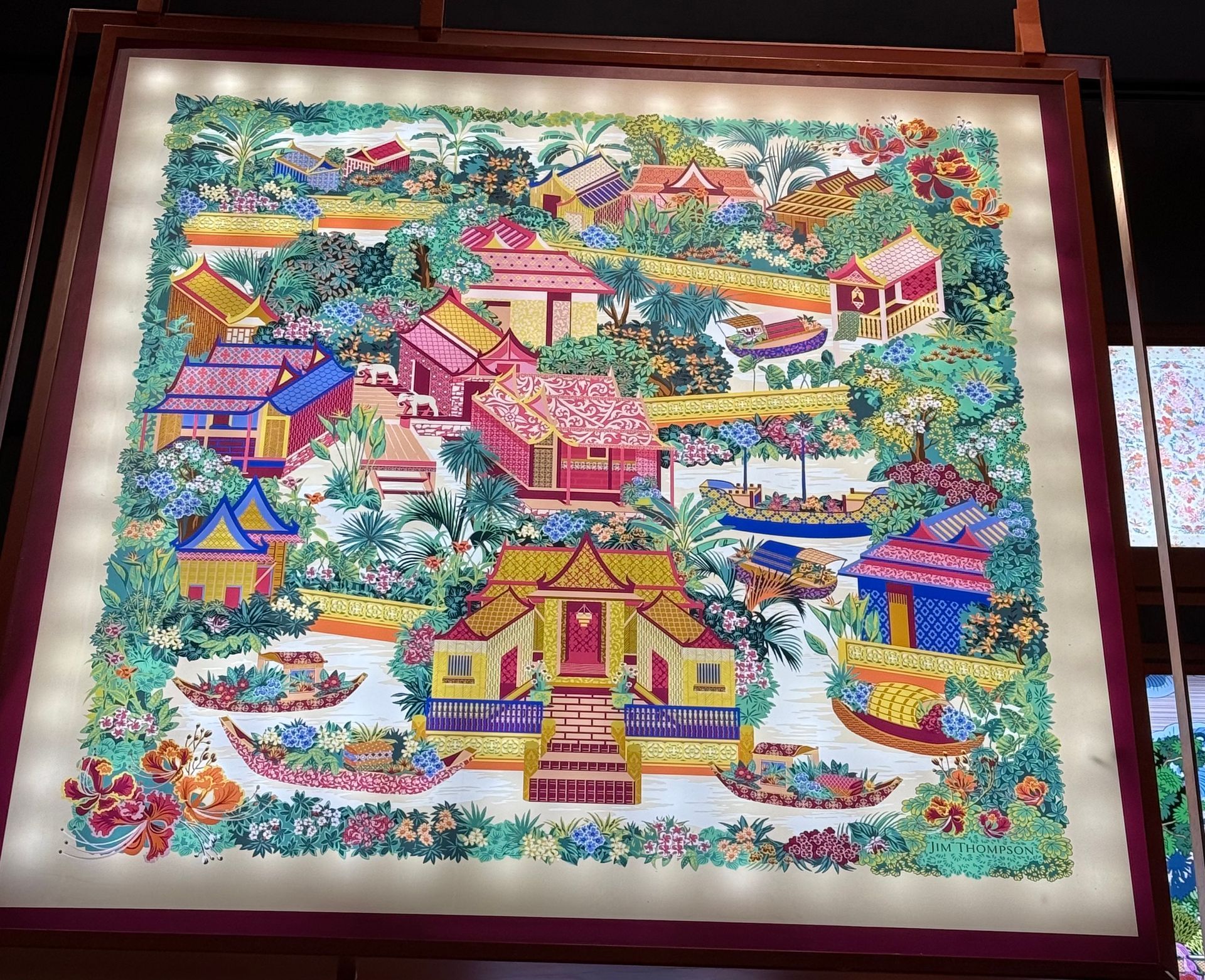
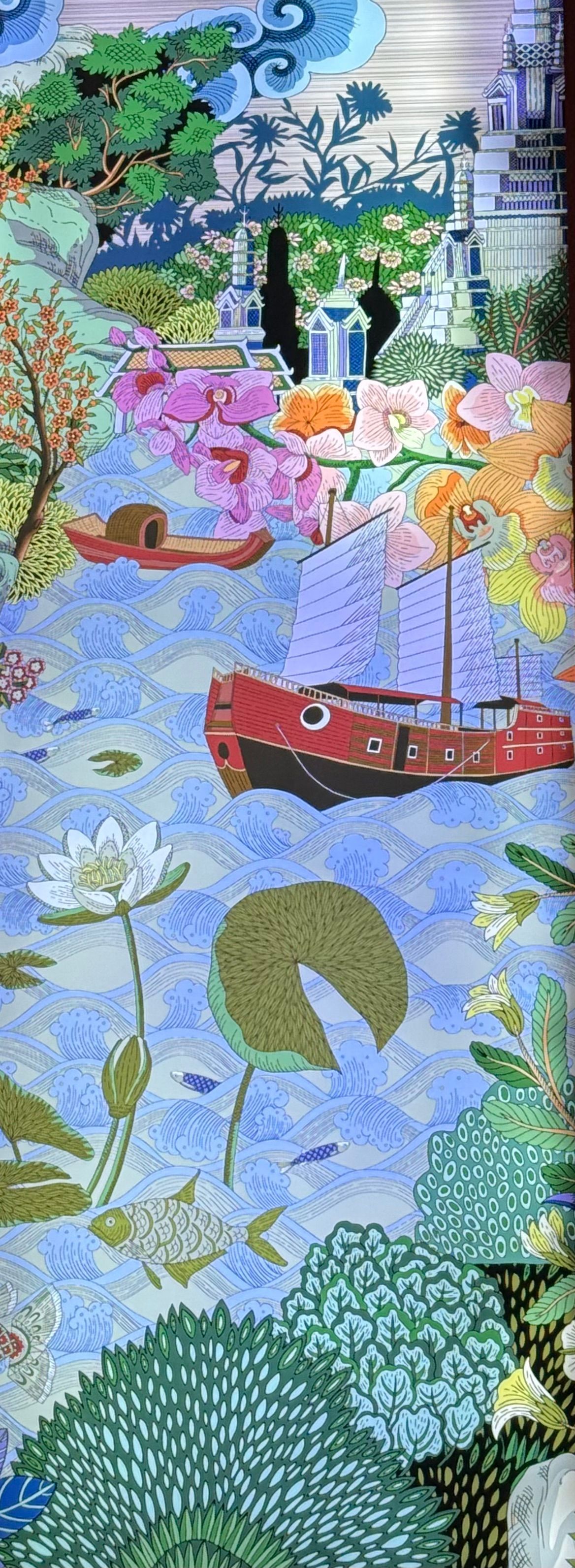
    Best known silk pattern

    Button
  • Slide title

    Another top seller

    Button
  • Slide title

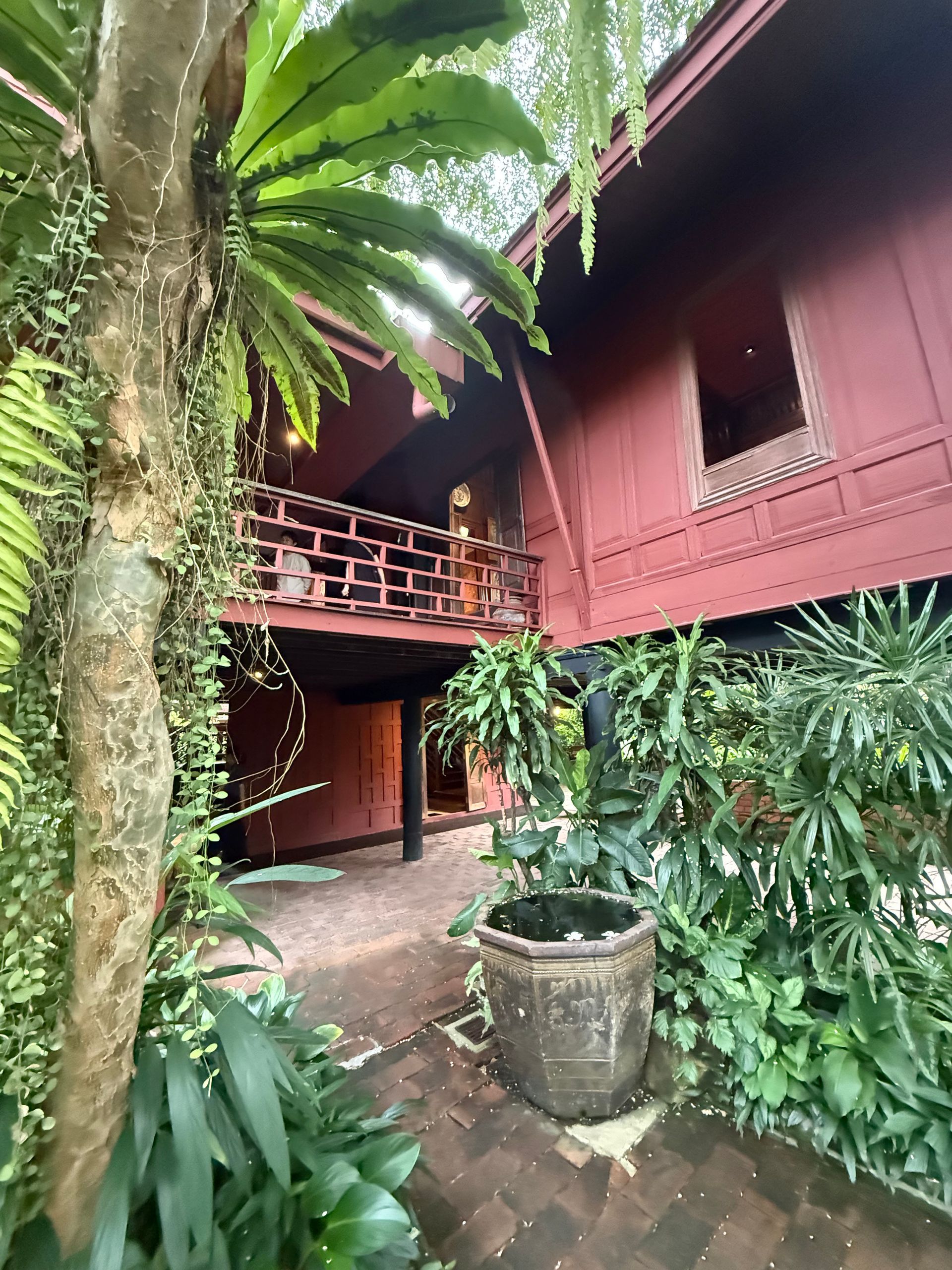
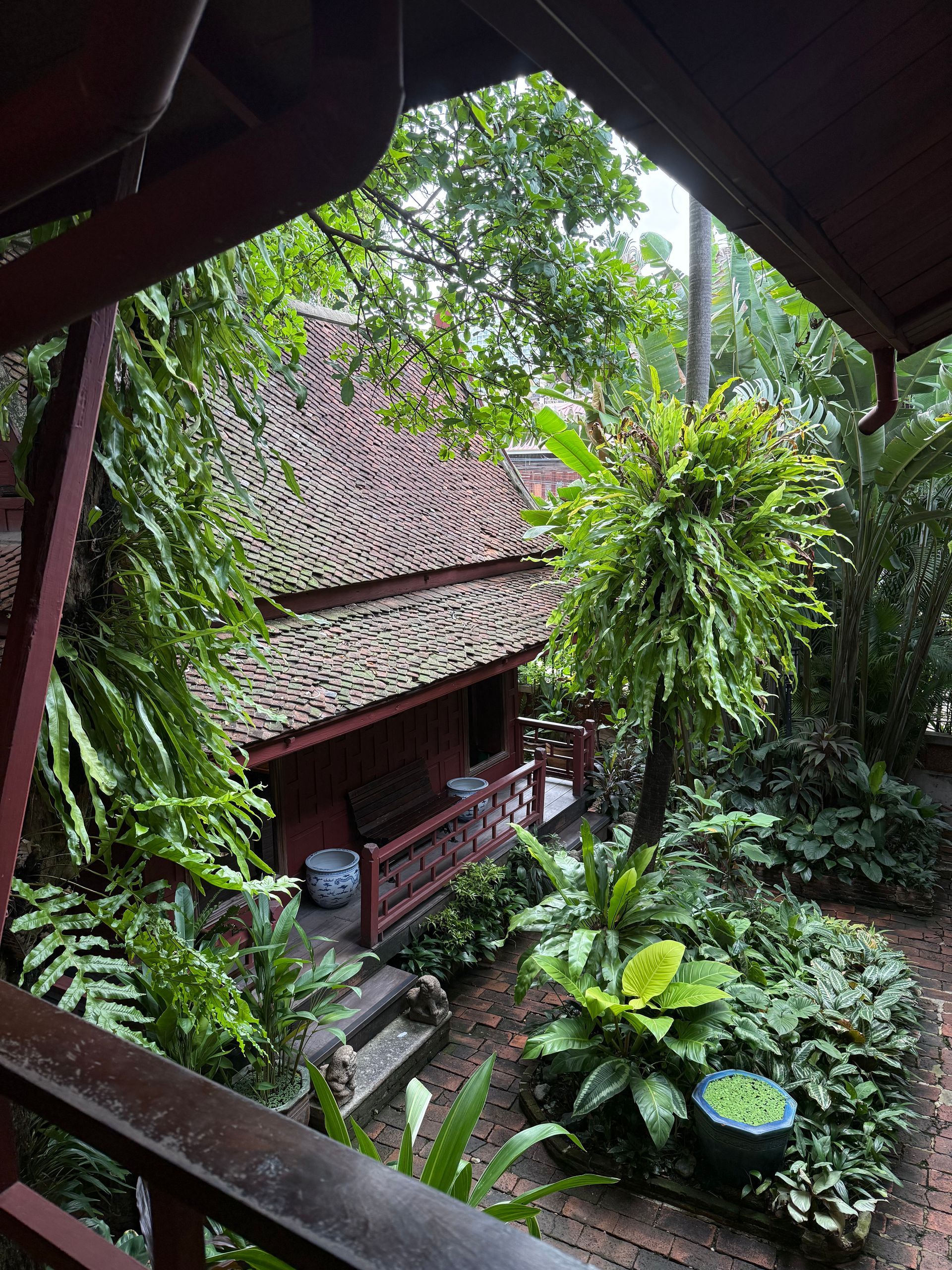
    His home

    Button
  • Slide title


    Button
  • Slide title

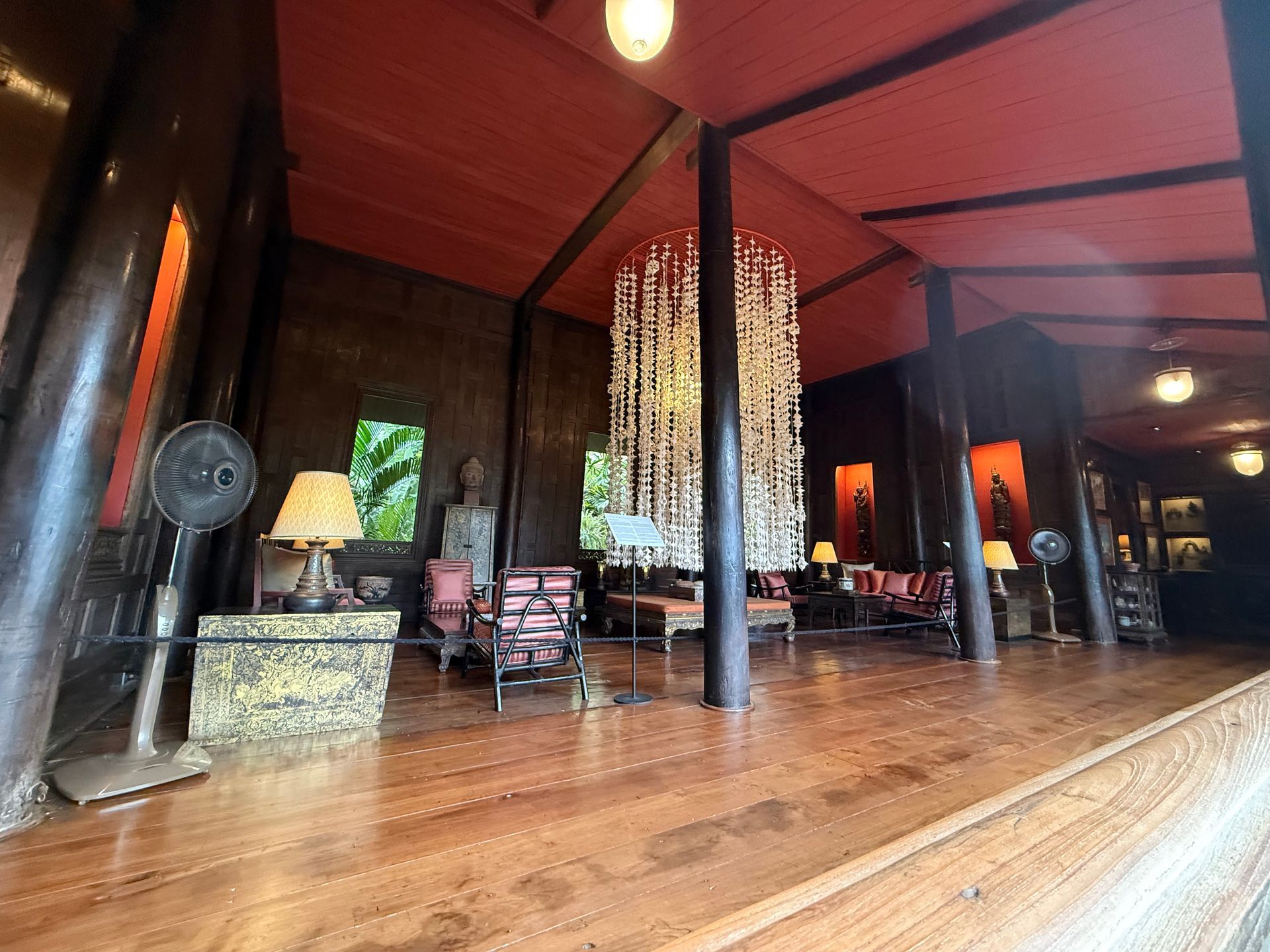
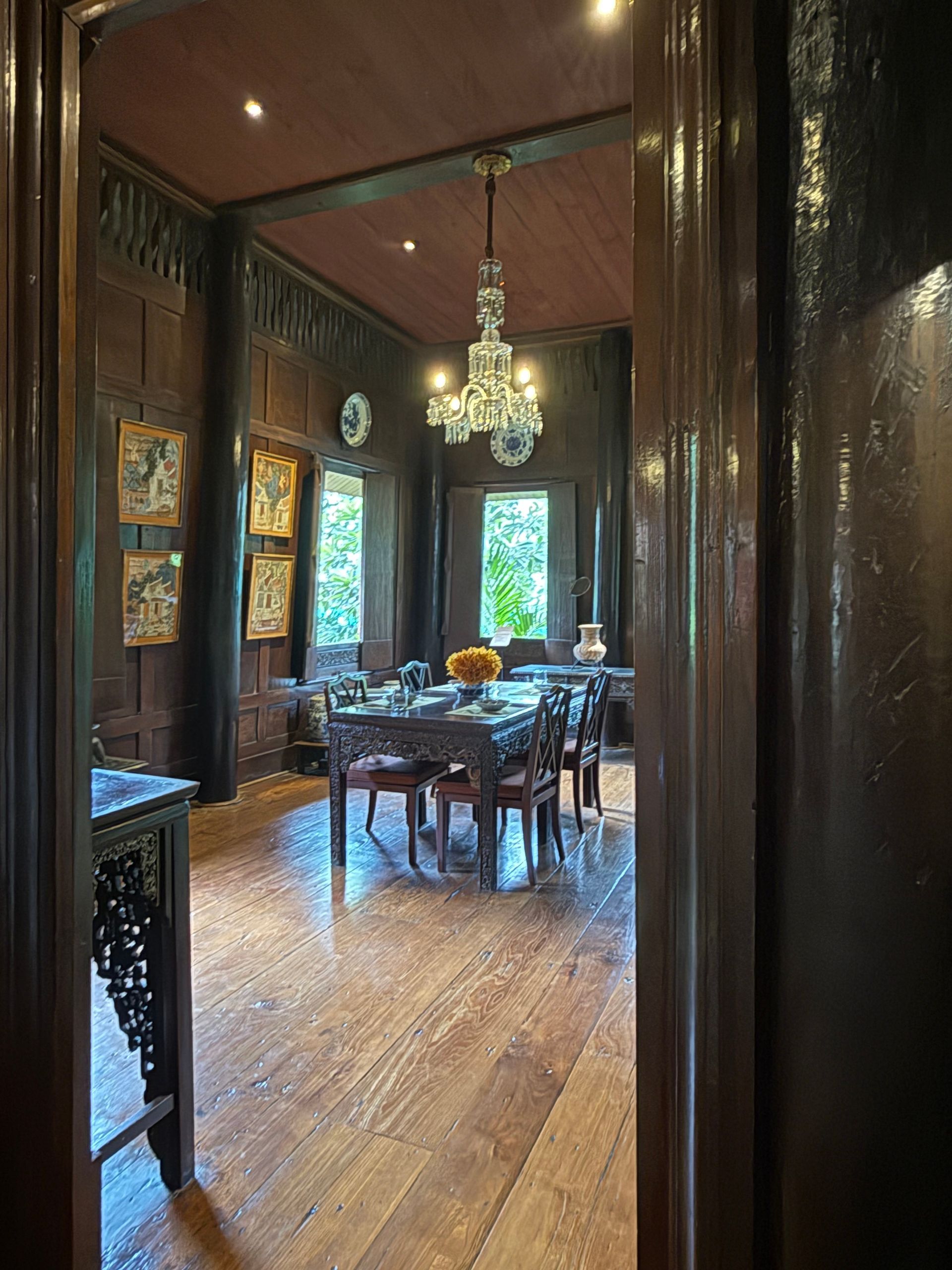
    Livingroom w/ large temporary art installation around chandelier

    Button
  • Slide title

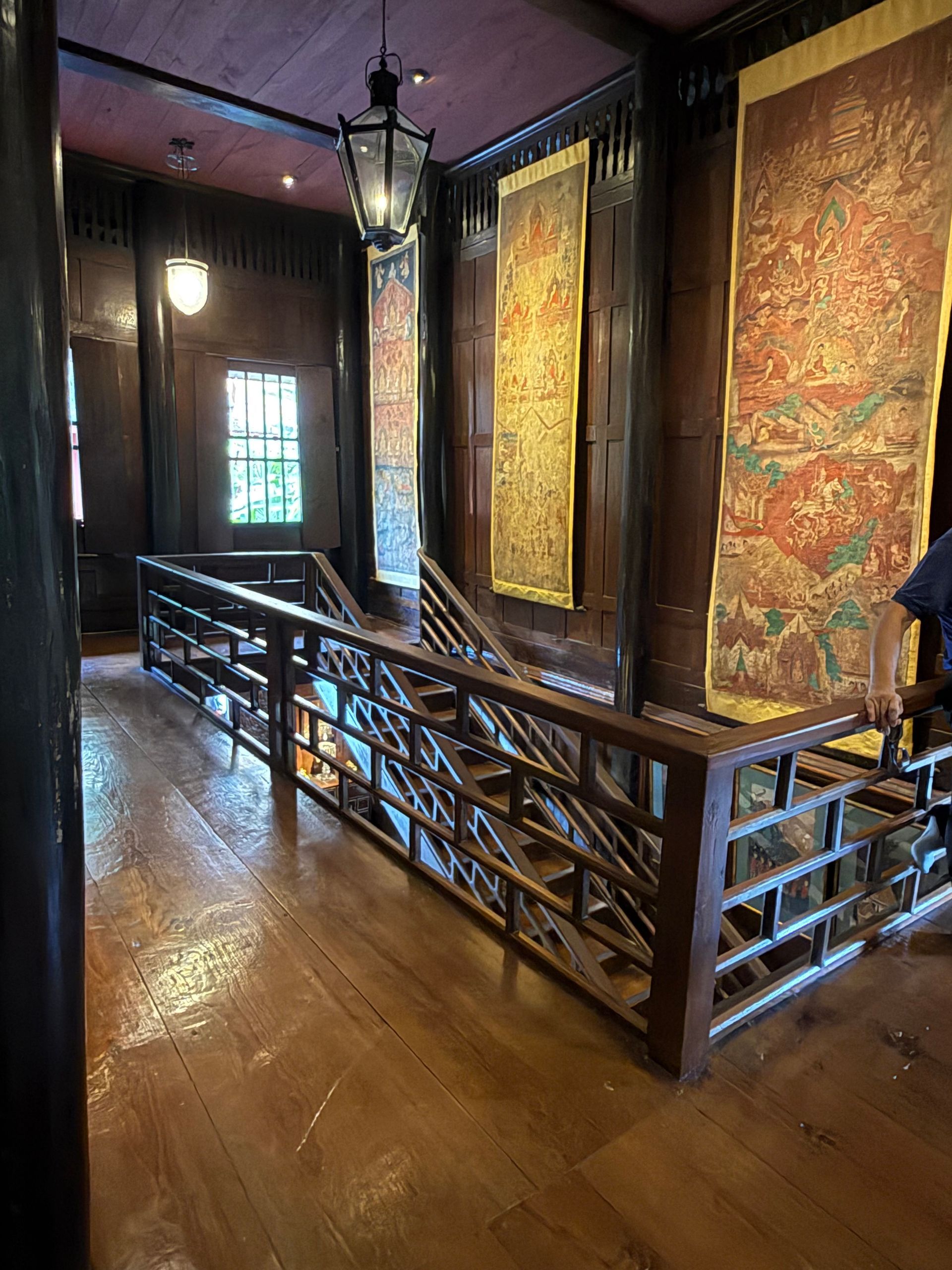
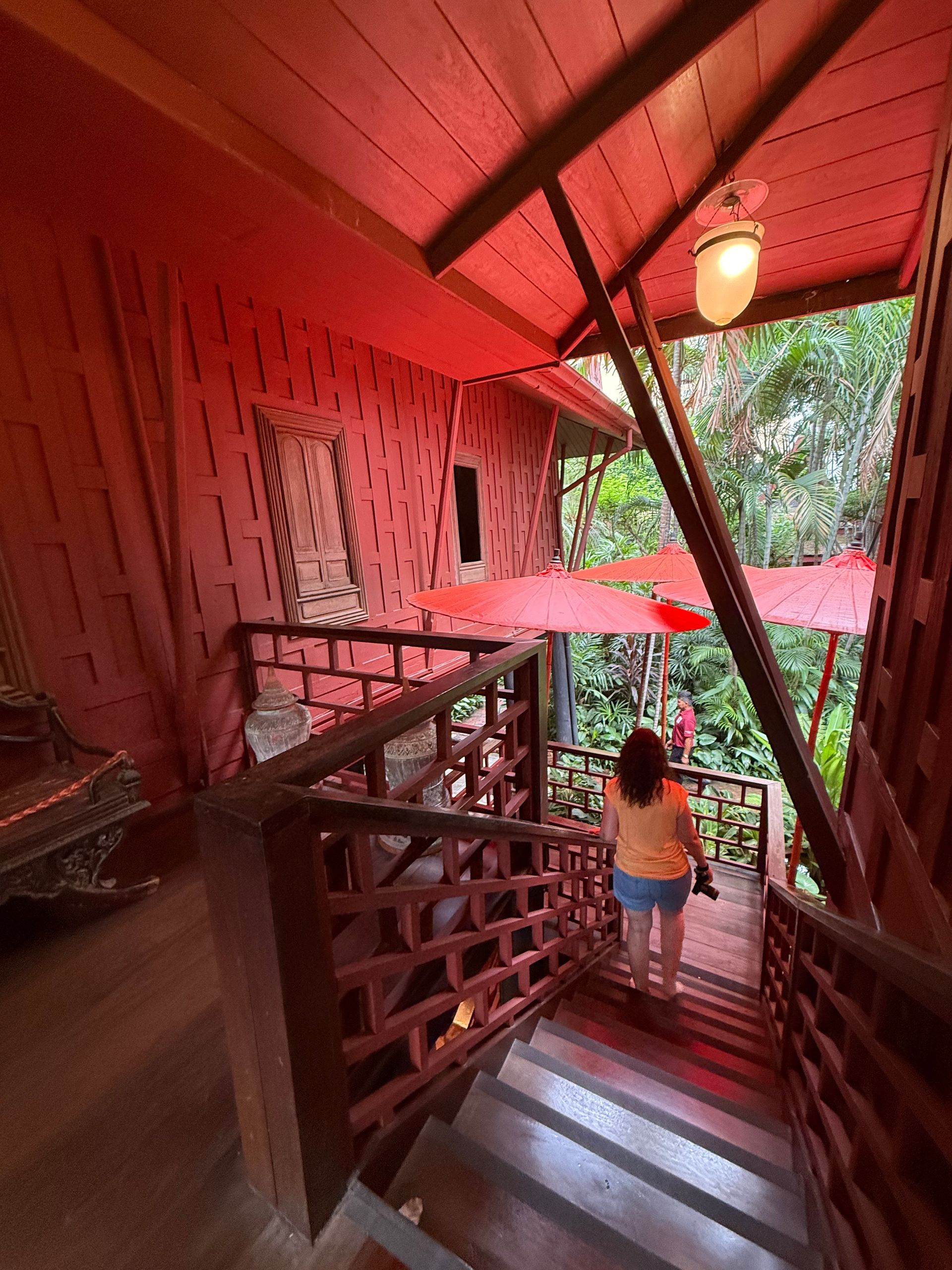
    Added Interior staircase

    Button
  • Slide title

    Write your caption here
    Button
  • Slide title

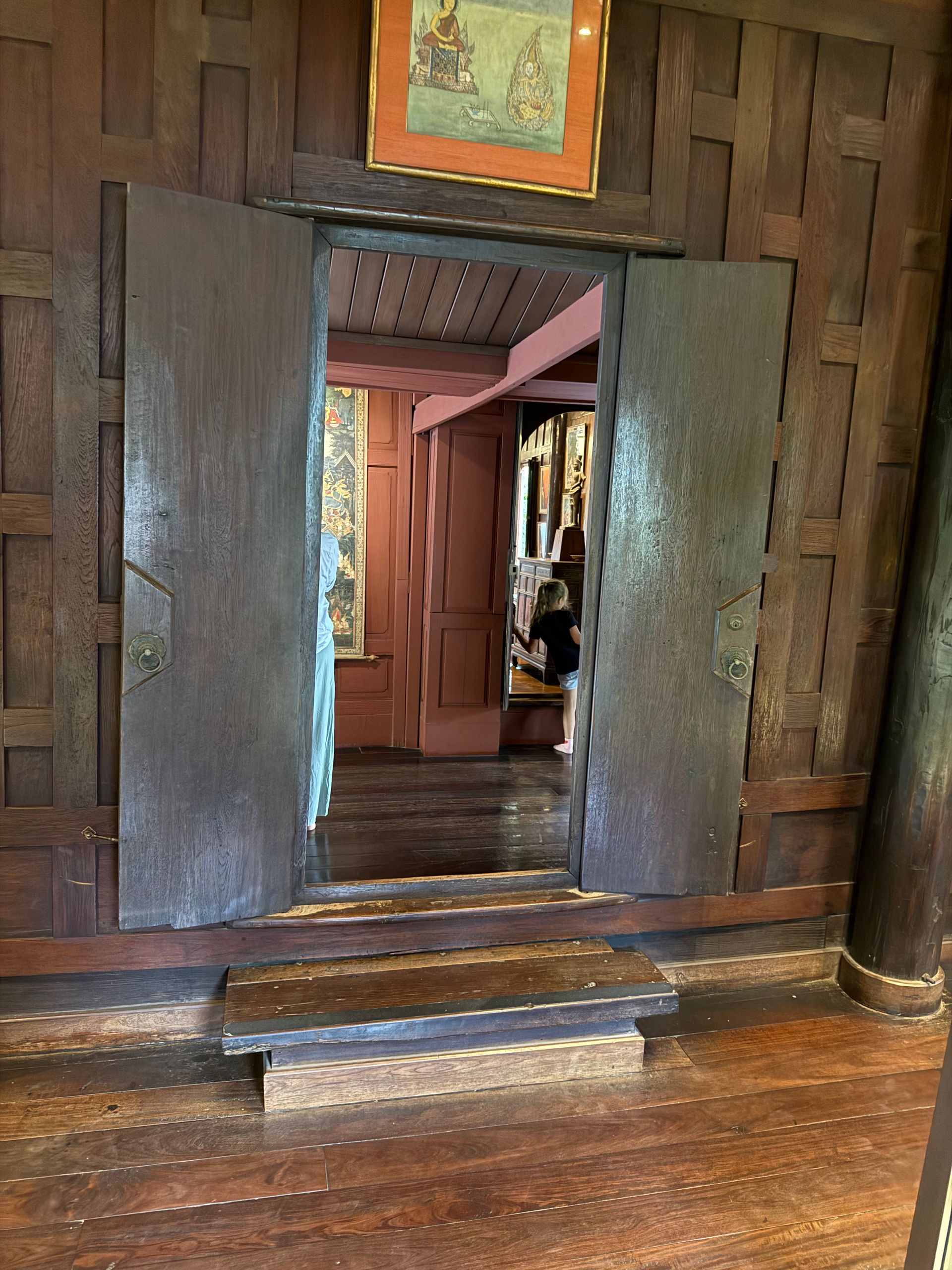
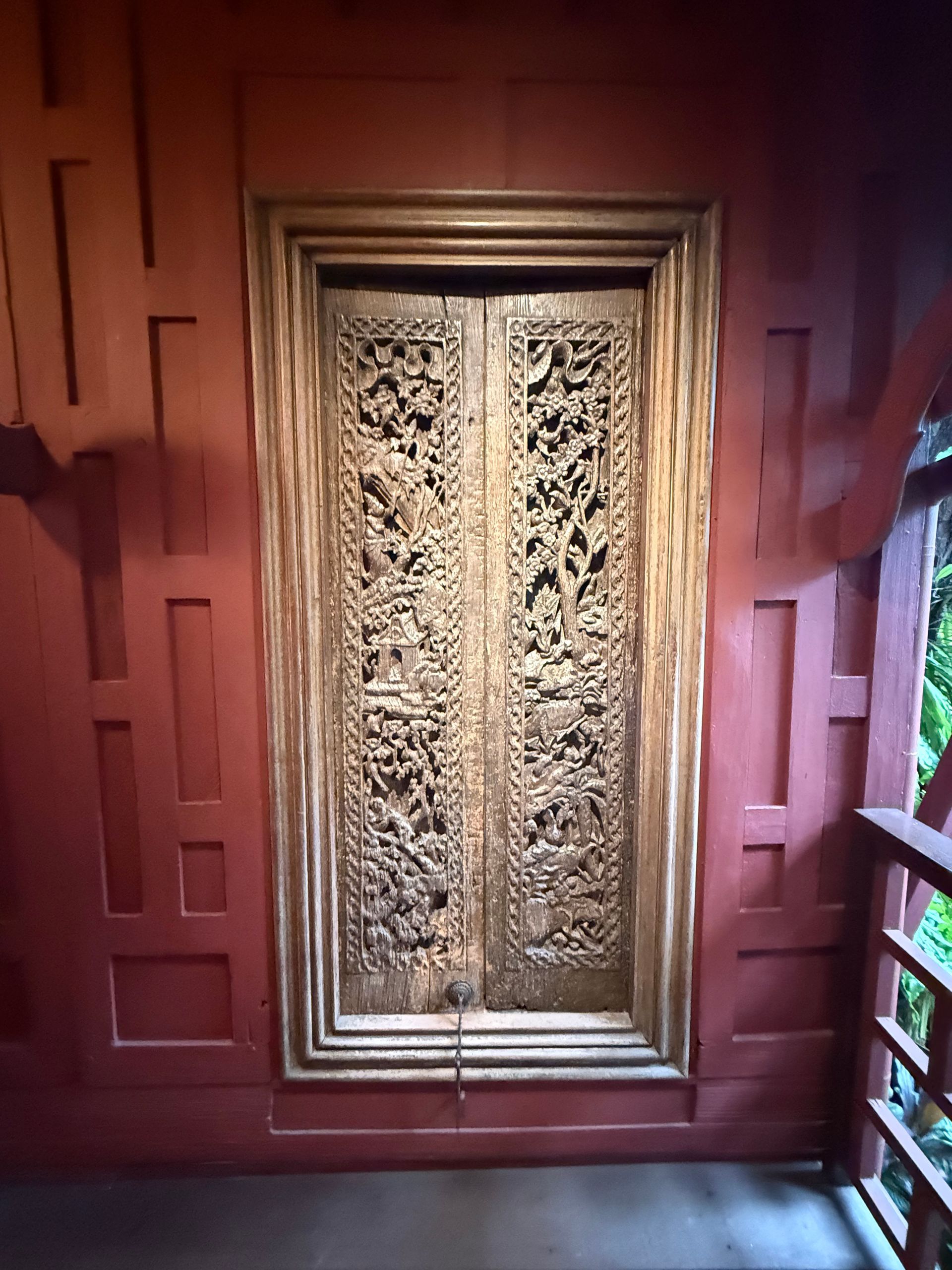
    Raised doorways to keep out creepy crawlies, snakes and evil spirits 

    Button
  • Slide title

    Write your caption here
    Button
  • Slide title

    Write your caption here
    Button
  • Slide title

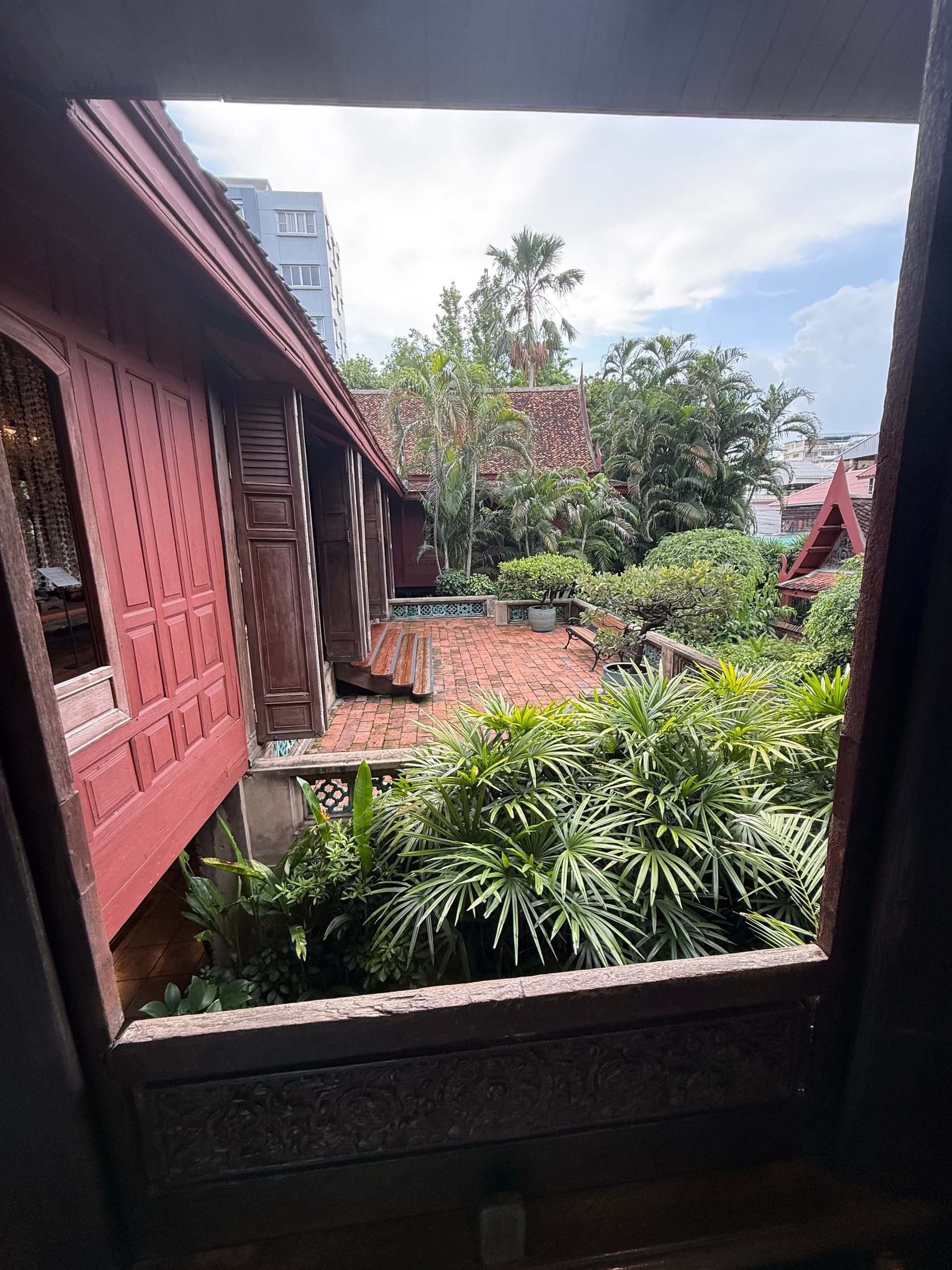
    Balcony off master bedroom

    Button
  • Slide title

    Terrace off Livingroom that lead to boat dock - the way most guest arrived

    Button
  • Slide title

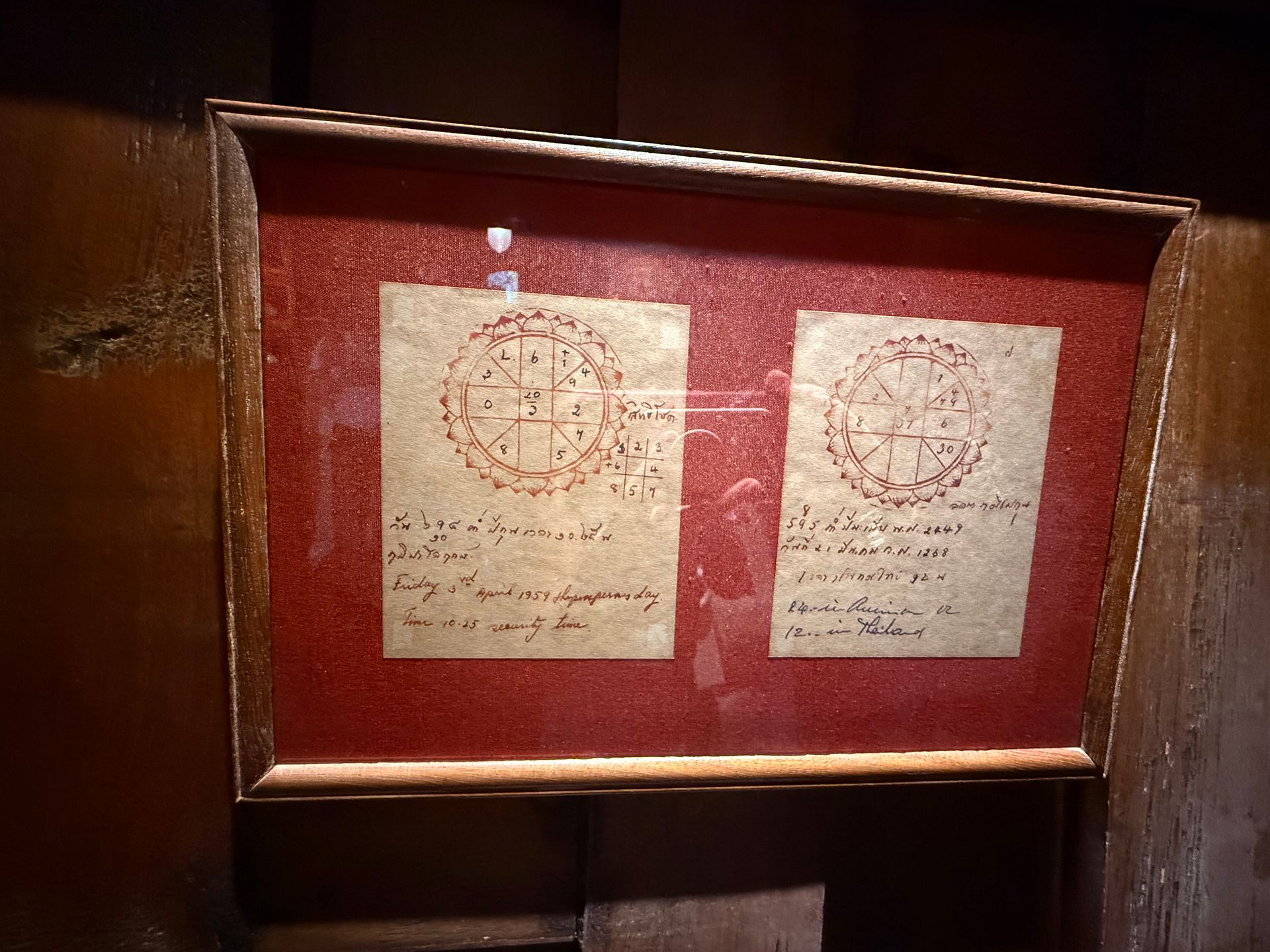
    Astrological reading

    Button
  • Slide title

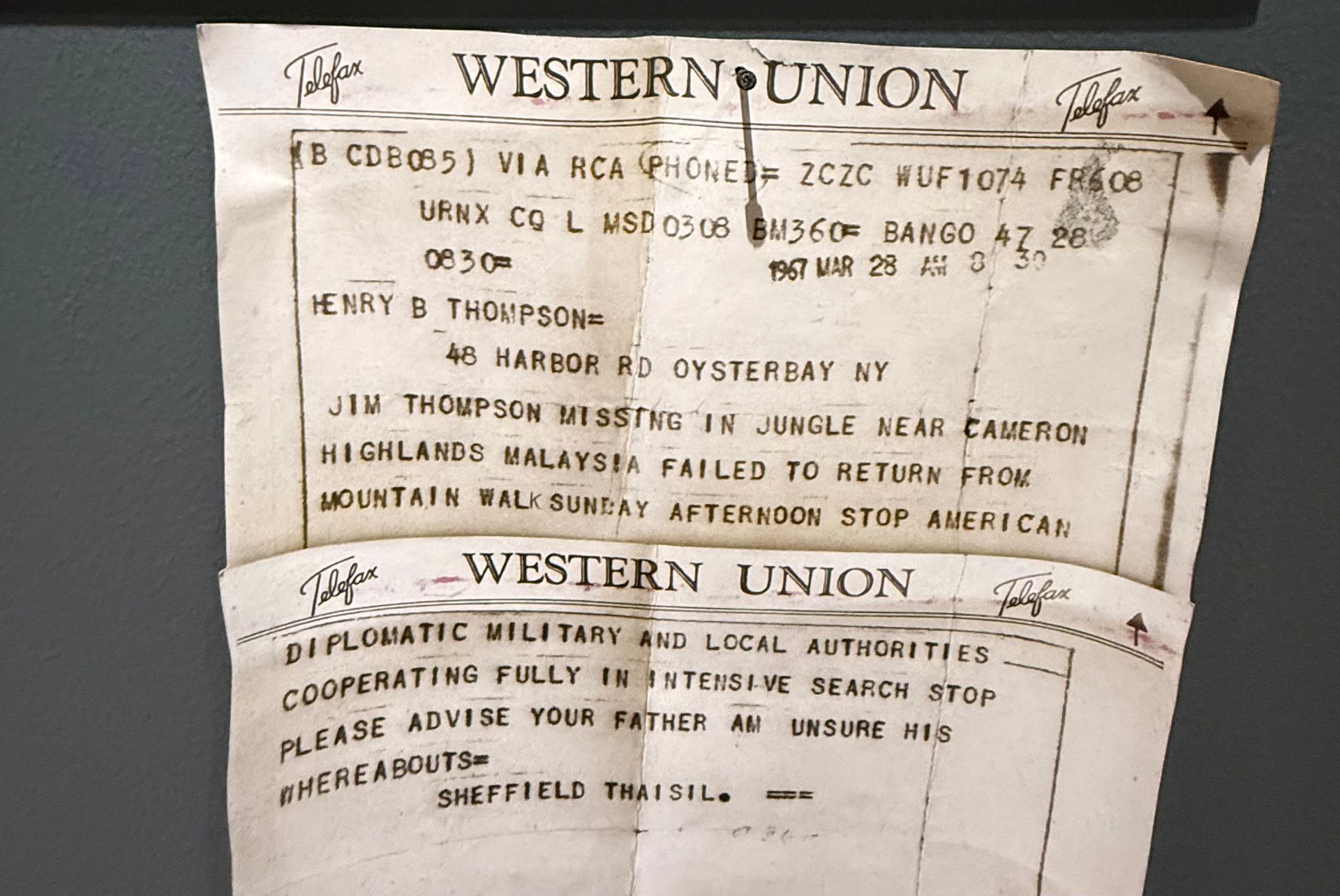
    1967 Telegram to family about disappearance

    Button
  • Slide title

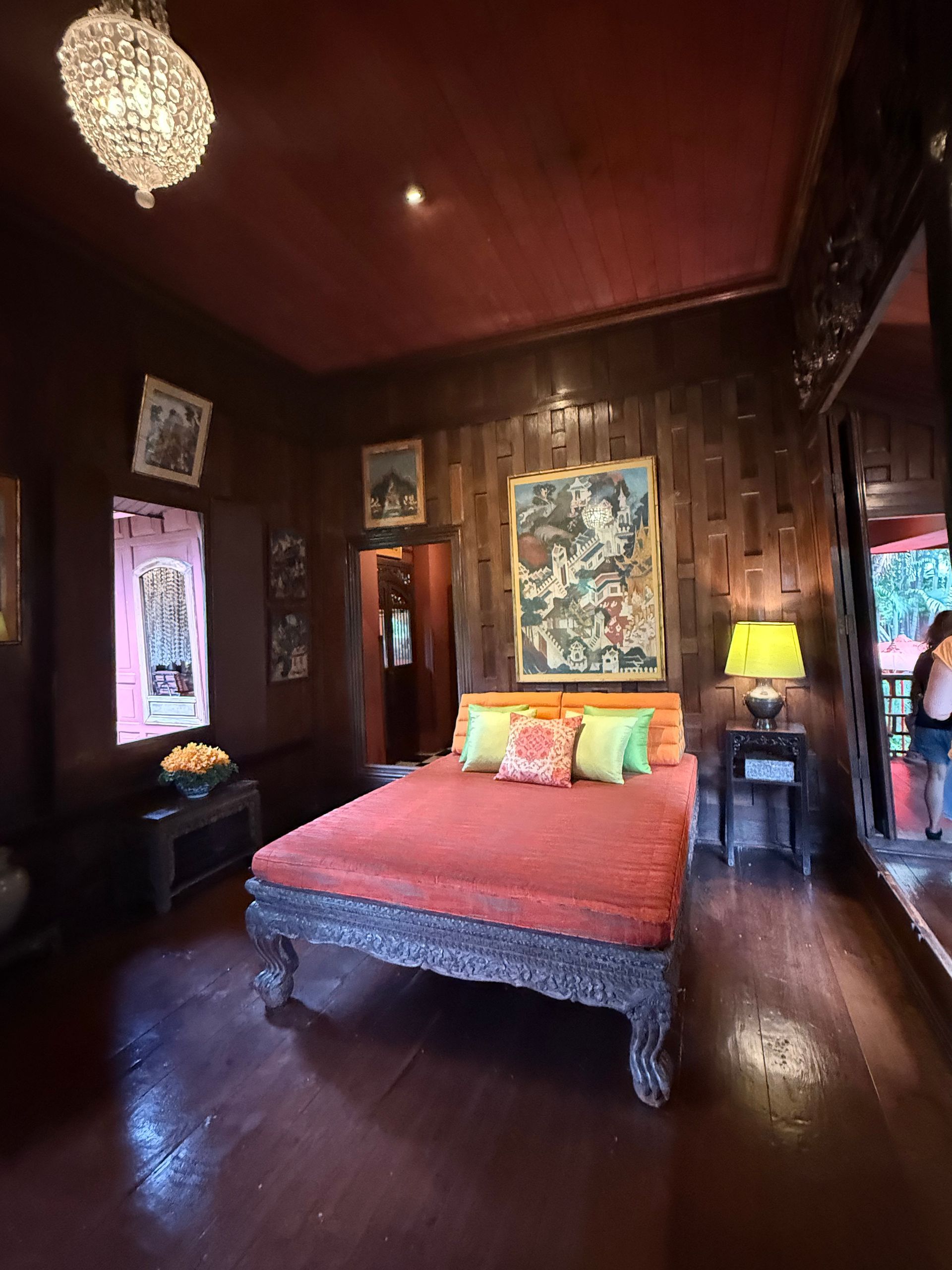
    Master bedroom

    Button
  • Slide title

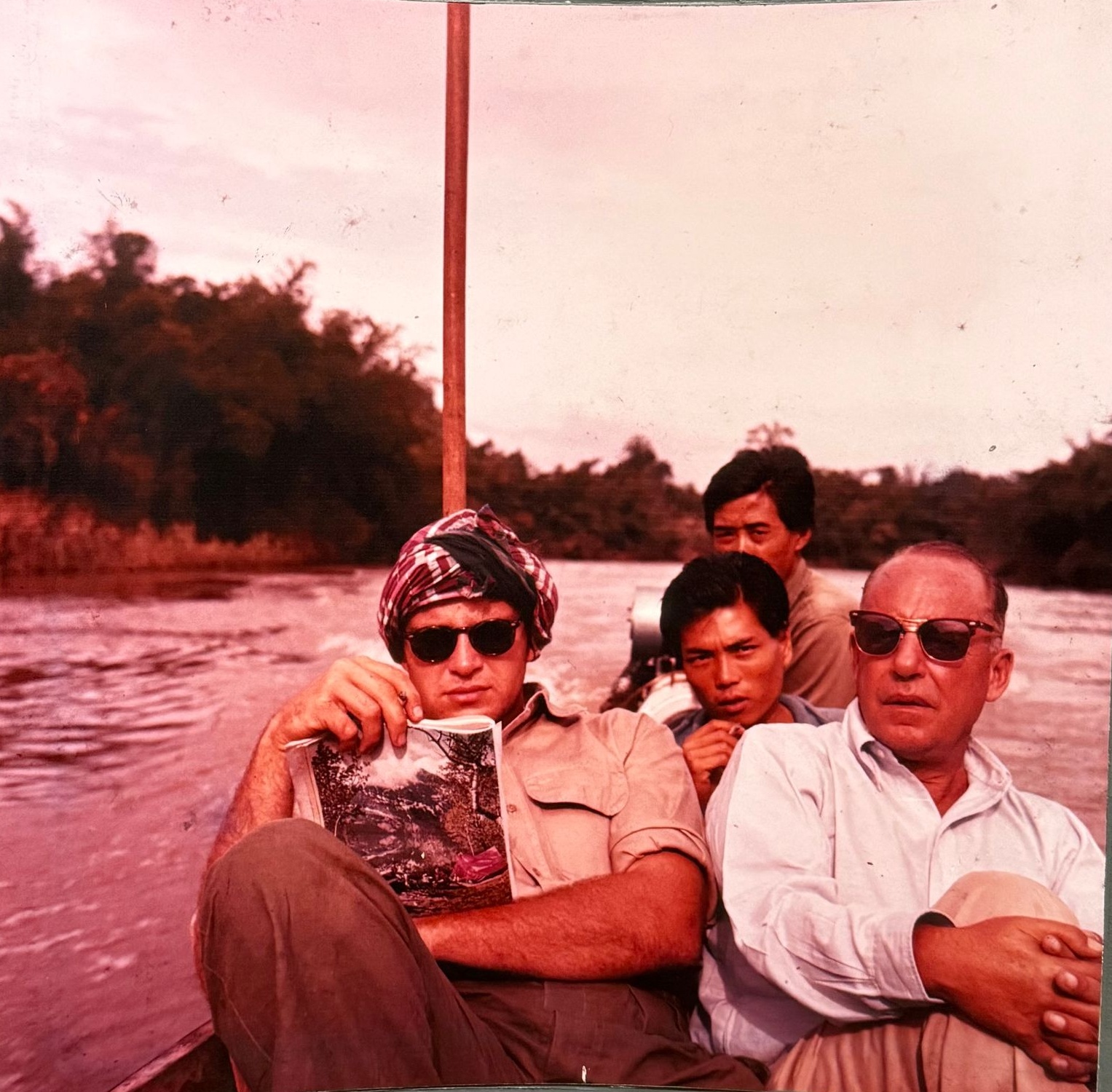
    1960 Jim ( white shirt) with friends on River Kwai

    Button

Jim Thompson was born in Greenville, Delaware in 1906. He went to Princeton and studied architecture. During WWII, he joined the U.S.Army and served in Europe and later Asia. He was sent to Bangkok as a military officier and fell in love with Thailand. After leaving the service, he returned to Bangkok to live here permanently.


He had planned to get his masters in Architecture, but failed Calculus twice, so pursued and discovered other passions. Silk hand weaving, a long neglected cottage industry, captured his interest and he devouted himself to reviving the craft. Highly gifted as a designer and textile colorist, he contributed substantially to the industries growth and worldwide recognition for Thai silk. His silks were used as costumes in the famed Broadway play - The King and I.


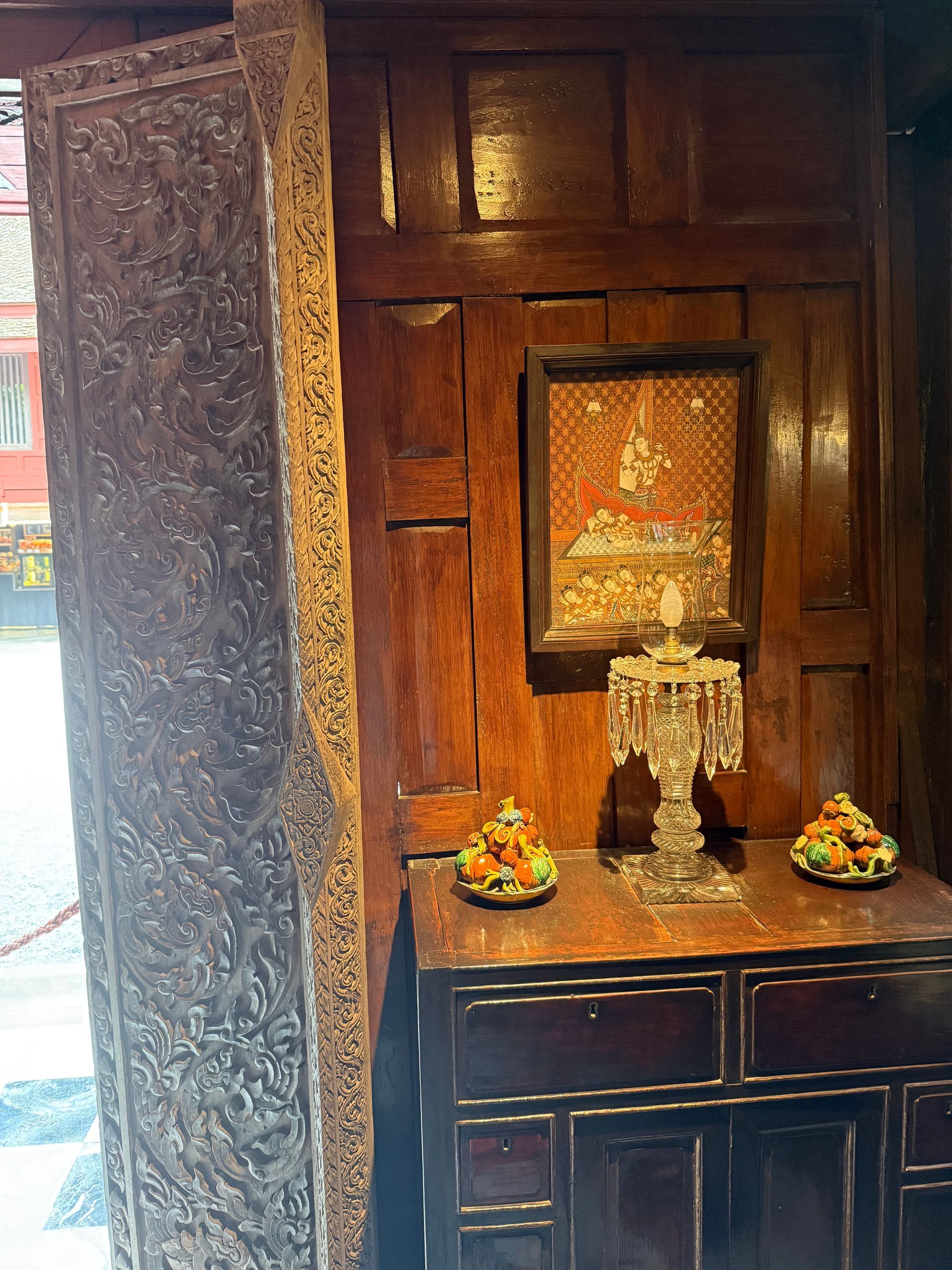
He constructed his own home by combining six teak buildings, most were 200+ years old and he had them dismantled and brought to the site. Some came from across the river and others as far away as the old capital of Ayudya. In his quest for authenticity, he used the customs of early builders. He raised the houses a full story above ground to avoid flooding. The roof tiles were custom made using an old process and the whole exterior painted red, with a special preservative. He added an interior stairwell and bought marble tiles floors and chandelirs from old palaces.


He also embraced Thai customs for religious rituals and astrology. His astrological reading told him the Spring of 1959, would be an auspicious time to move into his house, which he did. That same astrology reading, also predicted his death at the age of 61.


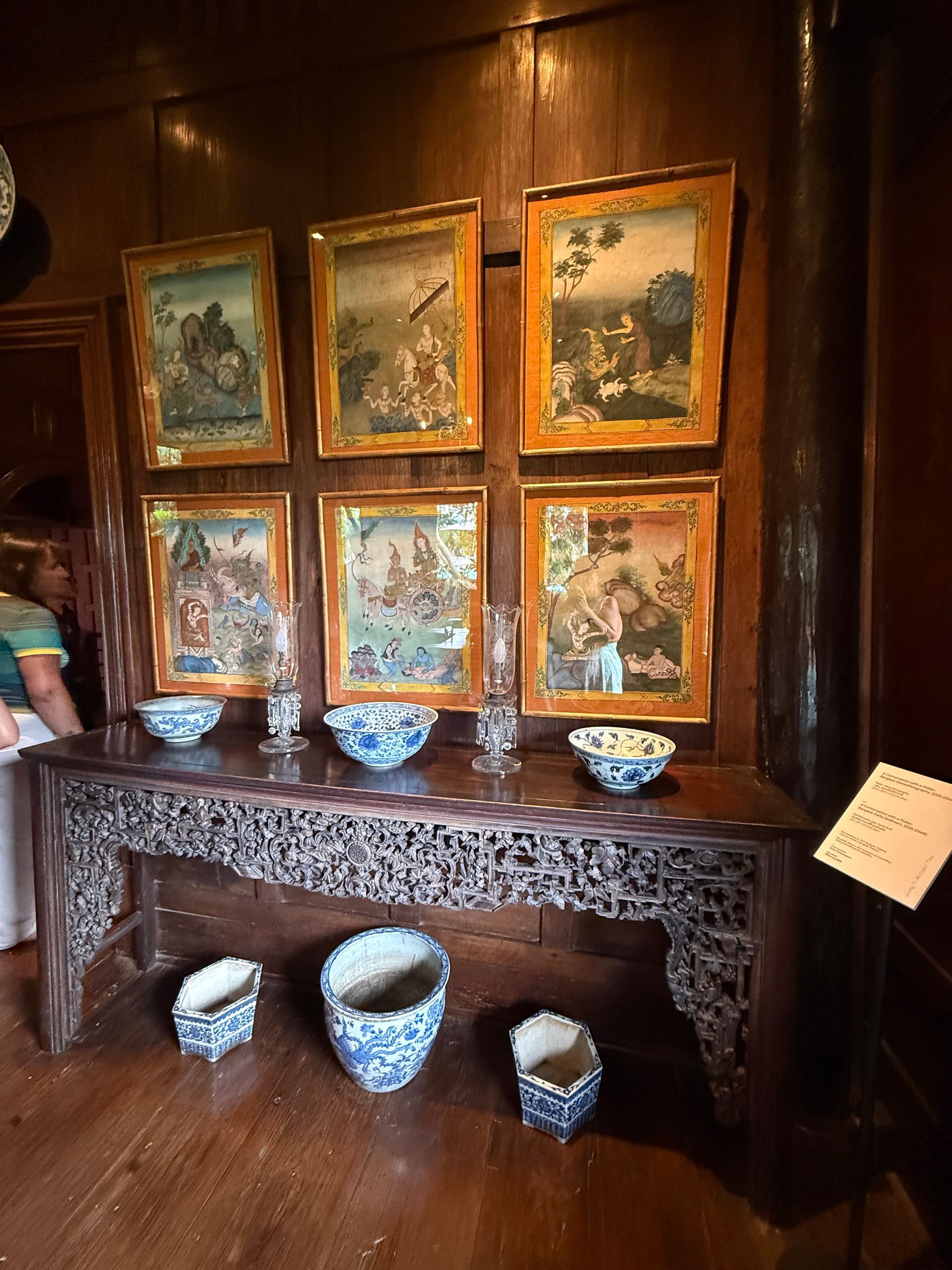
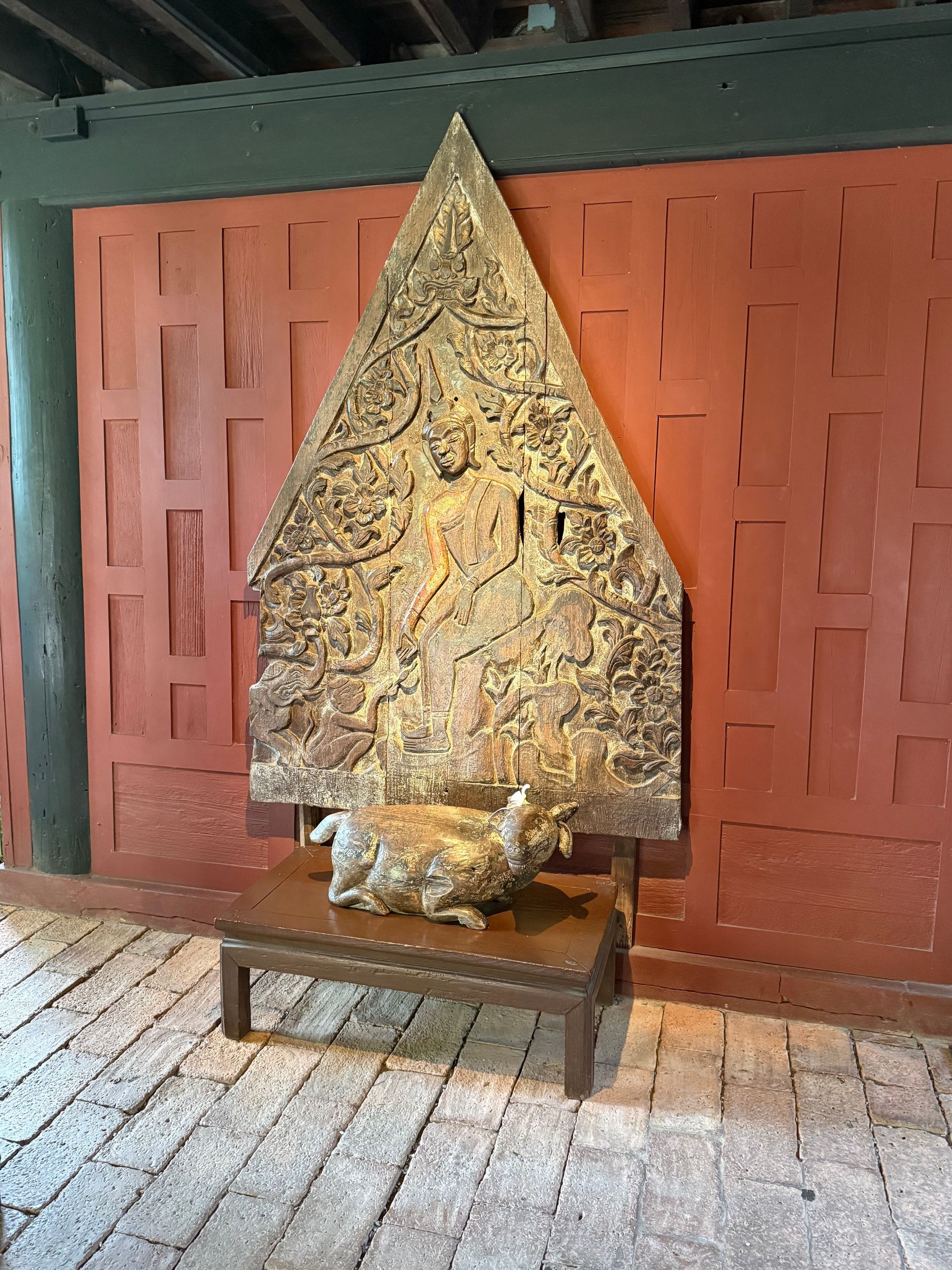
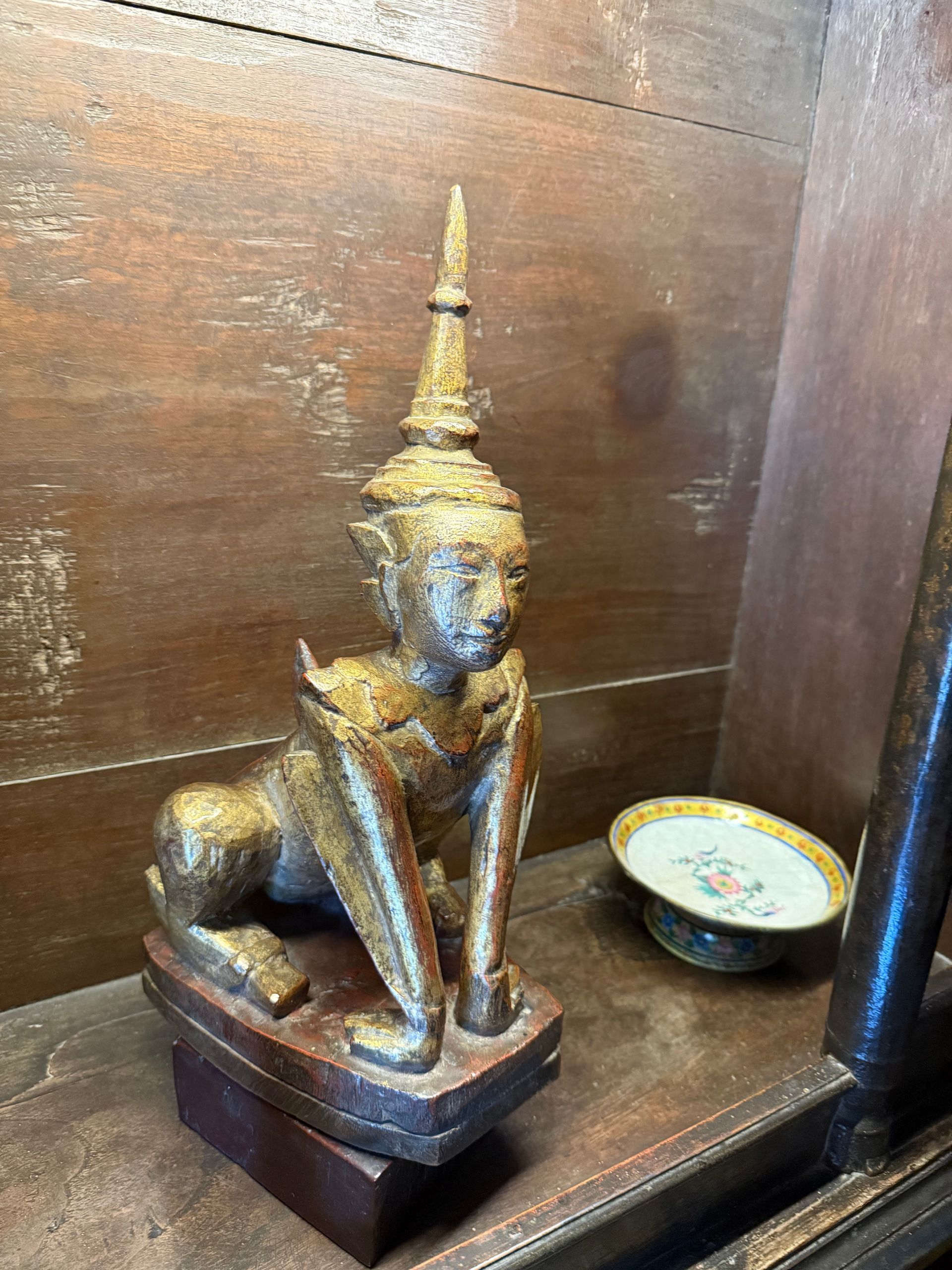
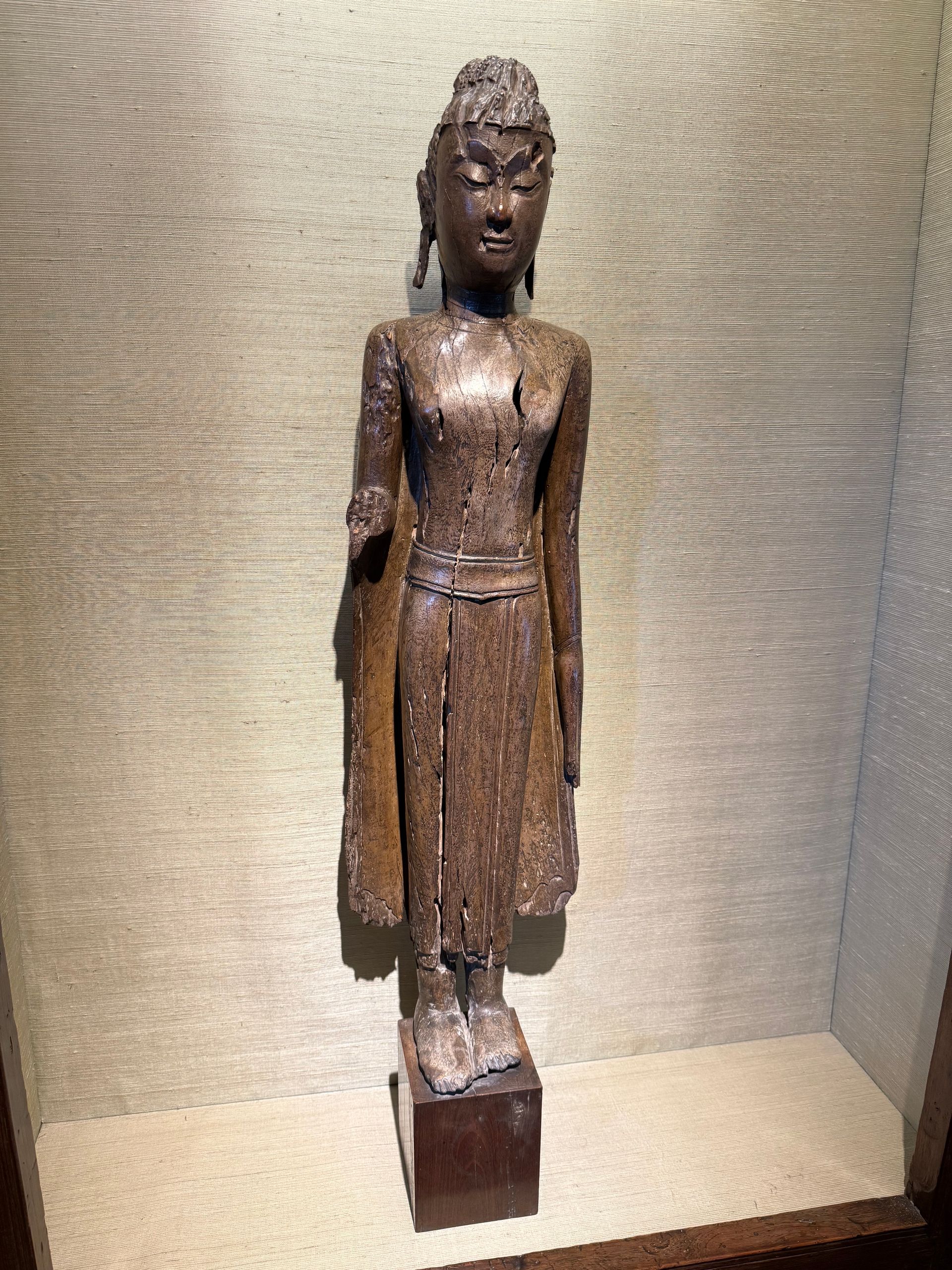
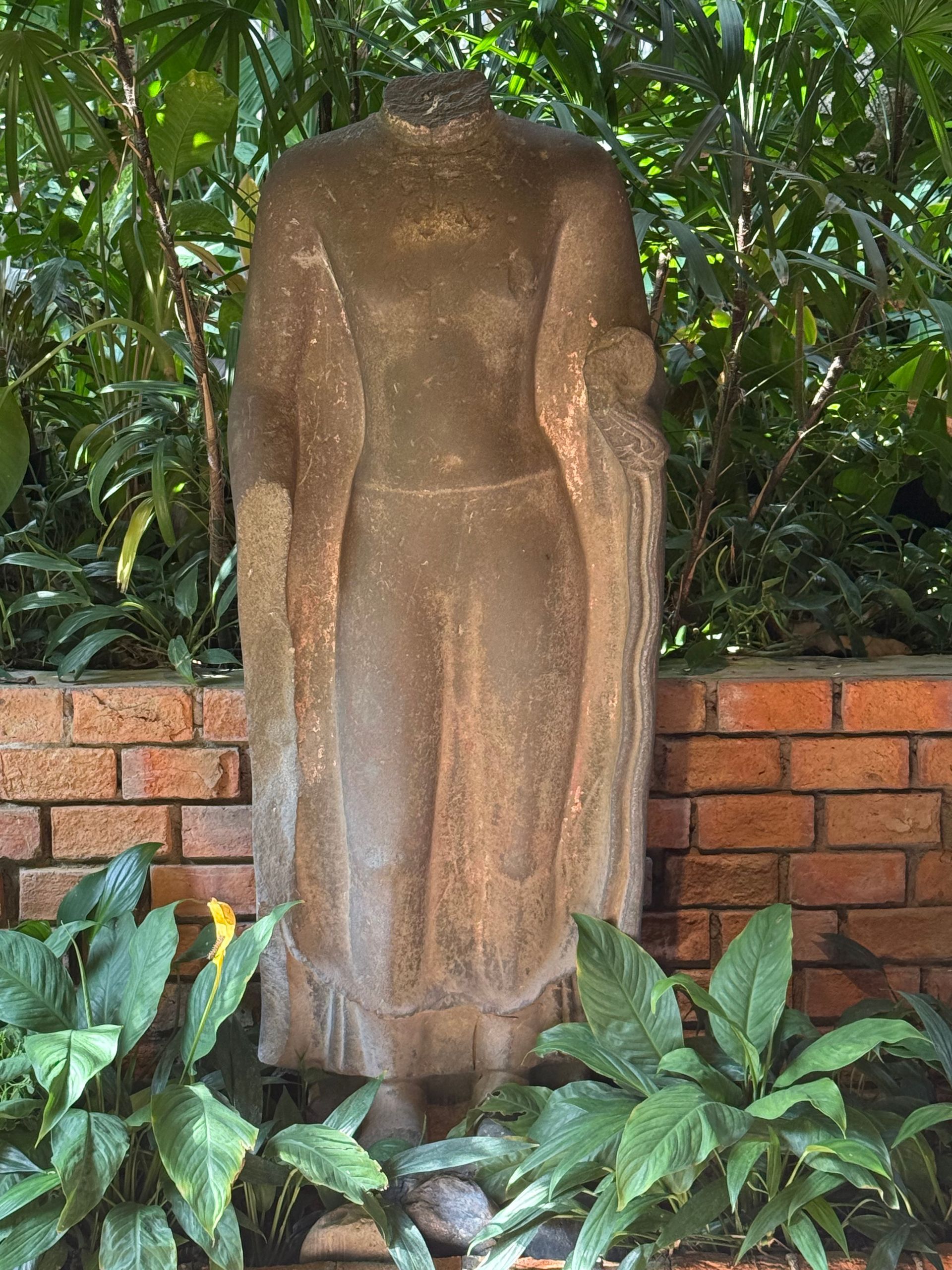
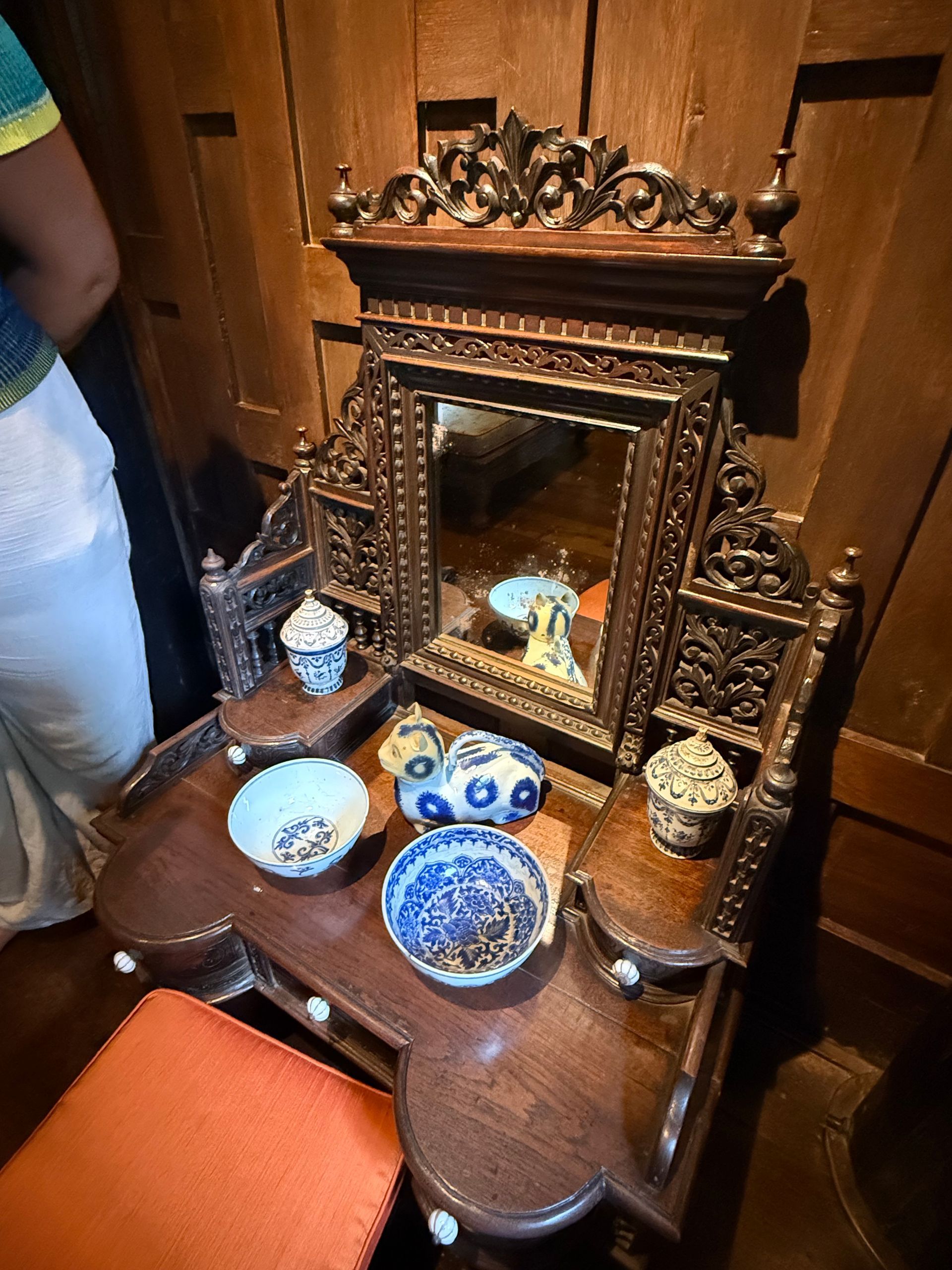
Jim also amassed a large antique collection, particularly with pieces that were slightly damaged, as he was determined to keep them out of the hands smugglers. He found ways to incorporate them and showcase them throughout his home.


Always an avid traveler, Jim was on a trip to the Cameron Jungle in Malaysia with friends, on March 26th,1967 when he went for an afternoon walk into the Jungle alone and never returned! Not a single, valid clue in his disappearance, has never emerged, in all the years since.


His Will left the business to his nephew, who sold it off to the shareholders and it is still a thriving business today. His home was made into a museum and gifted to Thailand and remains as a lasting reminder of his creative ability and deep love of Thailand.

Below is a fraction of his art collection.
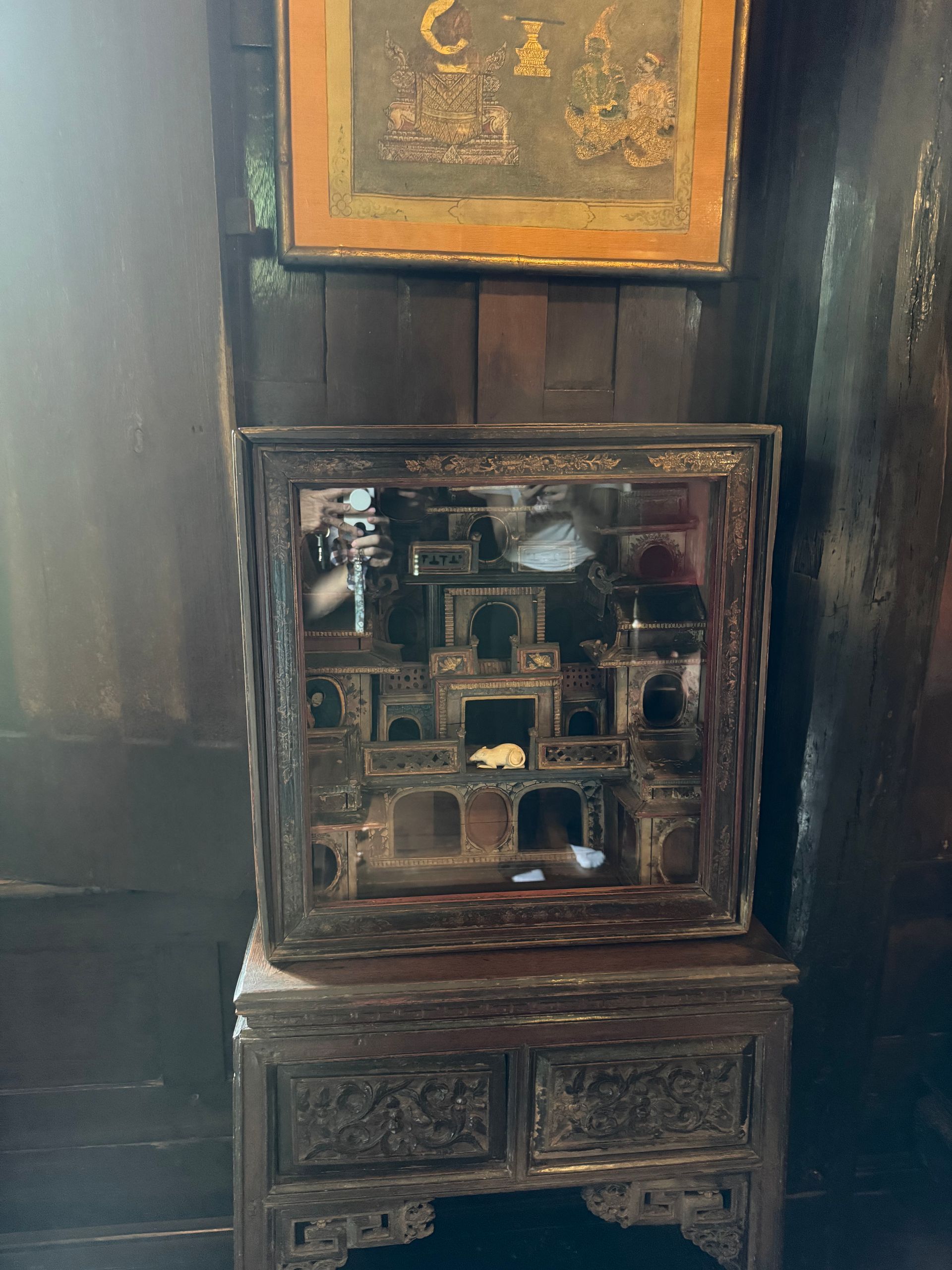
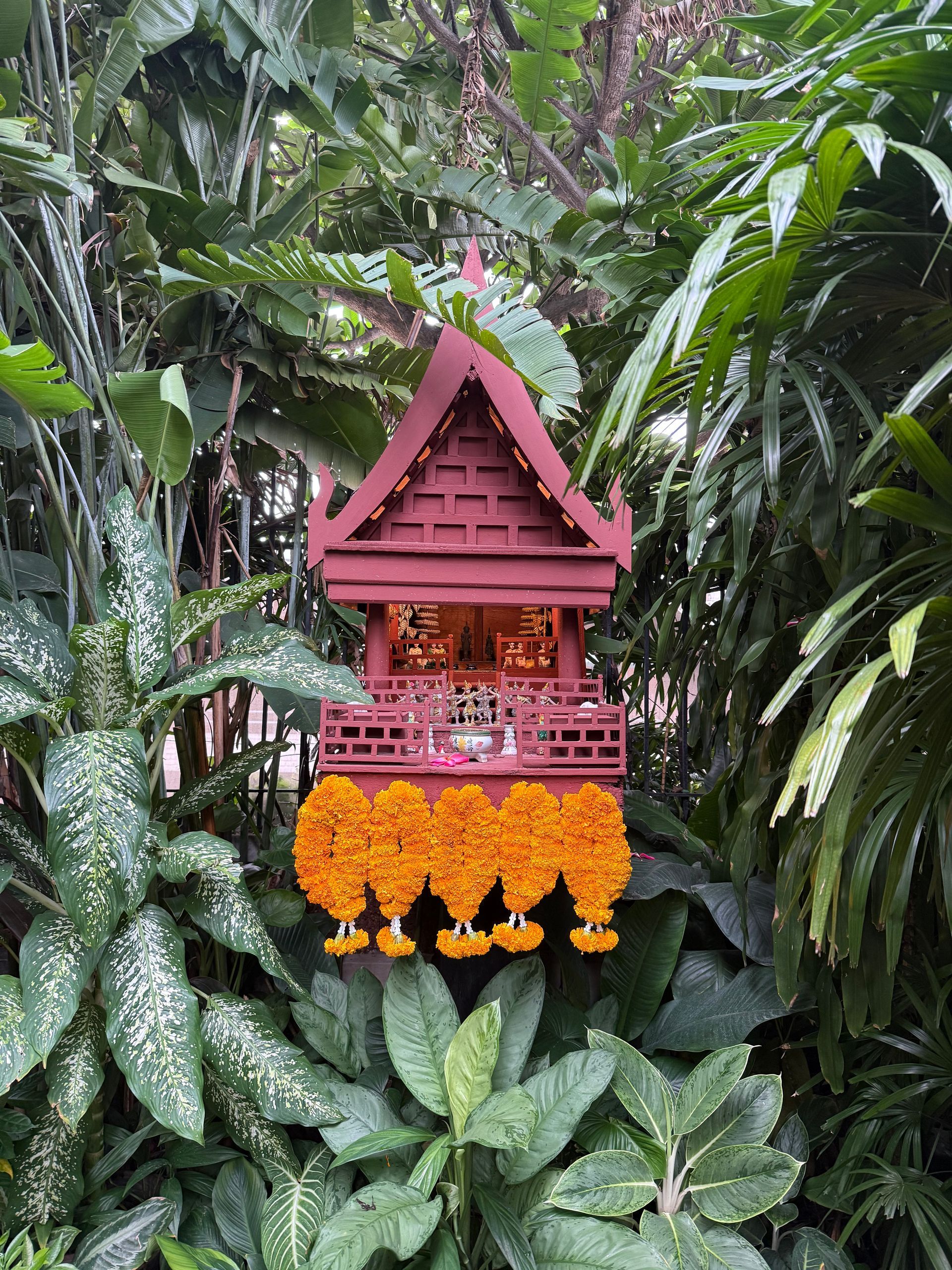
Above is a SPIRIT HOUSE and these can be seen all over Thailand. The idea is you build a mini replica of your home and place it outside the shadows or roof eaves of your home to appease the Spirits that lived here before you. You will often see items of food and drink added that were the favorites of family members of yours that have also passed. The belief is the Spirits from your homeland can pass these on, to your loved ones.
By Pat Patrick • October 12, 2026
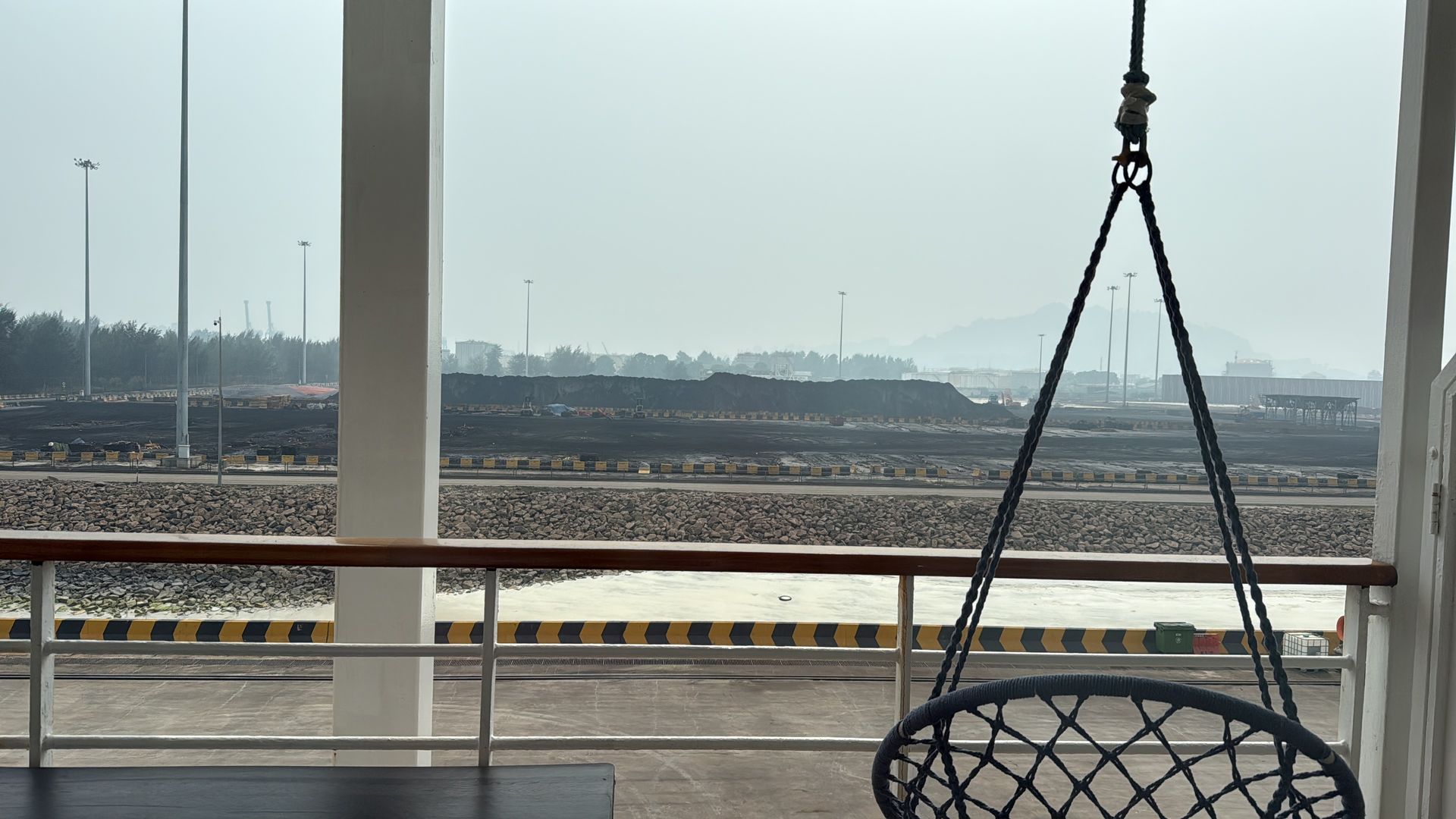
Just the other day a friend asked me if I got enough down time while living this lifestyle. My answer was "you have to make it !" In the beginning, it was go, go, go, every port. We had lots of FOMO ( fear of missing out ) and we tried to cram in as much as possible at every port. Sea days, were our only down time and there were never enough. It was a tad exhausting. Now two years into this life, I can say there are some ports that just don't call me and I opt to get other things done. Kuantan, Malaysia was one of the Ports. I never got off the ship, either day we were here. I intended to this morning, but we had storms with loud thunder late into the night and then was awoken by a crew alarm around 6:45am. My energy was low, there were shuttle issues, town was an hour ride away and there is alot of air pollution, ( due to neighboring Indonesia burning organic materials, in preparation for the upcoming monsoon season ). So I bagged my plans and continued working on my never ending TO DO LIST!
By Pat Patrick • October 11, 2026
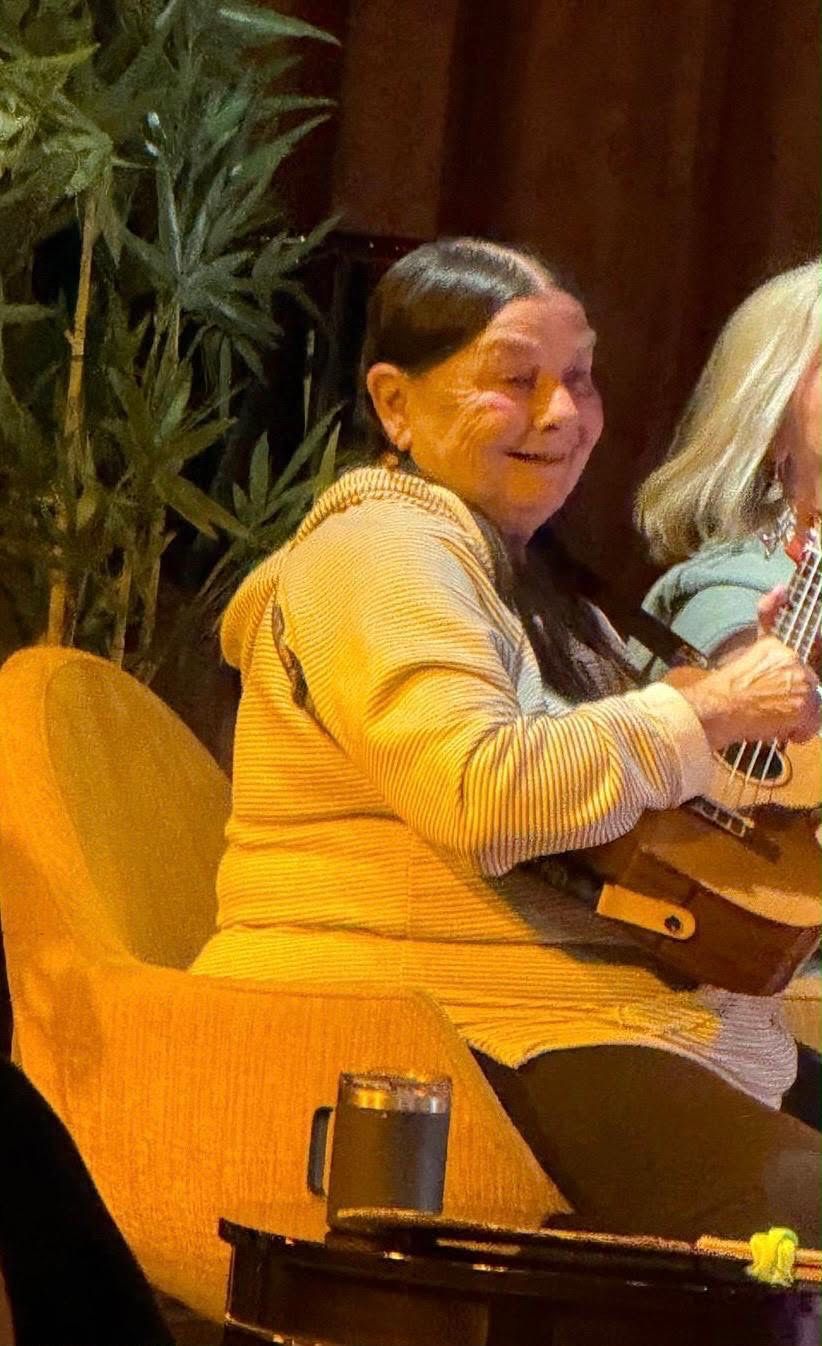
During our two years of sailing we have had several Shipmates come and go for a variety of reasons. Their health, has sadly been the reason for many departures. Cindy Harvey , would have loved to have lived out her days here on the Odyssey and even bought a second cabin and had an adjoining door added, to have a care provider, stay with her full time. However, Cindy's limited mobility, pain and confinement got to be too much - so she left us a few months ago. She went to an assisted living facility, on the coast of Oregon, to be near her family. Tragically she fell, was trying to recover, slipped into a coma and sadly passed away this week.
By Pat Patrick • October 8, 2026
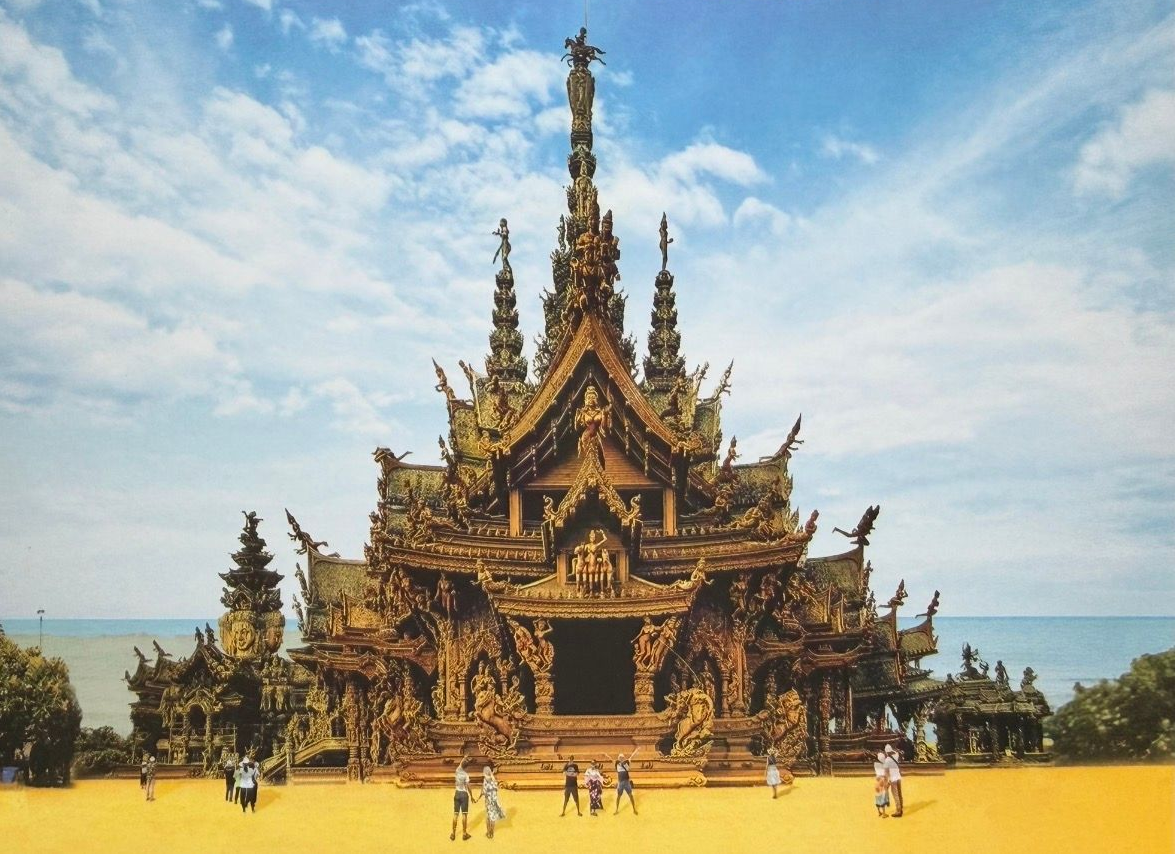
The Sanctuary of Truth Museum is the world's largest hand carved wooden castle, located on the coast of Pattaya, Chonburi Province, Thailand . Conceived in 1981 by Thai visionary Khun Lek Viriyaphun the structure is built entirely from 4 types of wood - Teak, Mai Daeng, Mai Takien & Mai Panchaat and put together using Thai nailless wood joinery - mainly dovetails, carrying poles and tongue & groove. We started the tour in the workshop where the artisan, mainly woman, were hard at work. Since conception, the Museum has been an active construction site, thus we all wore hardhats! The artisans continue handcarving sculptures and columns, daily and will most likely continue for years to come.